
Nvidia RTX 5050 leaked with 9GB GDDR7: A strategic move in the budget segment.
NVIDIA plans to upgrade the RTX 5050 to 9GB GDDR7, using recycled GB206 chips to optimize performance and address the VRAM shortage issue when DLSS is enabled.
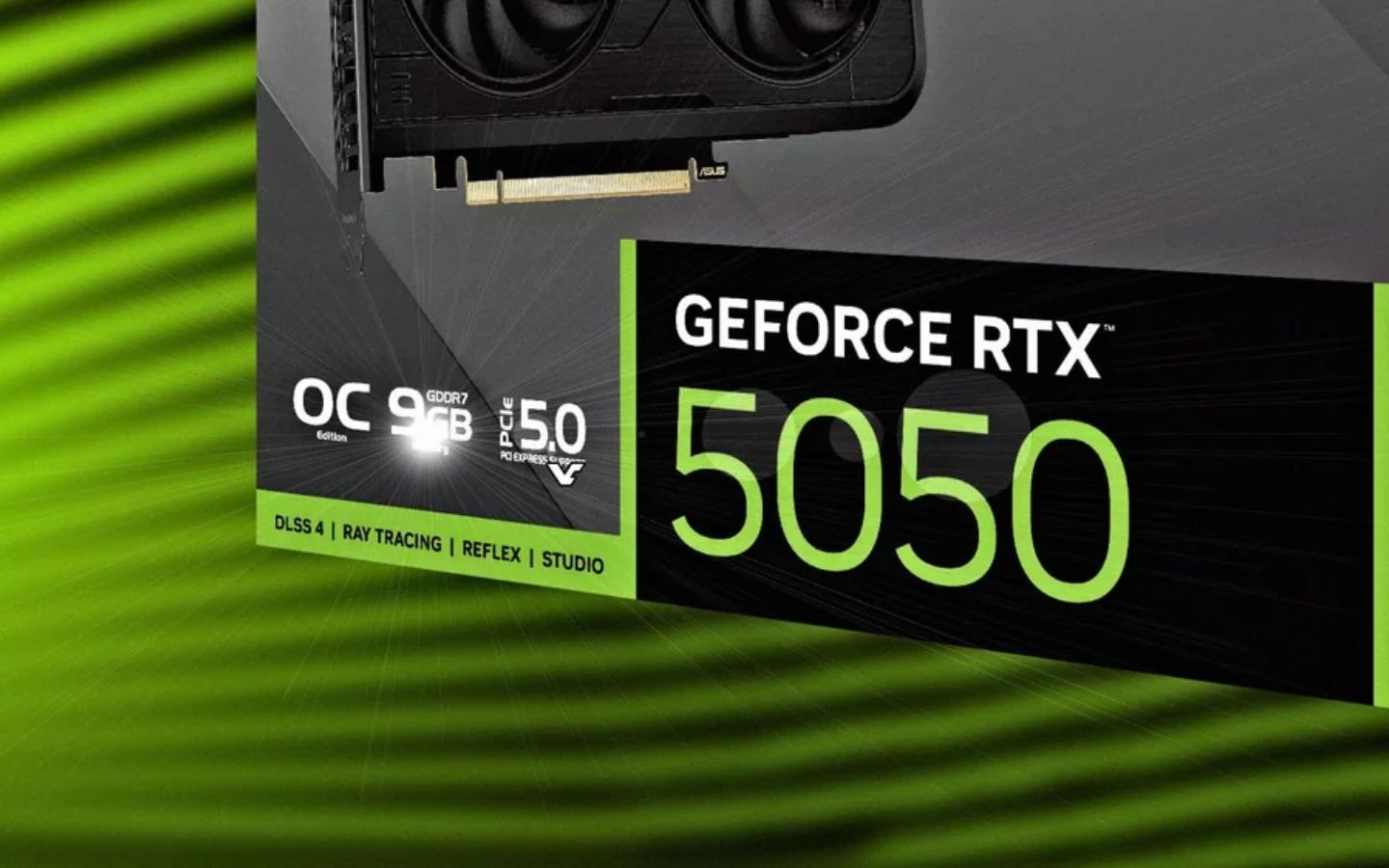
NVIDIA is preparing for a significant upgrade to its mainstream RTX 5050 graphics card. According to the latest technical reports, this card line will switch from GDDR6 to the next-generation GDDR7 memory standard, while also increasing VRAM capacity from 8GB to 9GB. This is seen as an effort by the company to maintain competitiveness in a volatile component market.
The shift to GDDR7 memory technology
The primary reason for this shift stems from the entire semiconductor industry's push to transition to the GDDR7 standard. This has led to limited GDDR6 supply and increased production costs for the older memory type. Integrating GDDR7 not only helps NVIDIA stabilize its supply chain but also provides superior bandwidth for end users.
Chip reuse and production optimization strategies
The new RTX 5050 will use the GB206 chip from the Blackwell architecture. Essentially, these are chips designed for the higher-end RTX 5060 model, but they didn't meet the technical requirements to operate at full performance. Instead of discarding them, NVIDIA reused them by reducing the number of CUDA cores to about half of the maximum 4,608 cores.
This method is not new in the semiconductor industry. Previously, the GeForce RTX 3050 also shipped with the GA106 chip (originally intended for the RTX 3060) before switching entirely to the GA107 chip. This strategy helps NVIDIA minimize electronic waste and optimize profit per silicon wafer.
Analyze technical specifications and bandwidth.
Although memory capacity increased to 9GB, the physical configuration forced NVIDIA to shrink the memory interface from 128-bit to 96-bit (due to a reduction in the number of memory modules from four to three). However, thanks to the GDDR7 standard's speeds of up to 28 Gbps compared to GDDR6's 20 Gbps, overall bandwidth still increased by approximately 5%.
| Parameter | RTX 5050 (Expected) | RTX 5050 (Old/Early rumored) |
|---|---|---|
| Architecture | Blackwell | Blackwell |
| VRAM capacity | 9GB GDDR7 | 8GB GDDR6 |
| Memory interface | 96-bit | 128-bit |
| Memory speed | 28 Gbps | 20 Gbps |
| Bandwidth | 336 GB/s | 320 GB/s |
| TDP | 130W | 130W |
The projected total power consumption (TDP) remains at 130W. Notably, although GDDR7 operates at a lower voltage (1.1V – 1.2V), NVIDIA may have redirected the saved power to enhance the processing power of the graphics core (GPU).
Impact on the actual gaming experience
The addition of 1GB of VRAM has more significant implications than just theoretical numbers. In modern, high-demand games at 1080p resolution, 8GB of VRAM is often overloaded when players simultaneously enable DLSS hypersampling and Frame Generation technologies. Upgrading to 9GB provides the system with more storage space for image data, reducing lag and delivering a more stable experience in the mainstream price segment.


