
The party secretary who rides a bicycle is suspected of faking poverty.
During his 21 years as a key leader in Hoi An, Mr. Nguyen Su initially rode a bicycle, then a 78-model motorbike, and when that motorbike broke down, he switched to a Wave motorcycle.
In a conversation with VietNamNet earlier this week regarding the recent phenomenon of businesses gifting luxury cars to government officials and leaders in some localities, Mr. Nguyen Su frankly stated that these are not "gifts given away for free."
Nothing comes without a price.
Luxury cars are expensive gifts. In the context of business relationships with leaders and government officials, what implications might public opinion have for such expensive gifts?
The practice of visiting and giving gifts to one another has existed for centuries, expressing emotional and spiritual significance. However, giving expensive gifts takes on a completely different meaning.
High-value gifts are usually only given to officials and people in positions of power. It's unthinkable that someone would buy such an expensive gift for an ordinary citizen.
Clearly, something is amiss. It's not like they're giving it away for free; nothing comes without a price. Businesses giving cars as gifts could be a way to gain access to leaders and build closer relationships.
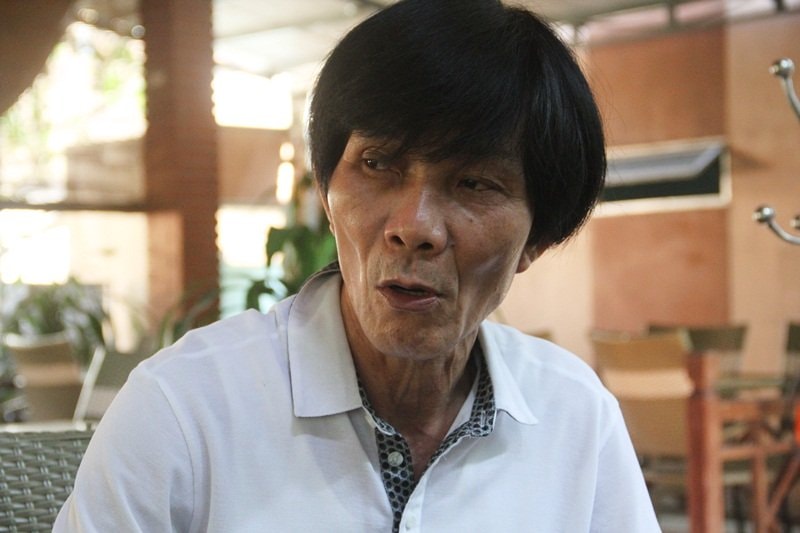 |
| Mr. Nguyen Su: There's no such thing as giving something away for free. |
The issue here is about donating luxury cars. Who are you giving those expensive cars to? If you're giving gifts to a local community, why not donate bridges, houses for the needy, or playgrounds for the children? If you're going to donate cars, why not donate garbage trucks or ambulances to support hospitals and help the people?
Local leaders might argue that luxury cars are necessary because when hosting important guests or foreign corporations coming to explore investment opportunities, not having a luxury car to transport them feels... inadequate?
If that car were a gift and used for receiving foreign delegations, that might be acceptable. But using it for the leaders' regular travel would immediately raise concerns.
But I don't think international tourists necessarily like riding in luxury cars.
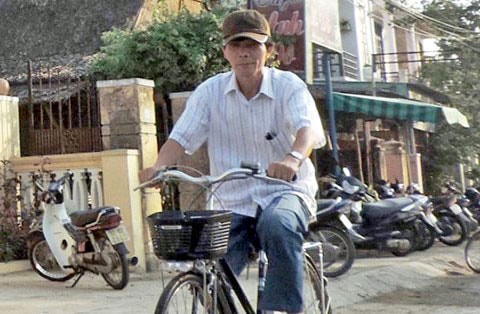 |
| This is a familiar image of Mr. Nguyen Su cycling to work in Hoi An when he was still employed. |
Actually, there are two types of situations regarding receiving a car as a gift. Firstly, some might think simply that it's something shared, something they'll use, and when they leave their position, they can just give it to someone else instead of taking it home.
Secondly, there's the issue of officials wanting luxury cars but being unable to purchase them with public funds, not to mention having to comply with state-mandated standards. Therefore, only donated cars are acceptable.
When giving gifts to leaders, it has to be a luxury car, not a mediocre one. I'm saying, if you give a car worth 500 million VND, but the standard for a leader is a car worth 1 billion VND, then they'll never use that gift car.
He should just use the budget to buy the car according to regulations. If his position allows him to use a 900 million VND car, then he should use a 900 million VND car that meets the standards. Luxury cars don't define a leader's image; a leader's value is demonstrated by their work efficiency.
A luxury car doesn't make you look classy. Driving a car that isn't luxurious doesn't make you look smaller either.
Why are these officials so poor, as if they fell from the sky?
Was such a phenomenon common during your time as leader? Did you often travel by car for official business?
For 21 years as a key leader in Hoi An City, I initially rode a bicycle, then a 78-series motorbike, and when that broke down, I switched to a Wave motorbike.
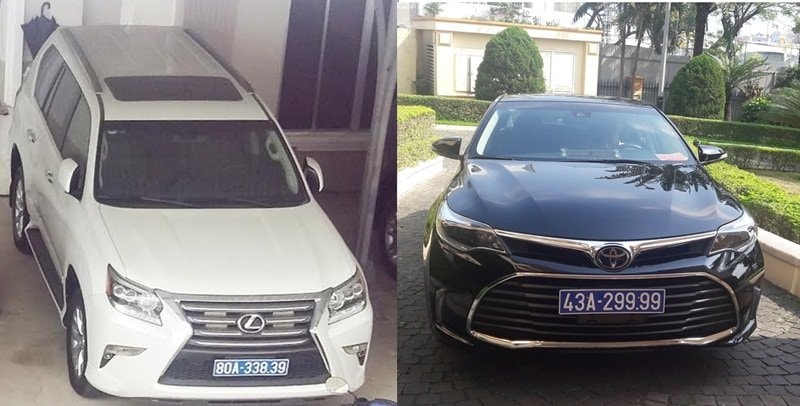 |
| Luxury cars with blue license plates have caused a stir in public opinion recently. |
When going to work or traveling within the city, I only use my bicycle or motorbike; I never use a car. I only need a company car when dealing with storms or floods, or when traveling outside the city.
As for gifts, apart from a pack of cigarettes or a pack of tea, I don't accept a single penny from anyone, including businesses. That's something I can state with certainty.
There were rumors that Mr. Su was faking poverty.
It's normal for people to be suspicious of officials, including myself. Because a significant portion of those in positions of power are very wealthy, and unusually so, they have no reason not to suspect that Mr. Su isn't rich.
I don't blame people for that, and I don't dwell on it. I live as I am. As my grandparents used to say, 'when the water dries up, sandbanks will appear,' there's no need to pretend to be dead.
It's normal for an official to not be rich, given their salary and numerous responsibilities, including raising and educating their children. Why do people keep thinking that officials are poor as if it just fell from the sky?
According to Vietnamnet.vn
| RELATED NEWS |
|---|


