
Do phone cases weaken cellular and Wi-Fi signals?
Many people worry that phone cases might impair signal reception. In reality, most cases don't significantly affect the signal, but there are some notable exceptions.
For years, debates about phone cases have revolved around whether users actually need them. However, a less frequently discussed question is whether phone cases can impair a phone's signal reception.
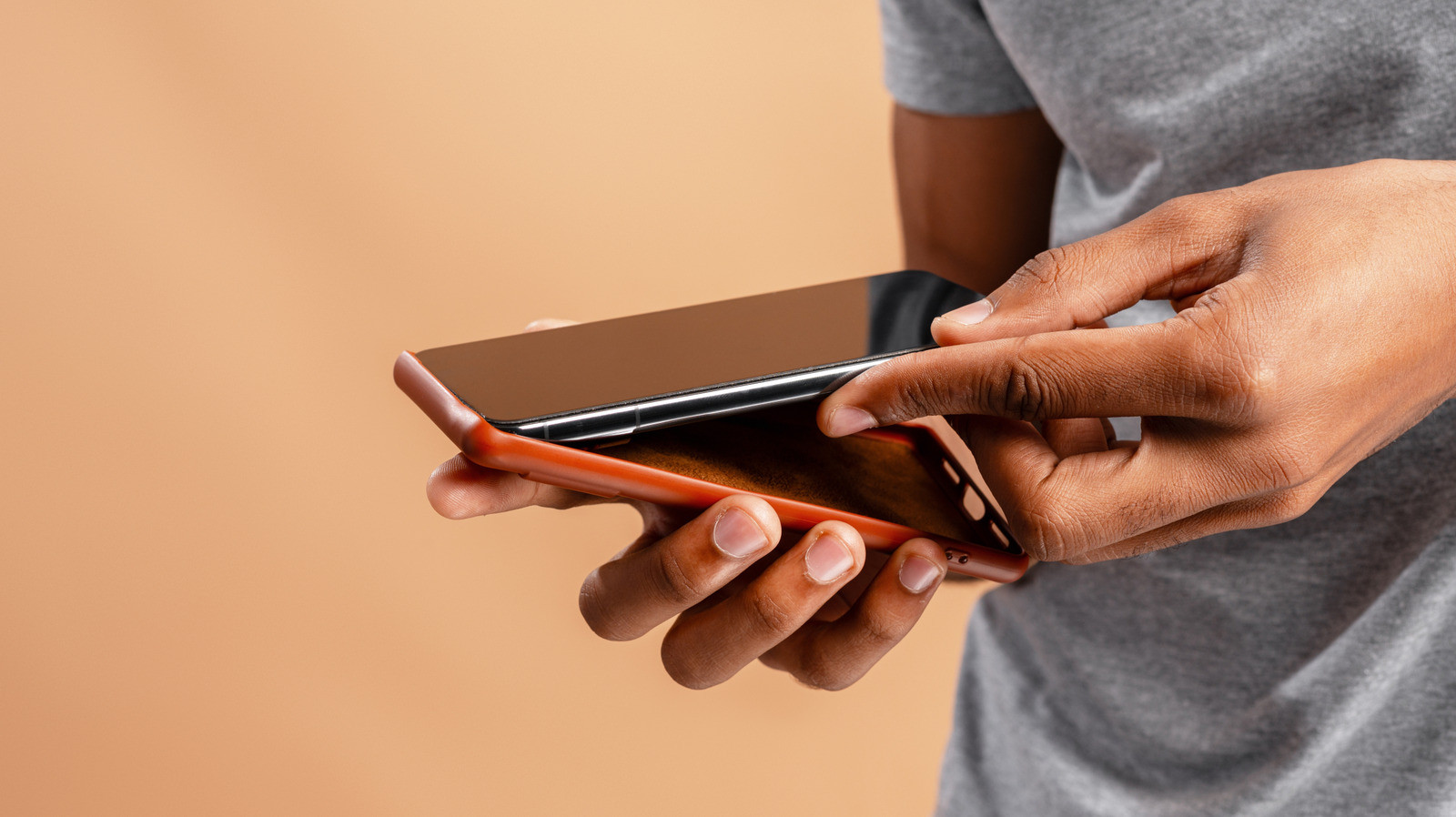
In most cases, the answer is no. Cases made from silicone, plastic, rubber, fabric, leather, or wood hardly affect the signal reception of smartphones. However, some specific materials and designs may still negatively impact connection quality.
How do mobile phones transmit and receive signals?
To understand why some phone cases can affect the signal, we first need to know how the phone communicates with the outside world.
Modern smartphones are equipped with multiple separate antenna systems to support connections such as cellular networks, Wi-Fi, Bluetooth, and GPS. These antennas are carefully positioned around the device to optimize radio wave reception and transmission.
Under normal conditions, electromagnetic waves used for data transmission will pass through non-conductive materials without significant obstruction. Therefore, a thin silicone case or a regular plastic case will hardly degrade the signal quality.
However, if the material or design of the phone case obstructs the antenna area, signal reception may be affected.
Metal phone cases are the most worrying "culprit".
The most important factor determining the ability to affect the signal is the material from which the phone case is made.
Basically, materials can be divided into two groups: conductive and non-conductive. Metals belong to the conductive group, while silicon, rubber, and most plastics belong to the non-conductive group.
If you use a metal phone case or one with many metal parts, your mobile and Wi-Fi signals may be weakened. This is because metal can reflect or interfere with the radio waves that your phone uses to communicate with the cell tower or Wi-Fi router.
This is also why phone manufacturers often avoid placing metal parts that completely cover the antenna area on the device.
The thickness of the phone case can also affect the phone's signal reception quality.
The material and design of the phone case play a significant role, not just the material.
On current smartphone models, the antenna bands are usually arranged along the frame. If the phone case is too thick in these areas, the signal may be somewhat weakened.
This effect is usually more noticeable with cases containing metal components, while silicone or plastic cases are only slightly affected. In fact, the material is still a far more important factor than the thickness.
Users should also pay attention to cases with decorative metal details or metal frames located right in the antenna area. If these details cover the antenna location, signal reception may be significantly affected.
However, phone cases are not the only "culprit" causing poor signal reception.
Although phone cases can affect signal quality in some cases, they are not the only reason why a phone might have poor signal reception.
Distance from the base station, user density in the area, terrain, weather, and obstacles such as concrete walls, glass, or metal structures can all degrade the signal.
Furthermore, the network technology used by the phone also significantly affects connectivity. For example, 5G signals in high-frequency bands offer very high data transmission speeds but have poorer penetration through obstacles compared to 4G or lower-frequency bands.
Therefore, if you notice your phone has weak signal reception, you should try using it with and without a phone case to compare the results. Signal strength measurement apps can also help assess the extent of the problem more accurately.
According to experts, a signal loss of around 1 to 3 dBm is usually not a cause for concern. In fact, how you hold your phone can sometimes affect the signal more than even a phone case.
In most cases, phone cases are not the cause of weak cellular or Wi-Fi signals. However, cases made of metal or designed to cover the antenna area can still reduce connection quality. When experiencing poor signal reception, users should consider various factors instead of just blaming the phone case.


