
OPEC faces its most difficult period.
(Baonghean) - In a recent comment, the Secretary-General of the Organization of Petroleum Exporting Countries (OPEC), Mohammed Barkindo, had to admit that the organization is in its most difficult phase in history, as member countries face the challenge of building consensus on production cuts and stabilizing the market. This assessment is all the more accurate given that the latest meeting of OPEC officials last weekend in Vienna, Austria, failed to address this issue.
It's just a statement.
After 11 hours of tense discussions, officials from 14 OPEC member countries and 6 non-OPEC nations finalized details of a plan to reduce oil production by 200,000 to 700,000 barrels per day, or 1-2%, in order to salvage global oil prices.
Prior to the meeting, public opinion was optimistic, believing that reaching an agreement would not be too difficult, especially since OPEC had unexpectedly agreed to cut oil production just the previous month. This agreement, the first in eight years, aimed for OPEC countries to reduce total production to 32.5 million to 33 million barrels per day.
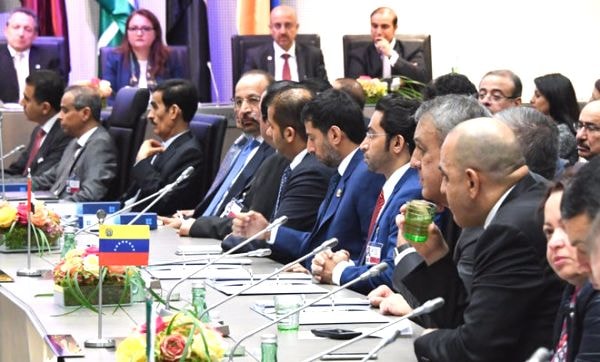 |
| Meetings of OPEC and non-OPEC officials failed to reach any agreement or commitment to production cuts. Photo: Reuters |
However, despite optimistic public opinion and the fact that oil prices remain a vital issue for many countries, the recent OPEC officials' meeting was a major failure. The 14 OPEC member countries and 6 non-OPEC nations – Azerbaijan, Brazil, Kazakhstan, Mexico, Oman, and Russia – were unable to reach any agreement or commitment. The plan involved 20 countries, both within and outside OPEC, coordinating production cuts.
If all goes smoothly, the new commitments will be carried over to the OPEC ministerial meeting at the end of November. However, predictions have gone awry. This means that the agreement on production cuts last month remains just a statement and cannot yet be put into practice. Immediately after this disappointing outcome, the US crude oil market reversed course and fell, breaking the $50/barrel and $49/barrel marks before settling at around $48/barrel.
Internal conflict
According to analysts, the real reasons were predictable. First, there was the strongest opposition from Iraq and Iran. Iraq stated that it desperately needed revenue from "black gold" to continue its fight against the self-proclaimed Islamic State (IS). Iran, having recently opened up to the world, set expectations of 4.2 million barrels per day. Iran also argued that demands to cut or freeze its oil production at this time were unfair. Furthermore, countries like Libya and Nigeria also demanded their own rights, citing conflict and instability.
Clearly, while OPEC itself has yet to reach a consensus, non-OPEC countries will also raise many questions. Although some non-OPEC countries, including Russia, have declared their willingness to control oil production, in return, OPEC member countries must implement production cuts first. This is arguably not feasible for OPEC at this time.
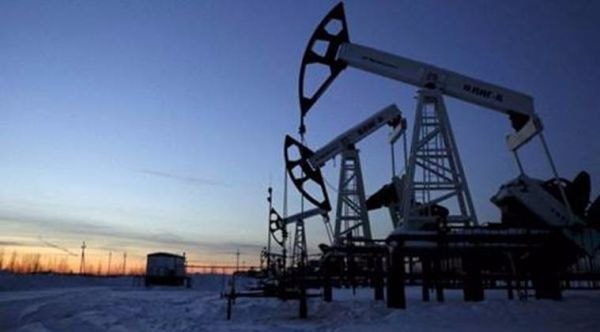 |
| "Black gold" is a vital source of revenue for many countries today. Photo: Reuters |
Not only is there a lack of confidence, but non-OPEC countries are also questioning the precise figures that need to be agreed upon. This is because, at the recent meeting, OPEC members failed to agree on the amount of oil each country should cut and the data to be used to determine production.
This development is understandable, given that for a long time, all countries, including OPEC nations, have refused to reduce production and have tried to maintain their market share in the oil market. No one is willing to compromise, and the oversupply has caused oil prices to plummet dramatically over the past few years.
Exceeding $50 per barrel remains unlikely.
However, alongside the disappointment, some opinions suggest that the meeting did make some progress by granting Iran an exception to the production cut, although the exact amount remains unclear. Nevertheless, it is certain that other countries also facing difficulties, such as Iraq, Libya, and Nigeria, will not easily approve such a measure.
Meanwhile, the geostrategic confrontation between the two "oil giants," Iran and Saudi Arabia, in the Middle East remains tense on multiple fronts. Any increase or decrease in oil production will have political and diplomatic implications.
In light of these developments, OPEC Secretary General Mohammad Barkindo warned of dire consequences if the planned production cuts are not achieved in the near future. Of course, while this warning is necessary, the goal of restoring prices to $50 per barrel and increasing them further will remain very difficult to achieve.
At this moment, the oil market and public opinion are closely watching every move of OPEC and related countries. Countries like Iran and Saudi Arabia are certainly making their own calculations to achieve both economic benefits and avoid jeopardizing their strategic goals. However, it seems unlikely that any significant progress will be made in freezing or reducing production before the official OPEC meeting on November 30th.
Phuong Hoa
| RELATED NEWS |
|---|


