
OPEC+ increased production by 206,000 barrels per day in May 2026.
The OPEC+ alliance has agreed to increase crude oil production quotas by 206,000 barrels per day in May 2026 to calm the market amid oil prices approaching $120 per barrel.
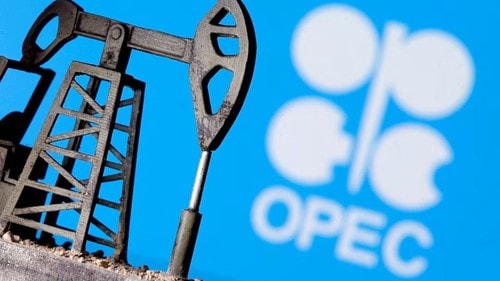
The Organization of Petroleum Exporting Countries and its partners (OPEC+) officially agreed on April 5th to increase oil production quotas by 206,000 barrels per day in May 2026. This decision comes amidst significant pressure on the global energy market from geopolitical developments in the Gulf region.
Supply disruptions in the Strait of Hormuz
The conflict, which began in late February 2026, nearly completely shut down the Strait of Hormuz – the world's vital oil shipping route. This incident severely disrupted the exports of key OPEC+ members, including Saudi Arabia, the UAE, Kuwait, and Iraq. These were also the only countries in the bloc with the capacity to immediately increase production.
The direct consequence is that crude oil prices have surged to their highest level in four years, currently trading close to that level.120 USD/barrelRising transportation fuel prices are putting significant pressure on the global economy, forcing many governments to implement emergency energy saving measures.
The increase in output is merely symbolic.
According to expert analysis, the OPEC+ increase of 206,000 barrels per day is equivalent to less than 2% of the supply shortfall caused by the closure of the Strait of Hormuz. Statistics show that the current disruption has resulted in a loss of approximately 12-15 million barrels per day, accounting for up to 15% of total global supply.
Jorge Leon, Director of Geopolitical Analysis at Rystad Energy, commented:"In reality, this decision adds very little supply to the market. With shipping lanes through the Strait of Hormuz still blocked, increasing quotas from OPEC+ has almost no practical effect."
Challenges from alliance members
Besides disruptions in the Gulf region, several other members of the alliance have also been unable to increase production. A prime example is Russia, which is facing Western sanctions and damaged infrastructure following conflicts with Ukraine.
The quota increase for May 2026 remains unchanged from the April 2026 adjustment, reflecting the alliance's caution in the face of complex market developments. The OPEC+ group affirmed its readiness to boost production as soon as key shipping lanes are reopened.
Price risk warning
Major financial institutions are issuing cautious forecasts about the future of the energy market. JPMorgan Bank warns that crude oil prices could exceed a certain threshold.150 USD/barrel- an all-time record high - if the congestion in the Strait of Hormuz continues until mid-May 2026. This could lead to a large-scale global energy crisis.


