
OpenAI develops AI smartphones: A new step to change the face of the mobile industry.
OpenAI is researching a smartphone prototype that integrates AI agents with a task flow interface to replace traditional applications. The device is expected to launch in 2028 along with a custom chip system.
OpenAI, the organization behind the success of ChatGPT, is venturing deeper into the hardware field with a project to develop a completely new smartphone. According to a report from analyst Ming-Chi Kuo, this device is not simply a phone integrating artificial intelligence, but a platform optimized for the era of "Agent AI".
The concept of agent AI and OpenAI's hardware ambitions.
Unlike current virtual assistants that only respond based on single commands, OpenAI's AI agent on its smartphone prototype is capable of proactively understanding the context, behavior, and needs of the user to perform more complex tasks. The company's goal is to build a device where artificial intelligence is always active at the hardware level to monitor and support users in real time.

Hardware architecture and collaboration with semiconductor partners
To realize its ability to handle complex AI, OpenAI is working closely with MediaTek and Qualcomm to develop custom-designed integrated circuit (ASIC) chips. The device architecture will be highly decentralized: basic AI tasks will be processed directly on-device to ensure speed and privacy, while demanding computing power requirements will be pushed to the cloud.
Luxshare, one of the key suppliers, is expected to play a co-design and exclusive manufacturing role for this model. This substantial investment in hardware shows that OpenAI wants to have complete control, from the AI software layer to the underlying microchip architecture.
Taskflow interfaces: The end of the application era?
One of the most revolutionary changes on this device is the removal of the traditional app grid interface that has dominated since the iPhone's inception. Instead, OpenAI will shift to a "task flow" model.
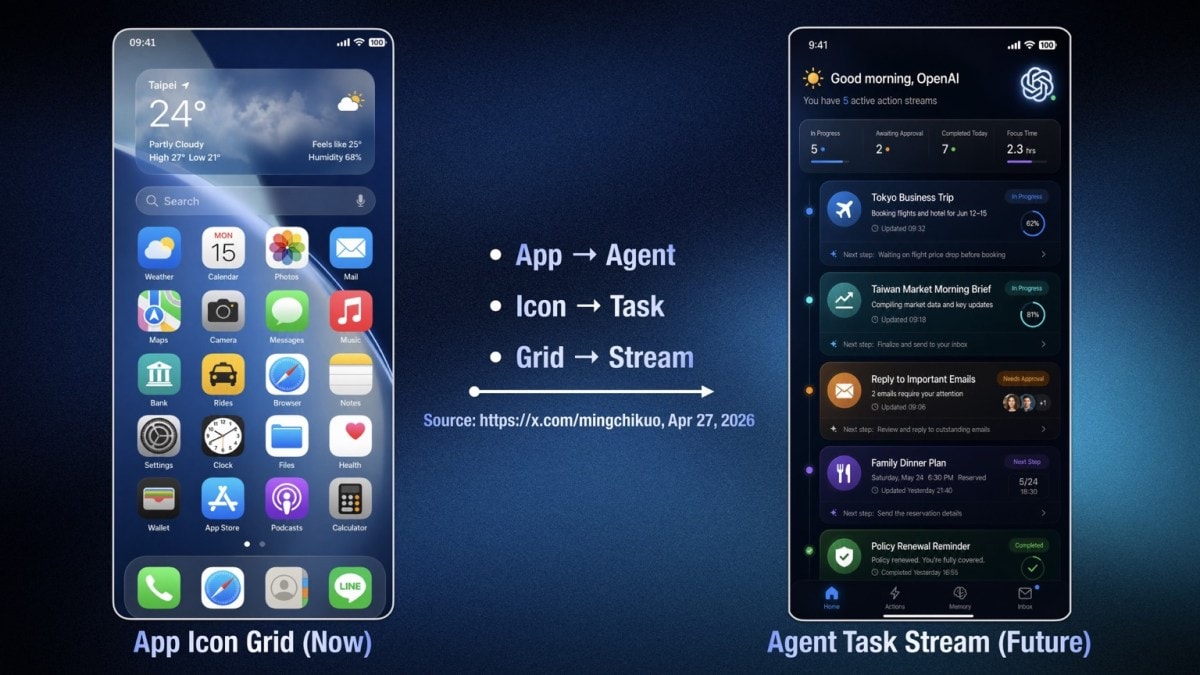
In this model, users don't need to open each application separately, such as Facebook, Gmail, or Maps. Instead, AI automatically coordinates, organizes, and displays information streams or task processing statuses directly on the home screen based on the user's intent. This simplifies operations and creates a more seamless information flow.
OpenAI's AI device launch roadmap and ecosystem.
This smartphone project is believed to be a follow-up development after OpenAI acquired the startup "io" by Jony Ive – a former Apple design director. Although the development team includes many talented individuals, reports indicate that the device will not enter mass production until 2028 at the earliest.
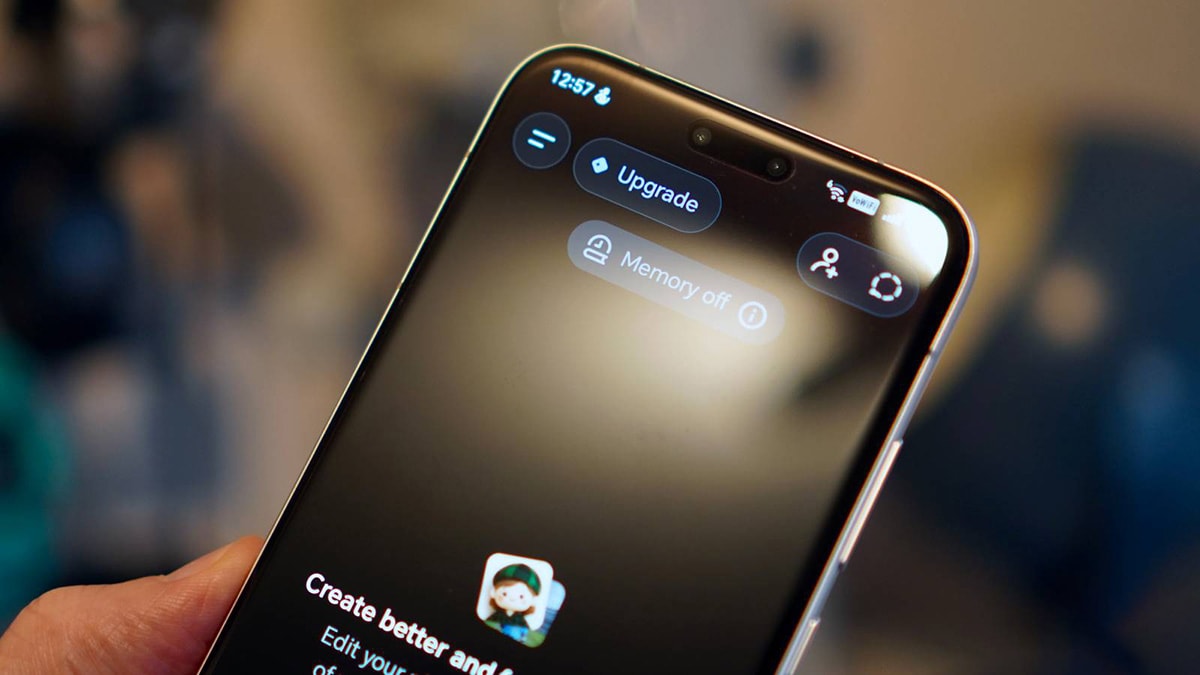
Besides phones, OpenAI is also considering launching wearable devices such as AI headphones, AI pens, and even smart speakers with built-in cameras. All of these devices will be part of a service ecosystem, where users may need to subscribe to recurring plans to fully utilize the power of AI. Entering the hardware market shows OpenAI's efforts to reduce its dependence on Apple or Google platforms, creating its own path in the global artificial intelligence race.


