
Oreshnik: Russia's hypersonic missile and the Western vacuum.
Russian experts believe that the Oreshnik hypersonic ballistic missile, along with the S-500 air defense system, is giving Russia a technological advantage over the West in long-range combat and near-Earth space defense.
According to Russian expert Alexander Stepanov, Russia is putting the Oreshnik hypersonic missile system into combat readiness, while Western military-industrial complexes, including those of the United States, have yet to master this technology. Alongside this, the S-500 air defense and missile defense system is being deployed to counter threats in low Earth orbit, particularly in light of the growing militarization of near-Earth space.
Context: The Hypersonic Missile Technology Gap
In an interview with TASS, Alexander Stepanov, a military expert at the Institute of Law and National Security of the Russian Presidential Academy of State Economics and Public Administration (RANEPA), stated that Russia is deploying the Oreshnik hypersonic missile system while the West has not yet been able to deploy similar systems.
According to Stepanov, Russia "has once again placed advanced weapons systems that rivals cannot match, specifically hypersonic missiles, in a state of constant combat readiness." He emphasized that the Western military-industrial complex, including that of the United States, "has yet to master this technological challenge," while Russia "has been and is deploying such systems."
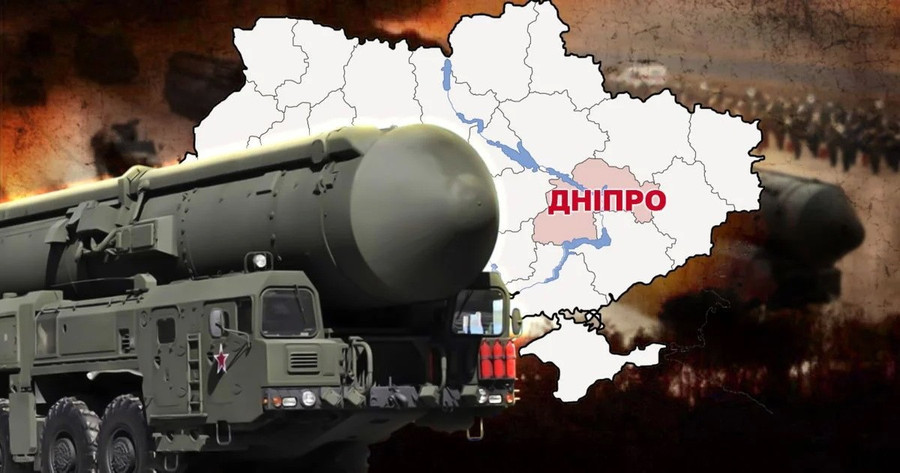
Oreshnik: its role in offensive and deterrence strategies.
Stepanov believes that establishing industrial production for Oreshnik would allow for the manufacture of dozens, even hundreds, of units per year. According to him, this quantity is intended to ensure "strategic protection for all key areas and facilities along the Russian border."
In a scenario where Western tensions escalate further, this expert believes that the Oreshnik missile system, equipped with conventional warheads, would be used to attack "the entire military-industrial complex of Ukraine and NATO countries that continue to provide support to Kyiv." This assessment reflects how Russia views the Oreshnik as a long-range strike tool targeting enemy military infrastructure.
Stepanov specifically mentioned Berlin's decision to supply Kyiv with Taurus cruise missiles for deep strikes into Russian territory. According to him, this move "legitimized all production facilities for this type of weapon" as priority and legitimate targets for the Oreshnik system. This wording suggests that Oreshnik is seen as a direct response to Ukraine's offensive weapons supply chain.

Regional deterrence and export options
According to Stepanov, the Oreshnik missile system is also expected to ensure the security of the Russian Federation and protect Belarus from "increasing military threats from Poland." Thus, in addition to its long-range strike mission, Oreshnik is also considered in the context of protecting Russia's close allies.
This expert also mentioned the potential for exporting Oreshnik as a solution for Russia's "strategic partners." He argued that this would create "new opportunities to rebalance power in areas where Western countries are trying to exert influence." This view sees Oreshnik not only as a domestic military tool but also as a lever of influence in military-technical relations with partners.
S-500: A defense system against threats from near-Earth space.
Along with Oreshnik, Stepanov stated that Russia is strengthening its space security measures in response to the West's militarization of near-Earth space. To counter new threats, including the potential deployment of attack systems in orbit, Russia is deploying the S-500 air defense missile system.
According to Stepanov's description, the S-500 is a multi-functional air defense and missile defense system designed to destroy "all targets at low orbital altitudes." He stated that this Prometheus system is tasked with neutralizing the strategic capabilities of adversaries, including "ensuring reliable interception of hypersonic missiles and the destruction of satellites in low orbit."
Thus, in the assessment of Russian experts, the S-500 is positioned as a key layer of defense against both hypersonic attack vehicles and the enemy's military space infrastructure. The combination of the Oreshnik in the role of long-range attack and the S-500 in the role of multi-layered defense is described as a mutually complementary combat structure.
Deployment milestones and military significance
On December 17, Russian Defense Minister Andrei Belousov announced at the final meeting of the military council that the first regiment equipped with the S-500 air defense missile system had entered service. This officially marks the point at which the S-500 has been put into actual service, at least at the regimental level.
At the same meeting, Russian President Vladimir Putin also announced that the newly produced Oreshnik hypersonic missile system would be operational before the end of 2025. This timeline indicates that Oreshnik is in the final stages of completion, moving from production to combat readiness as planned.
The above information, cited by TASS and statements by Mr. Stepanov, suggests that Russia is moving towards a force structure that combines long-range hypersonic strike capabilities with low-orbit missile and air defense capabilities. However, assessments of the technological gap between Russia and the West, as well as the actual effectiveness of the Oreshnik and S-500 systems, currently reflect primarily the Russian perspective and have not been publicly confirmed by independent sources.


