
Patriot system upgraded its all-directional interception capabilities near S-400.
The US is developing the CAML launcher and long-range interceptor missiles, allowing Patriot to strike targets that have already flown past or are behind it, approaching the omnidirectional capabilities of the S-400 and HQ-9.
The U.S. Army's Patriot air defense missile system is being upgraded with new launchers and interceptor missiles to overcome the limitation of only being able to effectively intercept targets within a narrow airspace in front of it. Once completed, the Patriot is expected to be able to engage targets flying in pursuit trajectories, even after they have passed the launch area, bringing it closer to the all-directional combat capability of the S-400.
The context for upgrading the Patriot system and current limitations.
Currently, the Patriot system can only effectively intercept approaching targets within a narrow angle in front of the launch platform. To attack targets behind or already overtaken, the operating unit is forced to maneuver and move the launch platform, creating significant difficulties in air defense operations.
The U.S. military says this limitation stems from two main factors. First, the Patriot's M903 launcher has a 38-degree tilt design, causing the interceptor missile to be launched at a fixed angle. This requires the launcher to be aligned with the general direction of the target before firing, so the missile flies directly into the desired area, instead of having to make a nearly 180-degree turn, wasting kinetic energy.
Secondly, although the launcher can rotate, it must operate within radar's line of sight, approximately 90 degrees. The entire system is positioned so that this 90-degree arc is always directed toward the primary threat, significantly reducing the ability to respond to threats coming from other directions.
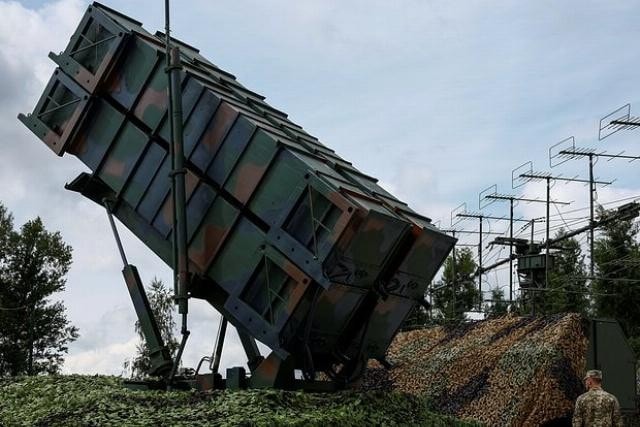
Earlier this year, the U.S. military officially confirmed that Russian tactical innovations, including upgrades that allow attack missiles to change trajectory and maneuver instead of flying along traditional ballistic paths, are creating real problems for the Patriot system supplied to the Ukrainian Armed Forces. The large scale of the attacks, combined with the missiles' maneuverability, has forced corresponding technical changes to the Patriot system.
CAML launcher and new long-range interceptor missiles
To overcome the aforementioned limitations, representatives from the manufacturer Patriot stated that they are developing a new type of launcher. This system, called CAML (Common Autonomous Multi-Domain Launcher), is described as being "more specialized" than the current launcher.
Although specific technical details have not yet been released, information suggests that the tilt angle of the new launch platform will be reduced compared to the current 38-degree design. This implies greater flexibility in launch direction, allowing interceptor missiles to approach targets at more difficult angles, including situations requiring pursuit after the target has already flown past.
Along with CAML, a program to develop a long-range, high-altitude air defense missile is also underway. According to the manufacturer, digital simulations show that with the new interceptor missile, Patriot will be able to "operate in a pursuit mode" and "have sufficient kinetic energy" to intercept targets behind or in pursuit flight.
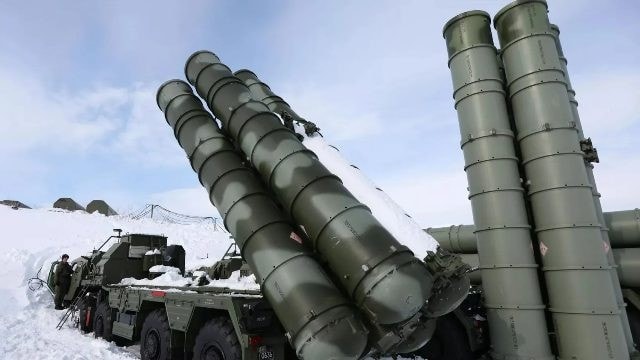
Tactical shift: from a 90-degree arc to an all-directional trend.
In its current configuration, the Patriot's reliance on an inclined launch platform and a 90-degree radar field of view forces operators to position the system so that its primary orientation is always directed toward the main threat. This creates air defense gaps in other directions and reduces the ability to respond to highly maneuverable or unexpectedly changing-direction targets.
With its CAML launcher and long-range interceptor missiles, possessing sufficient kinetic energy to pursue targets, the Patriot is being reoriented from a "front-line only" model to a more flexible combat model, capable of engaging targets that have already flown over the battlefield. This shortens the required launcher maneuvers and reduces reaction times in high-target density combat environments.
According to published information, the upgraded Patriot is expected to have the capability to engage targets in all directions, similar to modern long-range air defense systems such as the S-400.
Comparing the Patriot launch platform architecture with the S-400 and HQ-9.
According to American media reports, many long-range air defense systems in use around the world, including Russia's S-400 and China's HQ-9, utilize vertical missile launch systems. This design allows interceptor missiles to be launched almost vertically, then maneuver to intercept targets from multiple directions, both head-on and from behind.
Meanwhile, the Patriot uses a unique inclined launch platform, incapable of vertical launch under any circumstances, although technically it can achieve the closest possible accuracy. This difference in launch platform design philosophy leads to significant differences in airspace coverage and interception directional flexibility.
| System | Launch pad type | Interception direction | Notable features (according to source) |
|---|---|---|---|
| Patriot (current) | The M903 launcher is tilted 38 degrees. | Mainly forward, within the 90-degree radar arc. | It must be aligned with the target; it's difficult to hit a target behind it without moving the launcher. |
| Patriot (after planned upgrade) | CAML launch platform, reduced incline | Catch-up direction, omnidirectional asymptote | Long-range, high-altitude missiles possess sufficient kinetic energy to pursue targets that have already flown past. |
| S-400 | Vertical launch pad | Confrontation and from behind | Capable of attacking targets in all directions. |
| HQ-9 | Vertical launch pad | Confrontation and from behind | The launch platform architecture is similar to that of the S-400. |
Thus, the focus of the Patriot upgrade program is to narrow the gap in airspace coverage compared to vertical launch systems, through changes to the launch platform structure and the development of interceptor missiles with higher kinetic energy.
Technical significance for US air defense
The U.S. military's public acknowledgment of the Patriot's difficulties against maneuverable, trajectory-changing missiles highlights the urgent need to upgrade this primary long-range air defense system. Combining the CAML launcher with long-range, high-altitude missiles and expanded interception capabilities allows the Patriot to better adapt to the modern threat environment.
According to Topwar, the aforementioned upgrades aim to bring the Patriot closer to the all-directional target engagement capabilities of the S-400, while maintaining the familiar radar-fire control system structure used by US operators and other Patriot users.
In the context of increasingly maneuverable, trajectory-changing attack missiles being used on a large scale, enhancing the ability to intercept targets behind them is a technical adjustment aimed at extending the effective operational lifespan of the Patriot system in the modern battlefield.


