
Pep Guardiola and his gamble on a second-string team against Leverkusen.
Pep made 10 changes in his 100th Champions League match, leading to a defeat at the Etihad, with Leverkusen punishing him and putting Man City at risk of having to play in the play-offs.
The Etihad Stadium fell silent during Pep Guardiola's 100th Champions League match as Manchester City manager. His decision to rotate the squad extensively – 10 changes to the starting lineup, retaining only Nico Gonzalez – backfired. Against third-placed Bayer Leverkusen in the Bundesliga, City lost at home and face the risk of a play-off despite having accumulated 10 points previously.
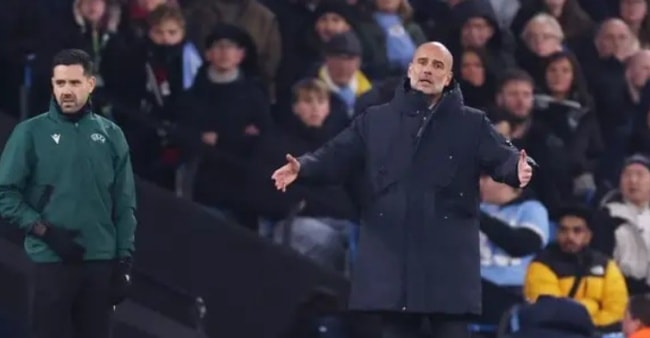
A failed gamble: 10 changes and consequences.
Against an opponent resurgent under Kasper Hjulmand after Erik ten Hag's brief reign, Pep dropped several key players from the starting lineup, including Gianluigi Donnarumma and Erling Haaland. With the advantage of a 23-match unbeaten run in the Champions League group stage at the Etihad, Man City opted for extensive rotation. But Leverkusen became the next team, after Lyon in 2018, to break through this "fortress".
The disjointed nature of the "second-string" team left Man City lacking control and cohesion on both flanks. Leverkusen exploited this weakness, leaving space behind the full-backs and in the gaps between the center-backs and wing-backs to create breakthroughs and put James Trafford's goal under pressure.
Leverkusen punishes: Grimaldo on the left wing, Schick's destination.
Leverkusen took full advantage of their opponent's laxness. Alejandro Grimaldo – one of manager Xabi Alonso's standout signings – opened the scoring with a powerful shot, beating James Trafford. It was his eighth goal of the season, demonstrating the attacking threat from the left wing that Man City couldn't contain.
While Man City were still struggling to stabilize their structure, Ibrahim Maza delivered an early cross into the gap between the center-back and full-back. Patrick Schick moved ahead of Nathan Ake and executed a delicate header, his eighth goal. Defensive discipline and effective finishing allowed Leverkusen to control the game despite facing personnel difficulties.
Late adjustment and irreversible inertia
A lackluster first half forced Pep to activate an emergency plan right after the break: Phil Foden, Jeremy Doku, and Nico O'Reilly came on to replace Rico Lewis, Oscar Bobb, and Rayan Ait-Nouri. The attacking structure became more rhythmic, but the team's cohesion was still lacking.
About 20 minutes later, Erling Haaland and Rayan Cherki came on to increase the pressure in the penalty area. Haaland's presence immediately made a difference in quick attacks and second balls; the striker nearly scored if not for a superb save from goalkeeper Mark Flekken. However, adjustments came when Man City were already behind, and the momentum of the game was no longer in the hands of the home team.
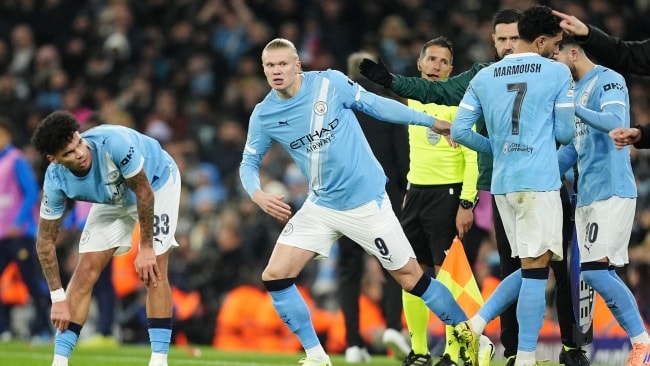
Tactics and messages are being reflected.
If Pep's goal was to prove Man City doesn't depend on a single individual, the performance of the substitutes showed the opposite. The lines lacked solidity to escape pressing, the left flank was vulnerable, and the space between the center-backs and full-backs was constantly exposed. None of them were given the opportunity to seize a chance and secure a starting spot.
The losing streak has extended to two games. What seemed like a safe group stage scenario has become much more challenging, especially with the next match being an away game against Real Madrid. Domestically, the next opponent is only Leeds United, but the message from Etihad is clear: Pep's Plan B, at least for now, doesn't offer any guarantee.

Impact: From Etihad to the play-off problem
Man City, with 10 points before the match, should have been able to finish the group stage peacefully. Instead, defeat at the Etihad opens the door to the possibility of a play-off. This is a clear reminder to Pep Guardiola: rotation is necessary in a packed schedule, but the intensity and extent of changes – 10 positions at once – must be balanced with the need to maintain the core tactical structure.
Leverkusen didn't need many chances to leave the Etihad with a victory. They were well-organized, had finishing strikers, and possessed sufficient defensive discipline to maintain their lead. Man City, on the other hand, weren't used to nights like this, and Pep was even more accustomed to controlling every variable. This time, he took a risk – and paid the price.


