
Phan Boi Chau - a prominent patriotic Confucian scholar of the early 20th century.
(Baonghean.vn) - At the beginning of the 20th century, the French colonialists established their rule over the entire country and organized large-scale exploitation of the colony. Faced with this situation, a number of patriotic Confucian scholars rose up to fight against the French colonialists and the puppet Nguyen dynasty. Prominent among them was Phan Boi Chau, a revolutionary and a great educator of the entire nation.
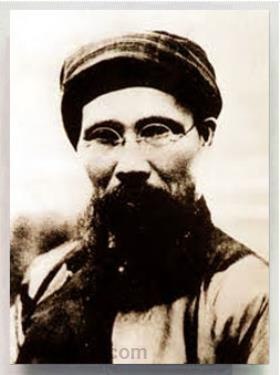 |
| Phan Bội Châu (1867 - 1940) |
Mr. Phan Bội Châu was born on December 26, 1867, in Dan Nhiem village, Nam Hoa commune, Nam Dan district, Nghe An province.From a young age, he already possessed a patriotic spirit. At the age of 17, he wrote the "Proclamation to Pacify the West and Conquer the North," which he posted on the banyan tree at the entrance of the village to show his support for the Northern uprising against the French.
At the age of 19 (1885), he and his friend Tran Van Luong formed the "Can Vuong Scholars" group (more than 60 people) to fight against the French, but they were terrorized by the enemy and had to disband.
Later, Phan Boi Chau went to Hue to teach. Because of his talent, the officials asked King Thanh Thai to pardon him. Thanks to this, in the very next provincial examination, in the year Canh Ty (1900), he passed with the highest score (Giải nguyên) in the Nghe An examination.
Within five years of passing the imperial examination, Phan Bội Châu traveled throughout Vietnam, befriending patriots such as Phan Chu Trinh, Huỳnh Thúc Kháng, Trần Quý Cáp, Nguyễn Thượng Hiền, Nguyễn Hàm (also known as Tiểu La Nguyễn Thành), Đặng Nguyên Cẩn, Ngô Đức Kế, Đặng Thái Thân, Hồ Sĩ Kiện, Lê Huân, Nguyễn Quyền, Võ Hoành, Lê Đại, and others.
In 1904, he, along with Nguyen Ham and about 20 other comrades, founded the Duy Tan Society in Quang Nam to fight against the French, choosing Ky Ngoai Hau Cuong De - a descendant of the Nguyen dynasty - as its leader.
In 1905, he, along with Dang Tu Kinh and Tang Bat Ho, traveled to China and then to Japan to seek Japanese assistance in helping the Duy Tan Society to expel the French.
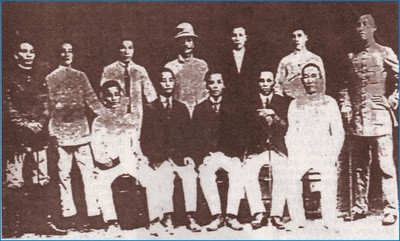 |
| Some Vietnamese students participating in the Đông Du movement (1905-1909). |
In June 1905, Phan Bội Châu and Đặng Tử Kính brought back to Vietnam a number of books on the history of Vietnam's loss of sovereignty. In August 1905 in Hà Tĩnh, he and his core comrades in the Duy Tân Society discussed and formulated a plan of action: Quickly send Kỳ Ngoại hầu Cường Để abroad; Establish agricultural, trade, and educational associations to gather the masses and generate funds for the associations; Select a number of intelligent, studious, and resilient young men to study abroad.
In October 1905, Phan Bội Châu returned to Japan with three young men, and later another 45 joined them. In 1906, Cường Để went to Japan and was enrolled in the Chấn Võ school. From then until 1908, the number of students studying in Japan reached approximately 200, living together in a well-organized group called the Cống Hiến Hội (Contribution Society)...
In March 1908, the "anti-tax movement" (i.e., the movement against taxes in Central Vietnam) erupted vigorously in Quang Nam and quickly spread to other provinces. The movement was suppressed by French colonial forces, and many members of the Duy Tan movement and the Duy Tan Society were arrested.
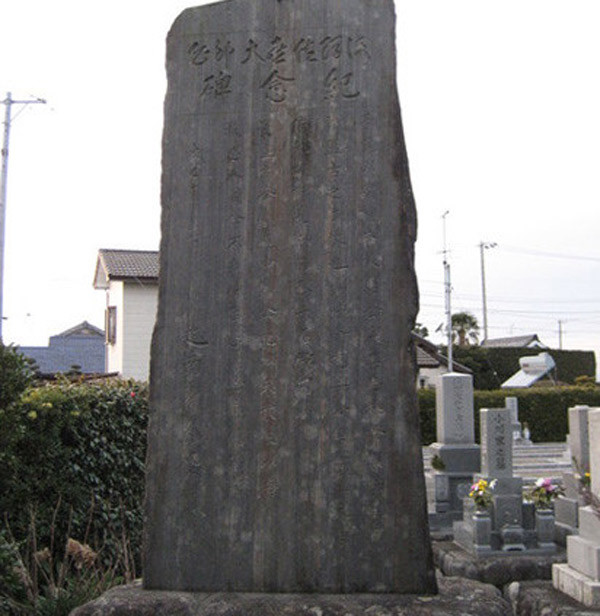 |
| This memorial was erected by Phan Bội Châu in Japan to commemorate the contributions of his great friend Asaba Sakitaro. |
Before this loss could be overcome, two representatives of the association, Hoang Quang Thanh and Dang Binh Thanh, were captured by the French while returning from Japan to Southern Vietnam to receive donations for the Dong Du movement. Following this, France and Japan signed a treaty (September 1908), according to which the Japanese government ordered the expulsion of Vietnamese students from Japan. In March 1909, Cuong De and Phan Boi Chau were also expelled.
In late 1910, Phan Bội Châu moved a large portion of his followers (including about 50 young people) from Guangdong to establish a base in Ban Tham (Siam). There, they cultivated the land together, studied, and practiced martial arts in preparation for a future plan to restore the nation.
In early May of the year Nhâm Tý (June 1912), at the "Great Conference" held at the ancestral temple of Lưu Vĩnh Phúc in Guangdong (China), delegates from all three regions decided to dissolve the Duy Tân Society and establish the Việt Nam Quang Phục Society, thus changing its principles from monarchism to democracy in order to expel the French, restore Vietnam, and establish a Vietnamese Republic.
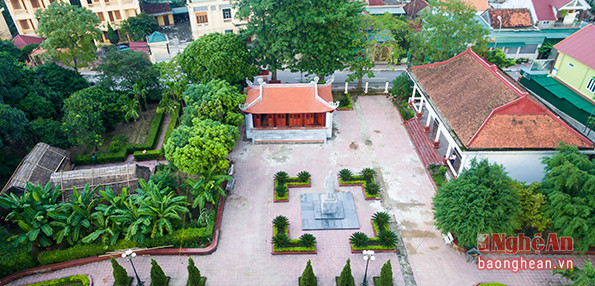 |
| The Phan Boi Chau Memorial House in Nam Dan town will be inaugurated on October 29th. (Photo: Archival image) |
Despite changing its ideology, Phan Bội Châu still maintained Kỳ Ngoại hầu Cường Để as president of the provisional government of the Vietnam Restoration Society, in order to gain the support of the people in the country.
Subsequently, the Vietnam Restoration Society sent several members back to Vietnam to eliminate some French officials and their close associates, aiming to "awaken the people" and "call upon the national spirit." Although the bomb-throwing riots were sporadic, they stirred up public opinion both domestically and internationally, prompting the French authorities to intensify their repression, resulting in many arrests and deaths. Accused of masterminding the plot, Phan Boi Chau and Cuong De were sentenced to death in absentia by the French colonial authorities and the Southern Dynasty.
In 1913, the French colonial authorities sent representatives to Guangdong to "negotiate" with Governor-General Long Te Quang, requesting the arrest of Phan Boi Chau and other key figures of the association. On December 24, 1913, Phan Boi Chau was arrested. However, thanks to the efforts of Nguyen Thuong Hien, who was then in Beijing, Long Te Quang was unable to hand him over to the French, and instead imprisoned him in a Guangdong prison. He was not released until February 1917.
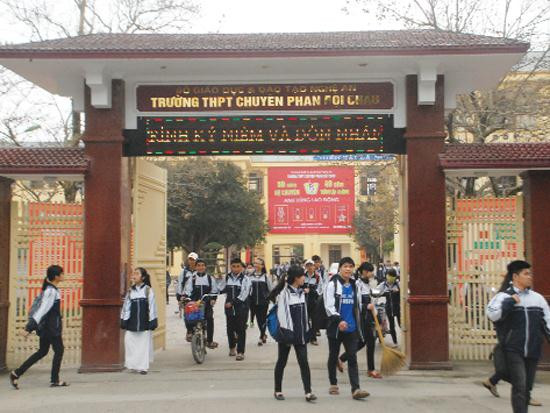 |
| Phan Boi Chau High School, Nghe An. |
After his release from prison, Phan Bội Châu resumed his revolutionary activities. In 1922, following the model of Sun Yat-sen's Kuomintang, he planned to reorganize the Vietnam Restoration Society into the Vietnam National Party. With the advice of Nguyễn Ái Quốc (who was then a member of the Eastern Bureau, in charge of the Southern Bureau of the Communist International), Phan Bội Châu intended to change the party's direction towards socialism, but before he could carry out the reorganization, he was abducted on June 30, 1925, by the French colonial authorities in Shanghai and brought back to Vietnam to be sentenced to life imprisonment.
Following the nationwide movement demanding the release of Phan Bội Châu, and thanks to the intervention of Governor-General Varenne, he was allowed to return to his residence in Bến Ngự (Hue). During the last 15 years of his life, he (then known as "The Old Man of Bến Ngự") maintained his noble character, constantly promoting patriotism through his writings and poetry, thus earning the deep affection of the people. Phan Bội Châu died on October 29, 1940, in Hue. His name has now been given to a specialized high school in Nghe An province, a major street in Hanoi, and many streets and schools in provinces and cities throughout the country.
Peace
(Synthetic)
| RELATED NEWS |
|---|


