
Analysis of the Trump-class battleship project and its similarities to the Orlan-class.
The Trump-class battleship project, with a displacement of 30,000 tons, is expected to revitalize the US fleet, but faces numerous obstacles related to energy technology and budget.
President Trump has just announced plans to create a new naval force called the "Golden Fleet," centered around massive warships designated as Trump-class battleships. This is a noteworthy move aimed at reviving the golden age of large armored vessels, which have been overshadowed since World War II by the rise of aircraft carriers.
The return of the battleship concept.
Battleships were once symbols of naval power, with their thick armor and heavy artillery. However, their limited defensive capabilities against bomber and torpedo attacks led to their eventual decommissioning. The last time US battleships saw combat was in Operation Desert Storm before their official retirement. The proposal to revive this class of ships is generating mixed opinions among military analysts.
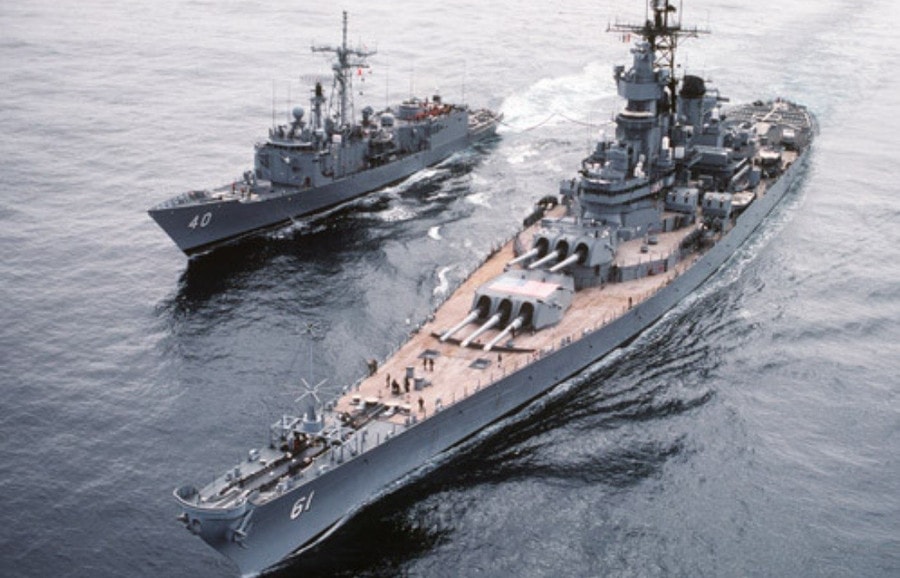
The specifications are comparable to those of the Russian Orlan cruiser.
Based on published documents, the Trump-class battleships have very impressive dimensions, comparable to the Project 1144 Orlan (NATO designation Kirov-class) heavy nuclear missile cruisers of Russia. Below is a table comparing basic specifications:
| Parameter | Trump-class battleship (Proposed) | Orlan-class cruiser (Russia) |
|---|---|---|
| Displacement | Over 30,000 tons | Approximately 28,000 tons |
| Length | Approximately 260 meters | 252 meters |
| Maximum speed | Over 30 knots/hour | 32 knots |
| Crew | 650 - 850 people | Over 700 people |
This size makes the Trump-class one of the world's largest surface vessel platforms, providing ample space for integrating a diverse range of modern weapon systems.
Weapon systems: From reality to fiction
In terms of firepower, the Trump-class battleship is designed to be a "multi-purpose naval warrior" with three main weapon classes:
Strategic weapons and rapid strike weapons
- SLCM-N missile:Ground-launched cruise missiles carrying nuclear warheads give the ship strategic deterrence capabilities.
- Conventional Prompt Strike (CPS) missile:The conventional rapid strike system has 12 launch cells. This is a ballistic missile with a range of 3,000 km, reaching speeds of Mach 5-6. However, it should be noted that many previous CPS tests have not been as successful as expected.
Multipurpose vertical launch system
The ship is expected to be equipped with 128 Mk 41 vertical launch tubes. This is a standard system of the US Navy, capable of flexibly deploying Tomahawk cruise missiles, Standard anti-aircraft missiles, and ASRO anti-submarine missiles. The integration of the Mk 41 is considered practical and highly effective in combat.
Directed energy weapons and electromagnetic cannons
The most controversial aspect is the plan to equip the ships with a 32-megajoule electromagnetic railgun and a 300-600 kilowatt laser system. While these technologies have the potential to destroy anti-ship missiles by heating their warheads, they are not yet ready for mass production. Previously, the electromagnetic railgun program for Zumwalt-class destroyers was canceled due to technological and energy feasibility issues.
Energy and budgetary barriers
Operating laser and electromagnetic cannon systems simultaneously requires enormous energy resources. This necessitates the ship being equipped with a nuclear reactor similar to Russia's Orlan-class. While the US has experience in building reactors for submarines and aircraft carriers, integrating them into a new class of surface ships would require specialized manufacturing infrastructure and operational expertise.
From a financial standpoint, the ambition to build 20-25 Trump-class ships is considered excessive given the current defense budget. Lessons from the Zumwalt-class destroyers (from a planned 32 ships down to just 3) and the cancellation of the Constellation-class destroyers highlight the significant challenges in controlling costs for overly complex weapons projects.
Assessing future combat capabilities
In the context of modern warfare shifting strongly towards unmanned aerial vehicles (UAVs) and semi-submersible vehicles, focusing resources on massive ships like the Trump-class carries significant risks. A large and expensive vessel would become a prime target for adversaries, while its ability to defend against swarms of drones remains questionable. Therefore, the current Trump-class project can be seen as more of a symbolic endeavor than a practical military solution in the short term.


