
Analysis of Russia's Iskander-1000 missile system with a range of 1,000 km.
The Russian armed forces are reportedly beginning tests of the Iskander-1000, a tactical ballistic missile variant with an enhanced range of 1,000 km thanks to improvements in engine, fuel, and warhead configuration, aimed at striking targets deep within the enemy's air defenses without penetrating enemy air defenses.
The Russian armed forces are believed to have begun testing a new version of the Iskander tactical ballistic missile system, unofficially called the Iskander-1000, with an increased range of approximately 1,000 km. Compared to the standard Iskander-M, which was limited to around 500 km to meet the requirements of the now-defunct Intermediate-Range Nuclear Forces (INF) Treaty, the new variant represents a significant upgrade in range and combat capability.
Overview of the Iskander-1000 variant
According to Western sources, the Iskander-1000 is a significantly upgraded version based on the already deployed Iskander-M platform. The most important change is the extended range, with test launches reportedly achieving distances exceeding 800 km, aiming for 1,000 km. This reflects improvements in the overall performance of the system, including the engine and fuel solution.
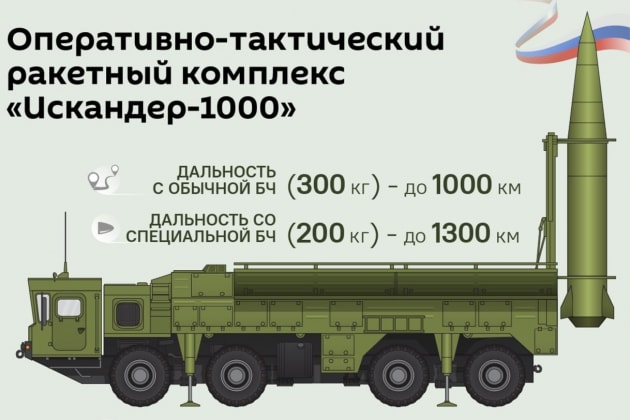
With the INF Treaty no longer in effect, increasing the range of a tactical ballistic missile system like the Iskander-1000 has clear operational implications: expanding the target area that can be attacked from launch sites located deep within territory or in safer areas.
Major technical improvements
Increase the firing range to approximately 1,000 km.
Compared to the approximately 500 km range of the Iskander-M, the Iskander-1000 is believed to have doubled that range. According to Western sources, tests exceeding 800 km suggest the potential to reach a target of 1,000 km under suitable combat conditions. This increase allows for extended coverage across the entire depth of the enemy's combat formation, rather than being limited to the front line and surrounding areas.
More efficient engine and larger fuel tank
The increased range is believed to have been achieved by combining a more efficient engine with a larger fuel tank capacity. According to the description, optimizing engine performance and increasing fuel capacity allows the missile to maintain a longer flight range while retaining the necessary kinetic characteristics during the approach phase to the target.
In addition to its long range, the Iskander-1000 is also emphasized for maintaining high maneuverability and supersonic speed in the final phase of its trajectory. This is particularly important given that modern missile defense systems rely heavily on predictability of trajectory and reaction time.
Flexible warhead configuration
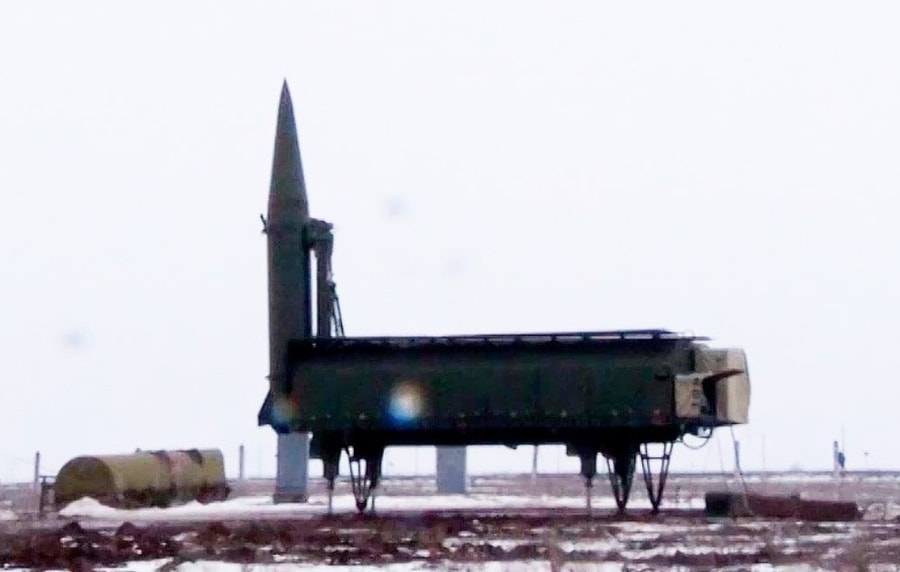
According to available information, the Iskander-1000's warhead can be configured differently depending on the mission. This includes mentions of lighter warhead variants aimed at maximizing range, utilizing the reduced weight to extend the range. This approach allows for a balance between destructive power and attack range, depending on the specific combat objective.
Tactical aspects and operational areas
Independent analysts cited suggest that developing the Iskander-1000 with a longer range allows it to strike targets deep within enemy combat formations without penetrating air defense zones. This means launch units can maintain positions in safer areas, reducing the risk of detection and counter-fire.
From an operational perspective, a tactical ballistic missile system with a range of up to 1,000 km significantly expands the potential target range: rear-line command centers, logistics depots, troop concentrations, makeshift airfields, or strategic transportation hubs. While the specific warhead and trajectory selection process is not detailed, the increased range remains a central factor shaping how the system is used.
Pilot testing phase and deployment roadmap
According to published information, in the initial phase, Iskander-1000 launches will be conducted at a test range to better determine the design characteristics. This is a common step to verify range, trajectory stability, and key operational parameters under controlled conditions.
After completing the basic tests, the system is expected to be produced in small quantities for further refinement. This small-batch production allows for the collection of additional operational data, thereby perfecting the final configuration before considering large-scale production.
Official representatives of the Russian Ministry of Defense have not yet commented on the new improvements to the missile. This means that much of the information about the Iskander-1000 currently relies on assessments from Western sources and independent analysts, and needs to be further cross-referenced with experimental data in the future.
Practical application in combat
According to several reports, as the Iskander-1000 enters advanced testing, the system could be used directly on the battlefield, potentially for deep penetration into Ukrainian territory. These reports reflect a potential but unconfirmed use of the system.
If this scenario unfolds, field launches will provide further data on the combat effectiveness, reliability, and responsiveness of the Iskander-1000 to established operational and tactical objectives. However, at this point, it is necessary to clearly distinguish between confirmed information (testing, increased range targets, engine and fuel improvements) and speculation about future scale and deployment.
Overall, the Iskander-1000 – if confirmed with the parameters mentioned – would be a significant development in Russia's tactical ballistic missile family, centered around three pillars: extended range, maneuverability, and supersonic terminal speed, along with flexible warhead configuration. The program's further development will depend on the results of field testing and any data released during small-scale production and (if any) combat use.
According to Avia-pro


