
Analyzing Iran's short-range missile arsenal: From the Scud series to the modern Fateh system.
Iran possesses one of the largest missile stockpiles in the Middle East, with a range of short-range, high-precision missiles serving as a strategic deterrent.
For decades, Iran has quietly built one of the largest and most diverse missile arsenals in the Middle East. In Tehran's firepower structure, short-range missiles serve as the "first punch," enabling its military to respond quickly to attacks and provide significant deterrence in modern warfare.
The history of missile development and the journey of localization.
Iran's missile program has been strongly pursued since the 1980s, stemming from the context of the Iran-Iraq war. Attacks by Iraqi Al-Husayn missiles on major cities made Tehran realize the importance of long-range guided weapons in creating a counter-attack and deterrence capability.
Initially, Iran focused on importing and producing short-range missiles based on the Soviet Scud design. In 1985, through diplomatic trips to Libya and North Korea, Iran gained access to its first batch of Scud B missiles along with crucial components and manufacturing technology.

By 1991, Iran had successfully tested Scud-C missiles received from North Korea. Simultaneously, the Iranian Ministry of Defense declared it had achieved the technological capability to domestically produce missiles similar to the Scud-B. Reports from 1994 indicated that Tehran possessed or manufactured approximately 300 Scud-B and 100 Scud-C missiles, laying the groundwork for the later development of domestic missile systems.
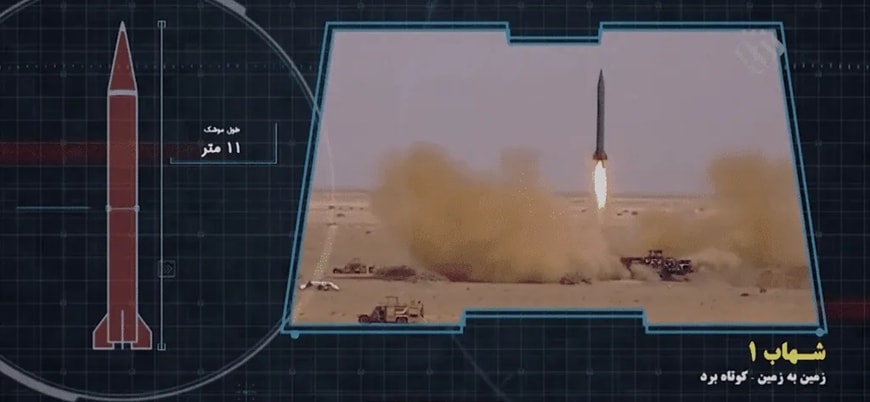
The rise of the Fateh solid-fuel rocket family.
Since the late 1990s, Iran has shifted its focus to developing solid-fuel missile systems to replace the older Scud series, which used liquid fuel and were more complex to deploy. The Fateh missile series has become the backbone of this force, offering high combat readiness and significantly improved accuracy.
The Fateh-110 system, introduced in 2002, represents a significant advancement. It is a single-stage, 8.86-meter-long surface-to-surface missile capable of carrying a 500kg warhead with a range of 300km. Through upgraded variants, Iran has integrated a modern guidance system, allowing the Fateh-110 to achieve a much lower circular error probability than previous generations.
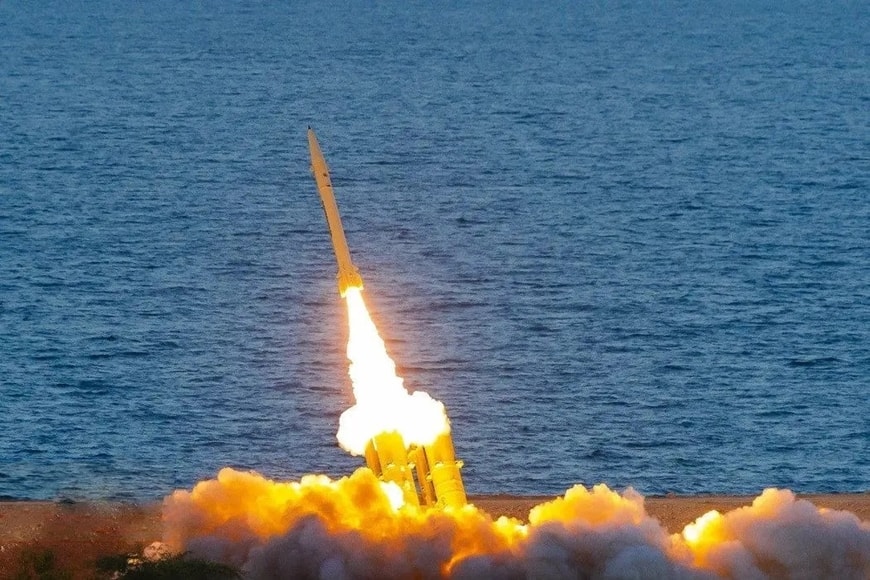
Most notably, there are extended variations such as:
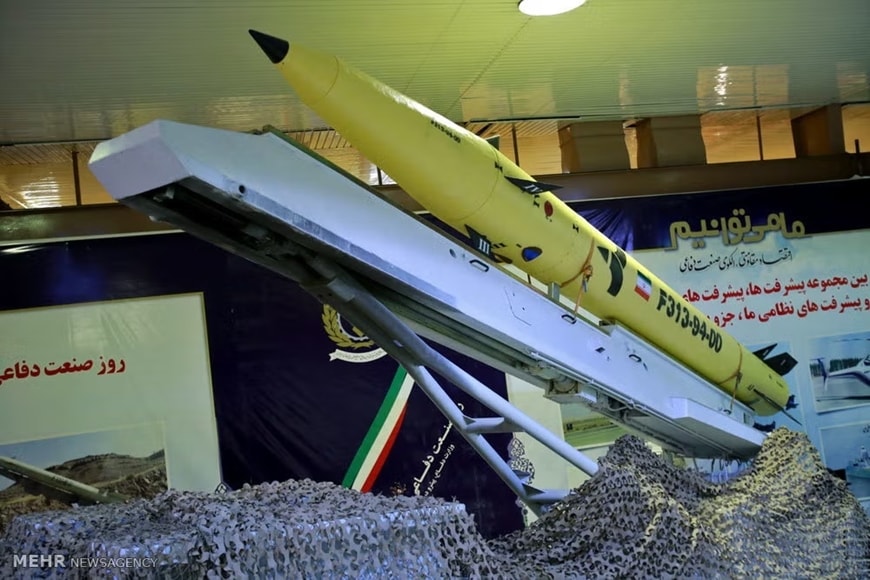
- Fateh-313:The range has been increased to 500km thanks to a lightweight airframe and improved solid fuel.
- Zolfaghar:Developed from the Fateh-313, it has a range of 700km and carries a warhead weighing up to 600kg.
- Dezful:The most powerful variant of the Zolfaghar series boasts a claimed range of up to 1,000km.
- Road-500:Using non-metallic composite materials and a Zoheir engine reduces weight while increasing range to 500km.
Liquid fuel system and Qiam-1 technology improvements
Despite prioritizing solid fuel, Iran maintains and upgrades liquid-fuel missiles to take advantage of existing infrastructure. The Shahab-1 and Shahab-2 (improved versions of the Scud-B and Scud-C) remain in service in the hundreds. However, the most representative example of this upgrade is the Qiam-1 missile.
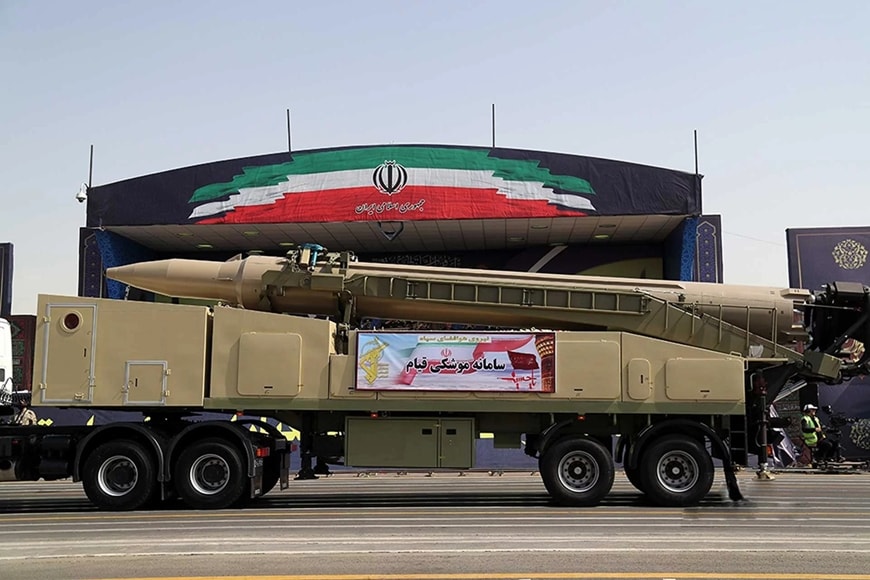
The Qiam-1 is designed without external stabilizing fins, instead using a thrust vector control system. This design reduces aerodynamic drag and increases radar stealth capabilities. The missile carries a 650km warhead, has a range of 800km, and features a detachable re-entry warhead, allowing it to descend upon its target at extremely high speeds ranging from 6,175km/h to 8,645km/h.
Comparison table of technical specifications for typical short-range missiles
| System name | Range (km) | Warhead weight (kg) | Fuel type |
|---|---|---|---|
| Fateh-110 | 300 | 500 | Solid fuels |
| Zolfaghar | 700 | 450 - 600 | Solid fuels |
| Qianm-1 | 800 | 650 | Liquid fuels |
| Fateh-360 | 100 - 120 | 150 | Solid fuels |
| Road-500 | 500 | Undetermined | Solid fuels |
The combination of traditional missile types and modern technologies such as composite materials and satellite guidance demonstrates Iran's diversified weapons development strategy. This not only helps Tehran maintain a large number of missiles but also significantly enhances its precision warfare capabilities in modern conflict scenarios.


