
Technical analysis of the Iskander 1000 missile with a range of 1,000 km.
Leaked documents suggest that Russia has begun mass production of the Iskander 1000 (9M723-2) ballistic missile with a range of 1,000 km, with upgrades to its engine, solid fuel, and guidance system, although Moscow has not confirmed this.
Documents cited by UNITED24 and information from the Bulgarinan Military website indicate that Russia has developed and mass-produced a new variant of the Iskander-M ballistic missile system, often referred to by some experts as the Iskander-1000, with a claimed range of up to 1,000 km. Russia has not yet commented on this information, so its accuracy remains to be seen.
Overview of the Iskander 1000 and its sources.
According to UNITED24, documents show that the Iskander 1000 missile, designated 9M723-2, was developed based on its predecessor, the 9M723. The new missile is believed to have completed testing and entered mass production.
According to leaked documents, Russia purchased 18 9M723-2 ballistic missiles in November 2025 at a cost of approximately $2.5 million each. These details have not been publicly confirmed by Russian authorities.
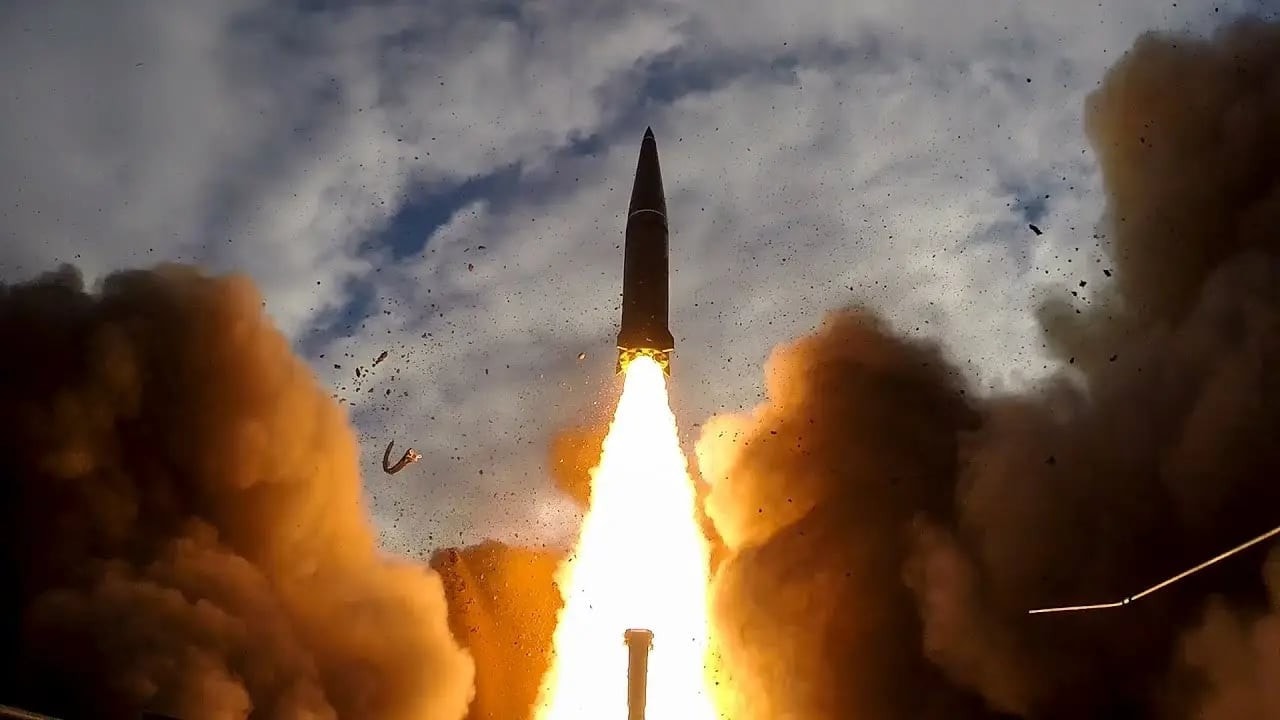
In February, the military news website Bulgarinan Military reported that Russia was nearing mass production of a new version of the Iskander-M missile system, highlighted by a significantly extended range compared to existing variants. This version does not yet have an official name, but some experts use the name Iskander-1000 based on its reported range.
Range and engine upgrades
According to Bulgarian Military, the most notable feature of the Iskander-1000 is its range of approximately 1,000 km. This is a significant improvement over the previous Iskander-M version, which had a range of about 500 km. Thus, the theoretical operational range of the system, measured in radius, has been significantly expanded compared to the older generation.
The increased range is attributed to two main factors: an upgraded engine and an increase of approximately 10-15% in solid fuel. This combination allows the missile to maintain thrust for longer periods, thereby extending its flight range while retaining an overall structure similar to the 9M723.
Navigation and orbital control system
Inertial navigation and correction algorithms
The document states that the Iskander-1000 retains the general structure of the 9M723 but is equipped with a new guidance system. At its core is an automatic inertial guidance system with integrated sensors that track the missile's position and flight direction throughout its trajectory.
Inertial navigation technology is believed to have been improved with new correction algorithms aimed at reducing trajectory deviations. These algorithms adjust flight direction based on accumulated errors, improving accuracy compared to older configurations, especially during mid-flight.
Combining satellite positioning
In addition to inertial guidance, the missile is equipped with satellite navigation capabilities, including GPS and GLONASS systems. Combining satellite data with the inertial system allows for continuous correction of position and flight direction, helping to maintain an optimal trajectory over long distances, with the range reportedly increased to 1,000 km.
Terminal radar guidance and TERCOM
According to the information provided, the Iskander-1000 features radar guidance during the final phase of its flight. This mechanism enables the missile to track its target even when the enemy deploys electronic warfare, thereby increasing the accuracy of its attack on moving targets.
The missile is also believed to incorporate TERCOM technology, which uses geographic maps and terrain data to adjust its flight path in areas with complex terrain. The addition of TERCOM, if integrated as described, helps the missile optimize its terrain-following flight path, enhancing its survivability against detection and interception systems.
Measures to penetrate defenses
According to sources, the Iskander-1000 can use active and passive decoys to confuse or mislead enemy missile defense systems. These decoys serve to create false targets or jam the sensors of air defense systems, making classification and interception more difficult.
Combining an optimized flight path, multi-layered guidance (inertial, satellite, radar, TERCOM), and decoys, the Iskander-1000 is described as aiming to reduce the probability of detection and interception throughout its entire flight.
Launch platform and logistics
Another noteworthy point is that the Iskander-1000 is believed to be launchable from the same type of launch vehicle as previous Iskander variants. This offers several logistical advantages: no need to develop a completely new launch system, and reduced integration time into existing missile units.
The shared launch platform also contributes to reduced deployment costs, while maintaining the operational and maintenance procedures already familiar to the Iskander-M operators. This is described as happening in parallel with efforts to reduce the likelihood of detection and interception by the enemy.
Tactical impact from upgrades
From a tactical standpoint, if the stated parameters are accurate, increasing the range from approximately 500 km to approximately 1,000 km significantly expands the potential operational space of the Iskander system. This allows missile units to operate at greater distances from their targets, while still exploiting the advantages of short flight times and unpredictable trajectories of short-range ballistic missiles.
A multi-layered guidance system capable of engaging moving targets, combined with terminal radar guidance, if implemented as described, would increase its effectiveness against targets requiring rapid neutralization. Furthermore, decoys and optimized flight paths to overcome missile defenses also enhance the survivability of the projectile in a high-density air defense environment.
Level of accuracy and considerations when evaluating
The information about the Iskander-1000 in this article is primarily based on leaked documents cited by UNITED24 and articles by Bulgarinan Military. These sources indicate that the 9M723-2 missile has completed testing, entered mass production, has a claimed range of 1,000 km, and that Russia ordered 18 missiles in November 2025 at a price of approximately $2.5 million each.
However, as of the time this information was released, Russia had not issued an official comment. Therefore, the technical specifications and tactical assessments mentioned above should be understood as being based on descriptions from open sources, and not as confirmed statements by the manufacturer or Russian military authorities. Further monitoring of publicly available information is necessary to gain a more complete understanding of the Iskander-1000 system.


