
Technical analysis of the Oreshnik missile: Domestic components and the defense challenge.
The results of the examination of the Oreshnik medium-range ballistic missile fragments show that all components were manufactured in Russia and Belarus, allowing the system to maintain its combat capability without relying on Western technology.
The Oreshnik medium-range ballistic missile is a new strategic weapon of Russia, designed to optimize deterrence and penetration of modern missile defense systems. Analysis of over 1,000 components from Oreshnik missile fragments recently collected in Ukraine revealed that all parts originated from Russia and Belarus, with no components imported from Western countries.
Component origin and self-sufficiency in production
Unlike the Iskander ballistic missile, which contained over 140 foreign components in previously recovered versions, the Oreshnik demonstrates complete self-sufficiency in materials and semiconductors. The investigation determined that approximately 40 Russian and 2 Belarusian companies are involved in the supply chain for this missile.

Among the production units, the Integral plant in Minsk and the Transistor semiconductor plant play a key role in supplying the main microchips. More than 50% of the components on the recovered rocket were produced between 2023 and 2024, with some components expected to be shipped in 2025. This indicates that the Oreshnik assembly line is operating continuously based on a stable domestic supply.
Combat characteristics and warhead separation mechanism
In terms of design principles, the Oreshnik is developed based on the technology of intercontinental ballistic missiles (ICBMs) from the Soviet era. By reducing the range compared to standard ICBMs, the missile can increase its payload capacity to carry multiple submunitions.
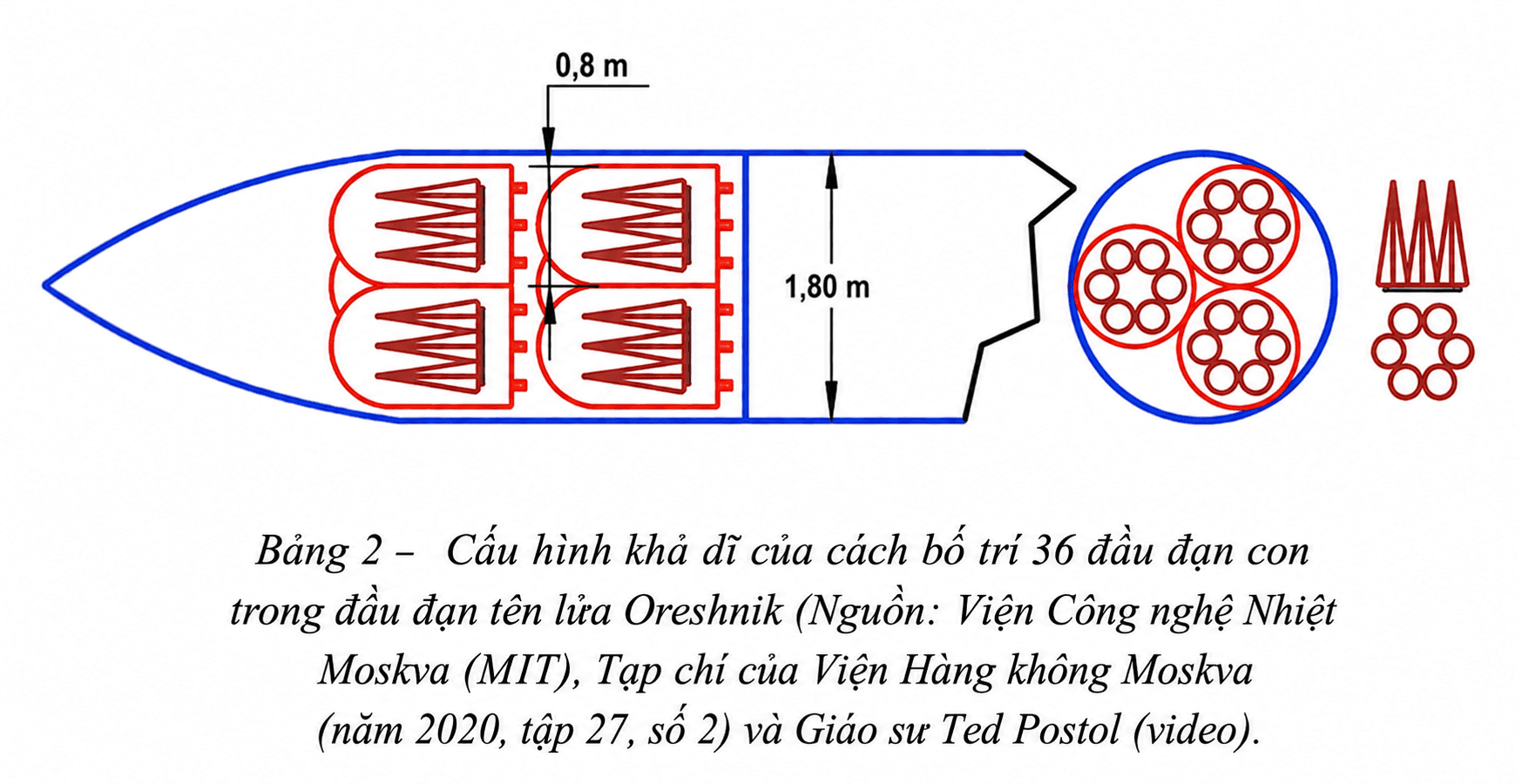
The Oreshnik missile is capable of carrying up to 36 submunitions. In the final phase of flight, the separated warheads reach speeds of approximately Mach 10 (10 times the speed of sound). When tested or used in combat with conventional warheads (not containing explosives or nuclear warheads), the warheads fall onto the target with enormous kinetic energy in the form of colliding metal fragments.
Traditional engineering solutions and precision
Despite achieving high performance in terms of speed and number of warheads, the electronic control unit on the Oreshnik's submunitions still uses traditional technical solutions. Military analysts note the presence of vacuum tubes in the electronics – a technology that dates back to the 1960s.
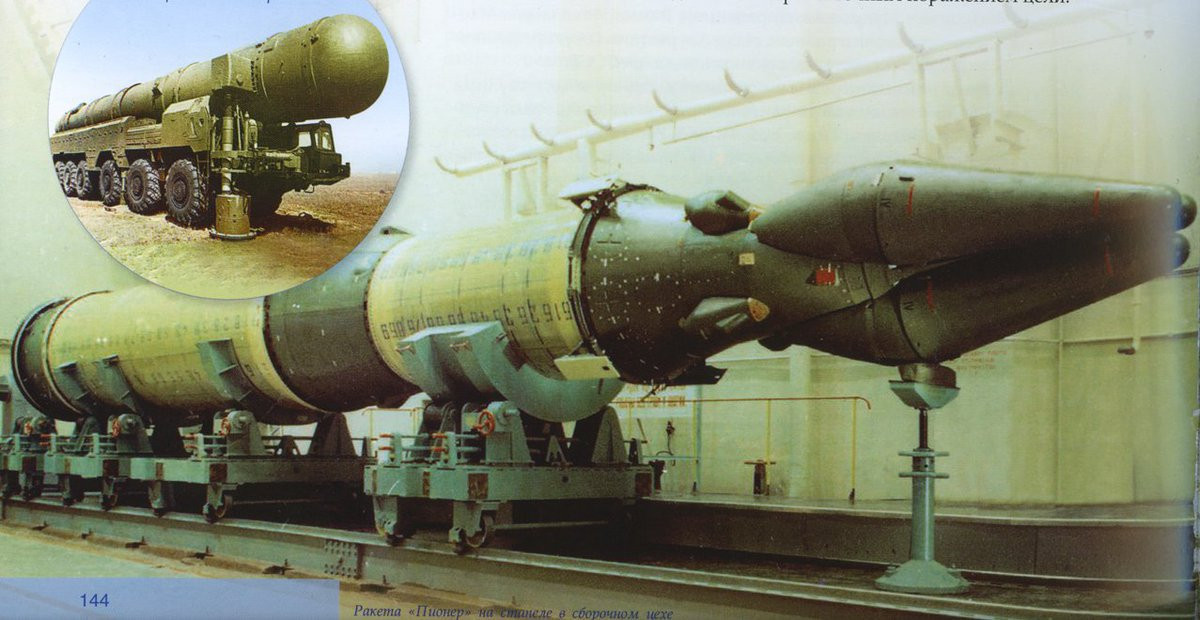
At the heart of the guidance system on the submunitions is the GU-503 mechanical gyroscope, a design dating back to the 1970s. This guidance platform has a lower Circular Error Probability (CEP) accuracy than modern satellite or electro-optical navigation systems. However, this is compensated for by the dense number of submunitions and the primary mission objective of carrying tactical or strategic nuclear warheads.
Challenges for missile defense systems
The combination of high terminal speed and the 36 separating sub-warheads creates an overwhelming challenge for air defense networks. Currently, NATO missile defense systems in Europe have only a few complexes capable of intercepting ballistic missiles outside the atmosphere before the sub-warheads separate.
Once the missile has entered its final phase and released its entire warhead, tracking and intercepting dozens of targets moving at Mach 10 simultaneously exceeds the capabilities of most current ground-based air defense systems.


