
Analyzing the reasons why GLSDB bombs become ineffective against electronic warfare.
Small-diameter ground-launched bombs (GLSDBs) were once expected to be a game-changing weapon in Ukraine, but battlefield realities have shown that their GPS guidance systems are easily neutralized by Russia.
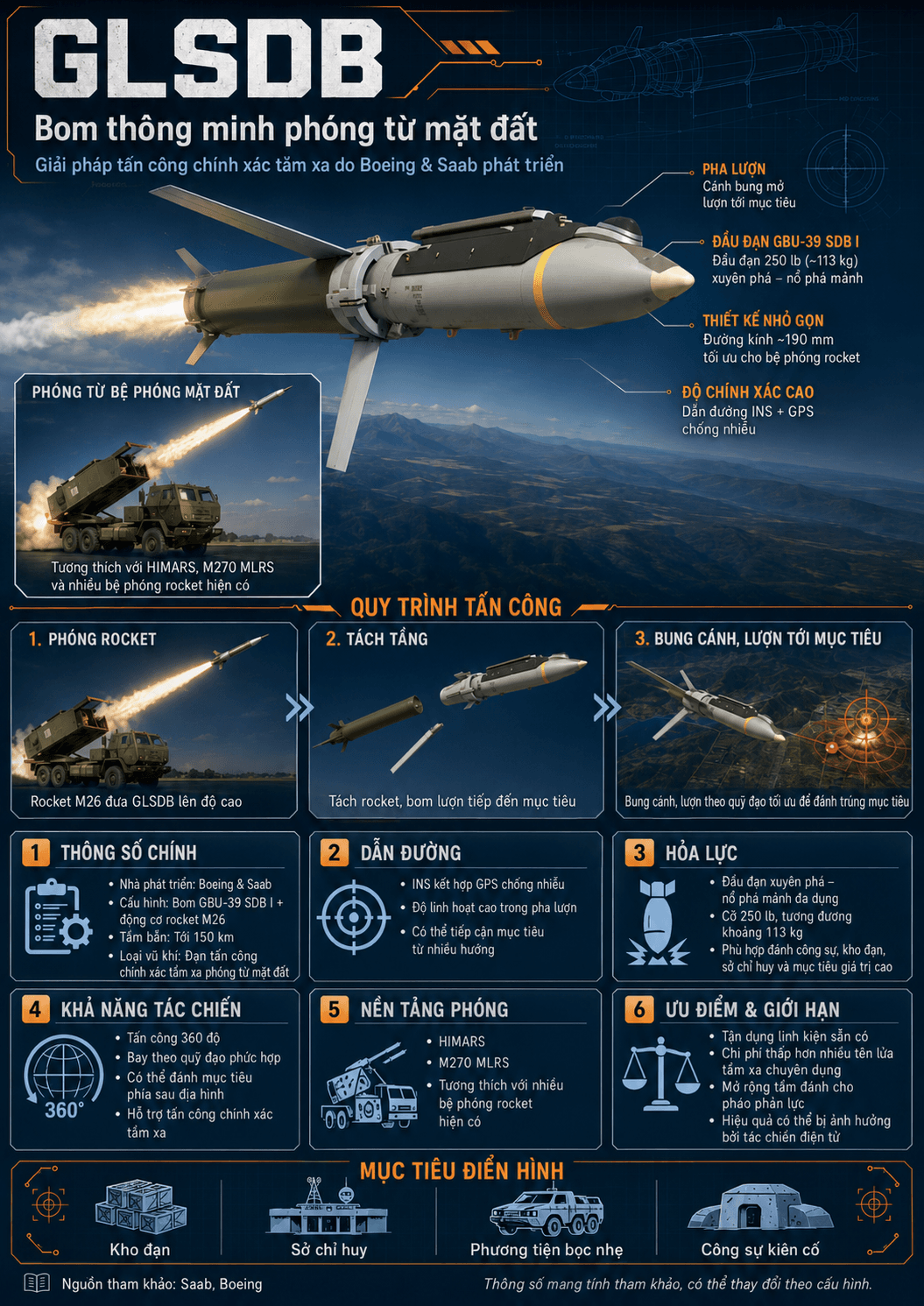
Ground-launched small-diameter bombs (GLSDBs) are a smart weapon solution developed through a collaboration between Boeing (USA) and Saab (Sweden). While initially expected to help Ukraine expand its precision strike capabilities against enemy rear areas, deployments since early 2024 have revealed significant technical limitations against modern electronic countermeasures.
GLSDB's unique hybrid engineering structure
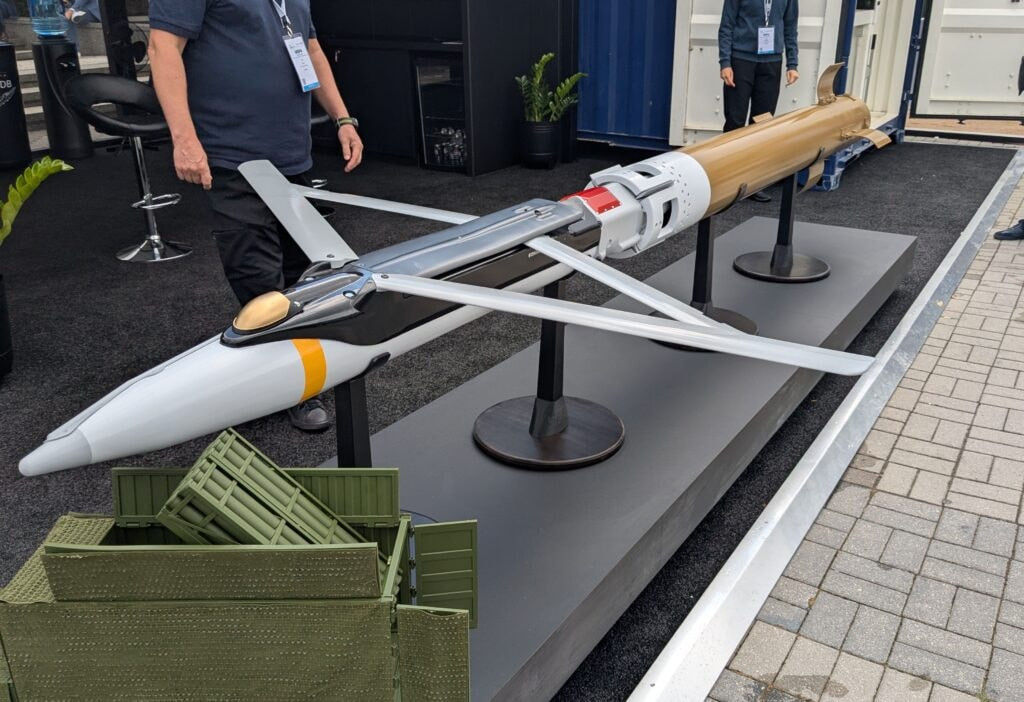
Essentially, the GLSDB is not an entirely new missile design. It's a combination of the GBU-39 small-diameter bomb and the M26 rocket engine. This concept allows for the utilization of readily available components, significantly reducing production costs compared to developing cruise missiles or short-range ballistic missiles.
The system operates on the following mechanism: a rocket engine propels the bomb to the required altitude and velocity, after which the GBU-39 bomb fragment separates, deploys its wings, and glides to the target. With a claimed range of 150 to over 160 km, the GLSDB allows for attacks on ammunition depots, command centers, and logistics lines located deep behind enemy lines.
Challenges from electronic warfare and reliance on GPS
The biggest weakness of the GLSDB has been revealed on the Ukrainian battlefield: its reliance on the Global Positioning System (GPS). According to technical reports, many GLSDB missiles failed to achieve the necessary accuracy due to interference from Russian electronic warfare (EW) systems.
The GLSDB's guidance system combines GPS and inertial navigation system (INS). GPS plays a key role in correcting the trajectory for maximum accuracy. When the GPS signal is obscured or distorted by high-power jamming stations, the bomb is forced to rely entirely on INS – which accumulates errors over time and distance, leading to deviating from the target.
Notably, the GLSDB's flight mechanism makes it more vulnerable than conventional rocket artillery rounds. Due to its slower flight speed in the final stage and complex trajectory to overcome terrain obstacles, the bomb needs to maintain a stable guidance connection for a longer period, creating opportunities for enemy EW systems to perform electronic interception.
Efforts to upgrade anti-interference capabilities in 2025
Following feedback from combat operations, Boeing and Saab have begun upgrading the system. Military sources indicate that the new GLSDB versions are being reinforced with improved internal connectivity and enhanced signal processing algorithms to increase their resistance to modern jamming techniques.
In the latest testing phases, approximately 19 upgraded GLSDB missiles were test-fired to assess the effectiveness of the system reinforcement. The goal is to help the weapon maintain reliability even in dense electromagnetic environments. Upgraded versions are expected to be considered for delivery again in 2025.

Lessons for precision-guided weapons
The story of GLSDB reflects a new reality in modern warfare: the adaptation cycle of technology is becoming increasingly shorter. A weapon, no matter how impressive its specifications on paper, can still be neutralized if the enemy quickly finds an electronic countermeasure.
The fact that Ukraine has not yet secured new contracts for GLSDB reflects the caution of all parties involved in allocating defense budgets to systems that have not yet proven their absolute reliability against an adversary with strong electronic warfare capabilities. Overall, the future development of GLSDB will depend entirely on its ability to demonstrate accuracy in heavily jammed combat environments.


