
Analysis of the capabilities of the new generation TOS-2 Tosochka thermobaric artillery system of the Russian army.
The TOS-2 Tosochka marks a breakthrough for Russian artillery with its mobile wheeled chassis, automatic control system, and extended range of up to 20 km.
The Russian military is focusing on upgrading the combat capabilities of the TOS thermobaric rocket launcher, a weapon designated as a "heavy flamethrower" system. Amidst ongoing military operations in Ukraine, the latest variants, such as the TOS-2 Tosochka, are playing a central role in offensive tactics, demonstrating the ability to destroy targets over a wide area with high accuracy.
The evolution from shock weapons to modern fire control systems.
The most significant step in Russia's thermobaric artillery modernization roadmap is the introduction of the TOS-2 Tosochka. Unlike its predecessors, the TOS-2 has evolved from a direct assault vehicle into a sophisticated fire support system. According to the state-owned defense technology corporation Rostec, the system's performance allows for the complete neutralization of enemy resistance at the target with just one salvo.
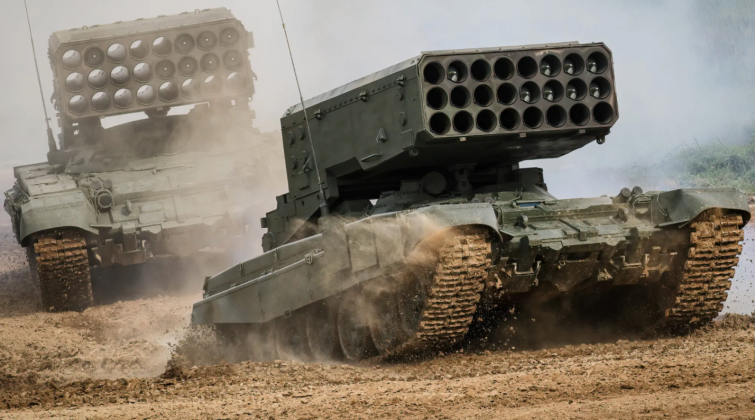
The TOS-2's design has been comprehensively improved to meet the demands of high-tech warfare. Instead of a heavy tracked chassis, the Tosochka uses a wheeled chassis, incorporating an automatic loading system and optimized fire control. These changes not only enhance maneuverability but also elevate the vehicle far beyond the concept of a conventional door-breaking device.
Technical advantage and tactical mobility
The new fire control system on the TOS-2 allows for target engagement with minimal error. The use of the Ural-63706-0120 6x6 all-terrain vehicle chassis enables rapid deployment to unprepared locations. The system is capable of receiving target data, communicating with command center, and quickly withdrawing after firing, giving it a significant survivability advantage over the tracked TOS-1 system.
In terms of combat performance, despite its relatively modest deployment numbers, the TOS-2 is proving its distinct value with low maintenance costs and fuel efficiency. Notably, reports confirm that the system's range has been significantly extended to 20 km by August 2024, allowing for engagements from a safer distance against short-range enemy rocket artillery.
The mechanism of destruction of thermobaric ammunition
The TOS-2's power lies in its thermobaric warhead (also known as a vacuum explosive). Its mechanism involves releasing a cloud of chemical gases into the air before detonation. This process creates an extremely powerful high-pressure shock wave that sucks out all the oxygen in the confined space.
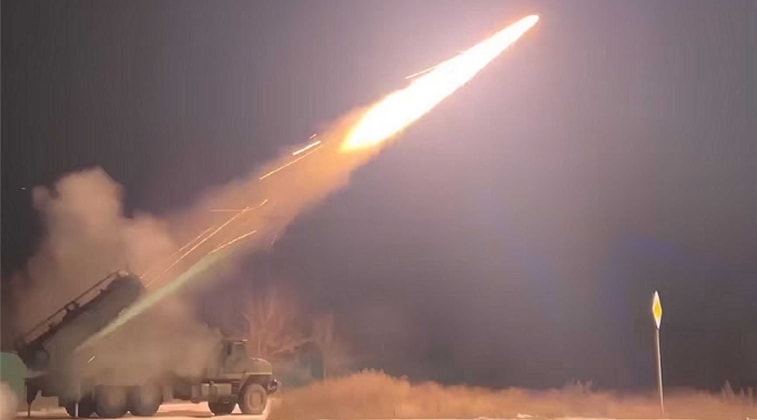
This physical effect inflicts absolute damage on enemy personnel hiding in bunkers, fortified structures, or areas with limited space. Before deployment in Ukraine, Russian thermobaric systems underwent rigorous real-world testing in battlefields such as Syria and Iraq, confirming their effectiveness in destroying fortified positions.
Modernization roadmap and future generation of TOS-3
Alongside the deployment of the TOS-2, Russia continues to modernize the TOS-1 series. New navigation systems have been integrated, improving accuracy to within a few meters. These solutions allow crews to shorten combat time in the field without leaving the vehicle, increasing protection against enemy counter-artillery fire.
The success of the thermobaric artillery systems has spurred the development of a more powerful successor generation called TOS-3. This project was first announced in April 2024, and images of the new variant began appearing in June of the same year. The continuous upgrade of the TOS family demonstrates Russia's strategy of maintaining artillery firepower superiority through specialized, highly destructive weapons.


