
Analyzing the capabilities of the Su-30SM2 fighter jets Iran recently ordered from Russia.
With the integration of Su-35 engines and R-37M long-range missiles, the Su-30SM2 squadron, expected to be delivered in 2027, will fundamentally alter the air balance in the Middle East.
Iran's Ministry of Defense has officially confirmed the order for 12 Su-30SM2 multirole fighter jets from Russia, marking a turning point in Tehran's efforts to modernize its air force. Deliveries of these fighter jets are scheduled to begin in mid-2027, raising questions about their operational capabilities and strategic impact on the Middle East region.
Air command and control capabilities
The Su-30SM2 is not simply a fighter jet but is also designed to function as a mobile command and control center. With its two-seat configuration, the aircraft allows the pilot and weapons officer to coordinate independently, processing massive amounts of tactical data in real time.
Inheriting design ideas from the MiG-31 interceptor fighter, the Su-30SM2 is capable of coordinating combat squadrons from a distance. While the pilot focuses on controlling the aircraft and performing highly maneuverable actions, the second member manages the sensor systems, weapons systems, and maintains seamless communication networks with allied units.
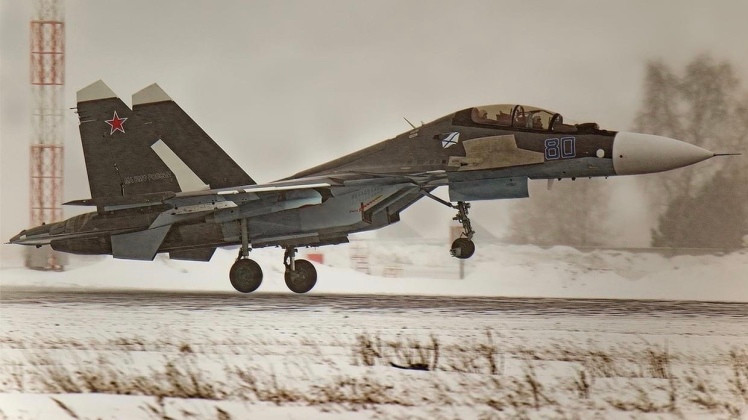
For air forces like Iran's, which rely heavily on older technologies, the arrival of the Su-30SM2 acts as a "power multiplier." A few Su-30SM2s can lead an entire squadron of older aircraft, providing target information and tactical guidance, thereby enhancing the overall combat effectiveness of the entire force.
Power from the AL-41F-1S engine of the Su-35
The most significant upgrade that makes the Su-30SM2 the "soul" variant of the Su-35 is the integration of the AL-41F-1S engine. This engine synchronization brings many superior technical advantages:
- Propulsion and maneuverability:The new engine provides greater thrust, significantly improving acceleration and super-maneuverability in close-range air combat.
- Power supply:The AL-41F-1S's ample power allows for the integration of more powerful passive electronically scanned array (PESA) radar systems and power-hungry electronic warfare complexes.
- Logistics and maintenance:Using the same engines as the Su-35 series optimizes maintenance cycles, reduces operating costs, and simplifies the spare parts supply chain.
The combination of long range, large weapons payload, and the information processing capabilities of its two-person crew makes the Su-30SM2 a formidable opponent to Western 4th-generation+ fighters. The aircraft's radar has a wide scanning range, allowing it to detect and track multiple targets simultaneously at long distances.
Long-range defensive and containment tactics
With the ability to carry heavy air-to-air missiles like the R-37M, the Su-30SM2 becomes a true "air fortress." The R-37M missile, with a range of up to 350 km, is capable of destroying high-value enemy targets such as refueling aircraft, early warning aircraft (AWACS), or strategic bombers.
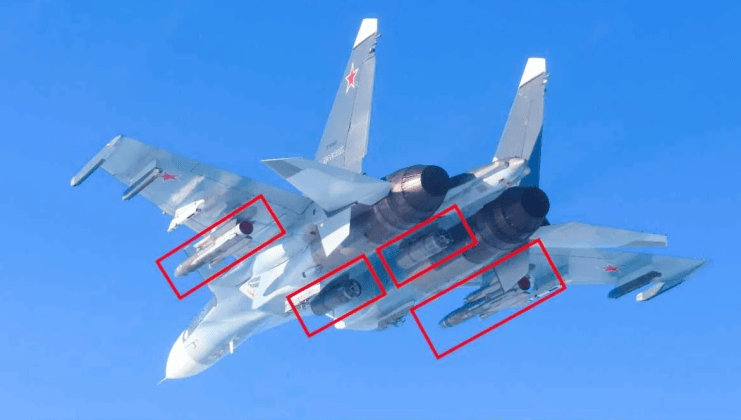
This capability is particularly important in a region with vast airspace like the Middle East. The Su-30SM2's range currently surpasses most aircraft present in the region, including the legendary F-14 Tomcat. Its ability to provide tactical overview and remote target designation will make any airstrike scenario against Iranian territory more complex and risky for potential adversaries.
Comparison of Su-30SM2 and Su-35
Despite sharing many technological components, the Su-30SM2 and Su-35 still have distinct differences in design philosophy:
| Characteristic | Su-30SM2 | Su-35 |
|---|---|---|
| Flight crew | 2 people (Pilot & Weapons Officer) | 1 person (Pilot) |
| Weight | Heavier due to the two-seat configuration. | Lighter, more aerodynamically optimized. |
| Main role | Versatile, Command & Control, Bombardment | Specialized air superiority |
| Advantages | Improved information processing and command capabilities. | Higher mobility, synchronized electronic systems from the start. |
Although the Su-35 has advantages in weight and aerodynamic performance due to its optimized design from the original airframe, the Su-30SM2 still replicates about 85–95% of its combat capabilities. Furthermore, in terms of command and coordinated bombing, the Su-30SM2 proves superior thanks to the presence of a second pilot, which reduces the control burden on the main pilot.
Overall, the introduction of the Su-30SM2 into service alongside existing aircraft will represent a strategic leap forward for the Iranian Air Force. While it may still lag behind fifth-generation fighters like the J-20 or F-35 in terms of stealth capabilities and advanced sensors, the Su-30SM2 remains an economical and effective solution for maintaining presence and deterrence in the skies.


