
Analysis of the CROSSBOW cruise missile and the KNDS's next-generation CAPINT tank.
MBDA successfully tested the CROSSBOW missile with an 800km range, using components not from the US, while KNDS unveiled the CAPINT tank with a modern unmanned turret.
The European defense industry has recently recorded significant progress with the successful testing of the low-cost CROSSBOW cruise missile for Ukraine and the launch of the CAPINT main battle tank. These developments demonstrate a trend toward prioritizing mass production capabilities and coordinated unmanned combat in modern conflicts.
Crossbow missile: A long-range strike solution independent of American technology.
MBDA Group has officially announced the test results of its CROSSBOW cruise missile, part of the Project Brakestop program. This project, initiated by the British Ministry of Defence, aims to provide Ukraine with long-range weapons at low cost, with rapid production and absolutely no use of components from the United States.
According to MBDA's press release, the tests took place between December 2025 and February 2026, but were only announced now.
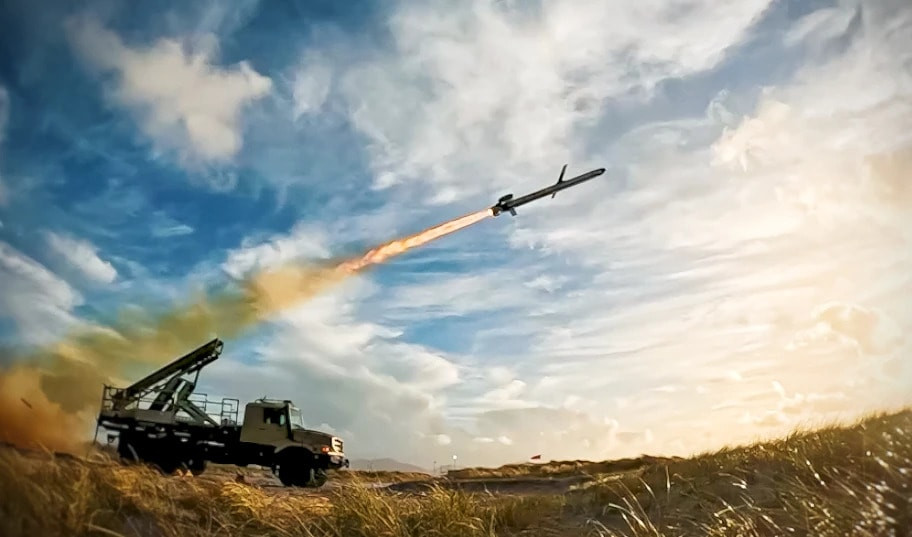
The CROSSBOW boasts impressive specifications for a low-cost weapon. The missile is 5.3 meters long, has a 3-meter wingspan, and carries a warhead weighing approximately 300 kg. The system is designed to fly at high subsonic speeds, achieving a range exceeding 800 km. Notably, the absence of American components or navigation data allows Ukraine to freely deploy and strike military targets deep within enemy territory without legal constraints from Washington.
In terms of production capacity, MBDA uses a modular design with components readily available on the civilian market. Production is expected to reach 20 missiles per month at a cost of approximately $545,000 per missile (excluding the warhead). Delivery to Ukraine is expected to begin in late 2026.
CAPINT Tank: A next-generation armored command center.
At the Eurosatory 2026 exhibition, the Franco-German joint venture KNDS introduced the CAPINT (Intermediate Capability) tank model. This is a tactical solution to fill the gap before the MGCS program officially becomes operational in 2040.
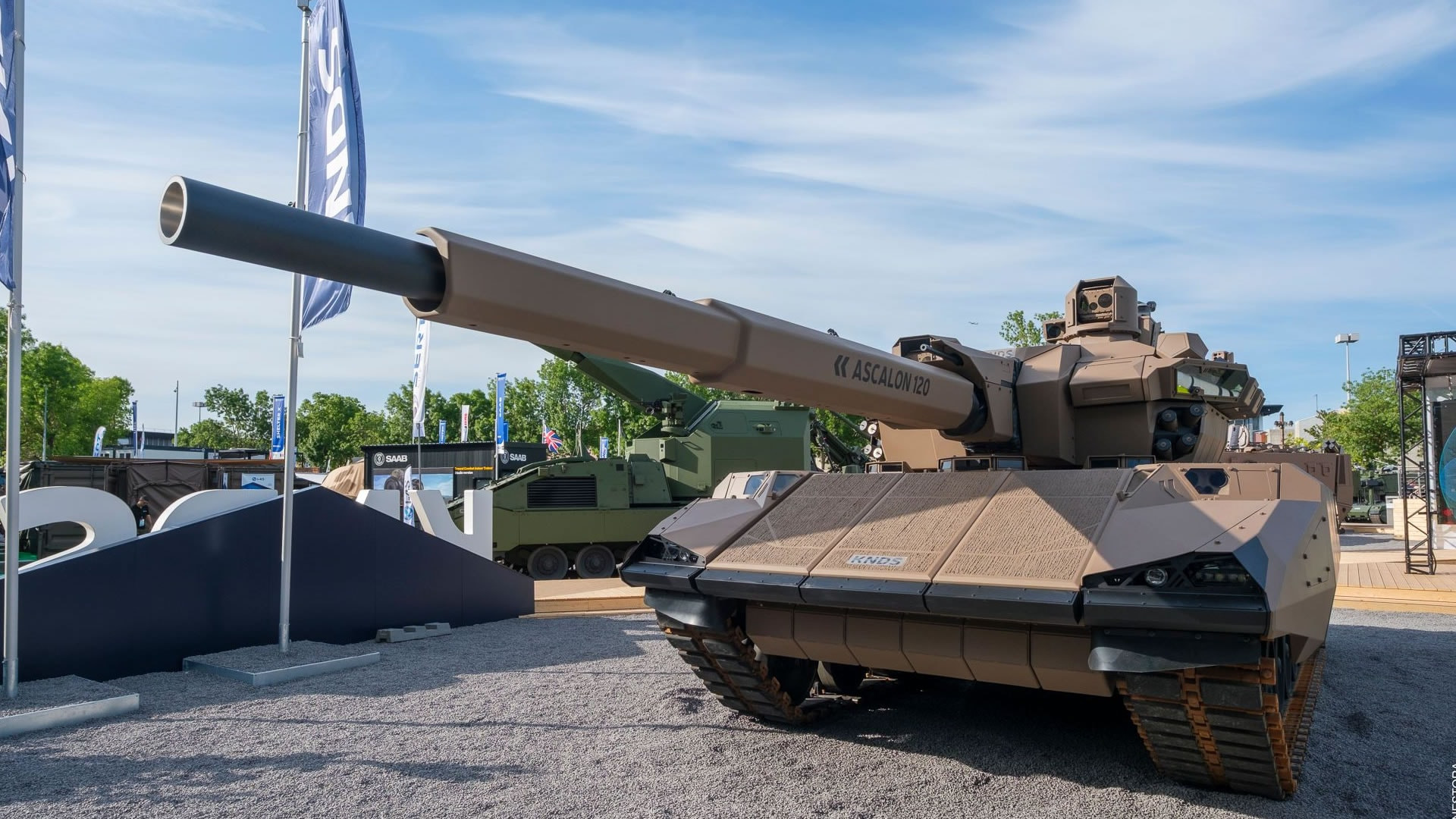
CAPINT combines the Leopard 2A8 hull with a completely new unmanned turret. The vehicle is equipped with a 1,500 hp (approximately 1,119 kW) diesel engine and is capable of integrating a hybrid powertrain to reduce its infrared signature. The breakthrough lies in the remotely controlled turret equipped with a 120 mm ASCALON smoothbore cannon, allowing the entire crew to remain inside the hull for maximum safety.
Tactically, CAPINT acts as a mobile command center. This tank is designed to work closely with unmanned aerial vehicles (UAVs) and robotic vehicles. UAVs, in particular, serve as reconnaissance and early warning systems, helping the tank optimize its survivability and engage targets remotely.
Russia installs protective netting on landing ship Aleksandr Shabalin
In another development in the Baltic Sea, the Russian military has begun deploying additional protective measures for the landing ship Aleksandr Shabalin (Project 775/II Ropucha II class) to counter the threat from FPV drones.
The Russian Baltic Fleet has installed protective netting on the landing ship Aleksandr Shabalin to counter FPV drones. According to Militarnyi, images of this device were published on social media by observer Massimo Frantarelli.
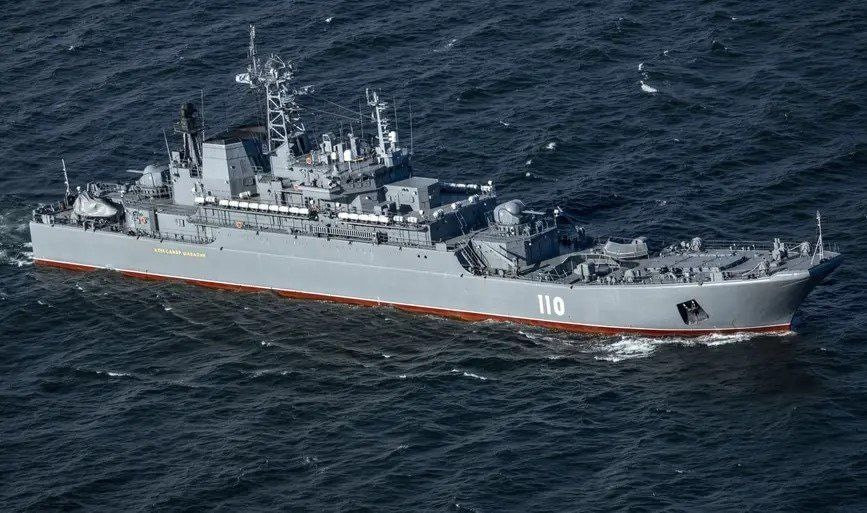
The net system is stretched between the AK-725 automatic cannon and the superstructure of the ship. However, military analysts are skeptical about the practical effectiveness of this net. In the current context, warships often face long-range suicide drones with much greater destructive power than conventional FPV drones, a type of weapon that a thin net would be unlikely to effectively intercept.


