
Analysis of the actual production of Russian fighter jets in 2025
Actual data shows that Russia's fighter jet production has only reached about 50% of its target, insufficient to offset significant battlefield losses in 2025.
During a recent meeting at the Kremlin, the CEO of the defense corporation Rostec, Sergei Chemezov, reported to President Vladimir Putin that Russia's fighter jet production had doubled since the start of the conflict in Ukraine. However, independent analyses from international military observers reveal a significantly different picture between the official report and the actual deliveries to air force units.
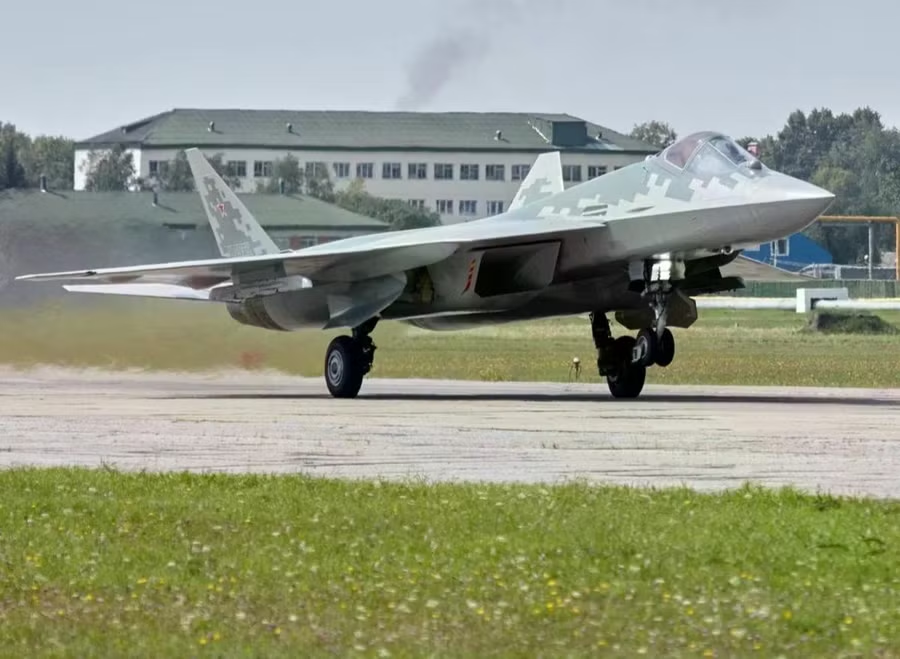
A large gap between the target and the actual delivery.
According to a report from the defense news agency Militarnyi, the Russian Aerospace Forces (VKS) will only receive approximately 30 new tactical fighter aircraft throughout 2025. This figure represents only about 52% of the target of 57 aircraft that the country's defense industry had previously set for its main aircraft lines.
Details of the handover schedules in 2025 include:
- Su-34M:Approximately 14 to 15 aircraft (modernized variants of frontline bombers).
- Su-35S:Twelve units were delivered in six batches throughout the year.
- Su-30SM2:Two multirole fighter jets.
- Su-57:Approximately two fifth-generation fighter jets.
Notably, the Su-57 fifth-generation fighter program continues to face prolonged delays. The fact that only two aircraft were delivered in an entire year shows that the production rate of this strategic aircraft has not yet reached industrial scale, contrary to the claims made in Russia's military modernization campaigns.
The balance of losses on the battlefield.
Although maintaining production amidst Western sanctions is seen as a significant effort by the Russian defense industry, this pace has not yet compensated for the rate of attrition. Analysts estimate that Russia lost approximately 65 fighter aircraft of various types in military operations alone by 2025.
With 30 new aircraft delivered compared to 65 destroyed or severely damaged, the VKS squadron's strength decreased by a net 35 aircraft in just one calendar year. This shows that even though Rostec claims to have doubled production, this figure is still significantly lower than the actual rate of attrition on the battlefield.
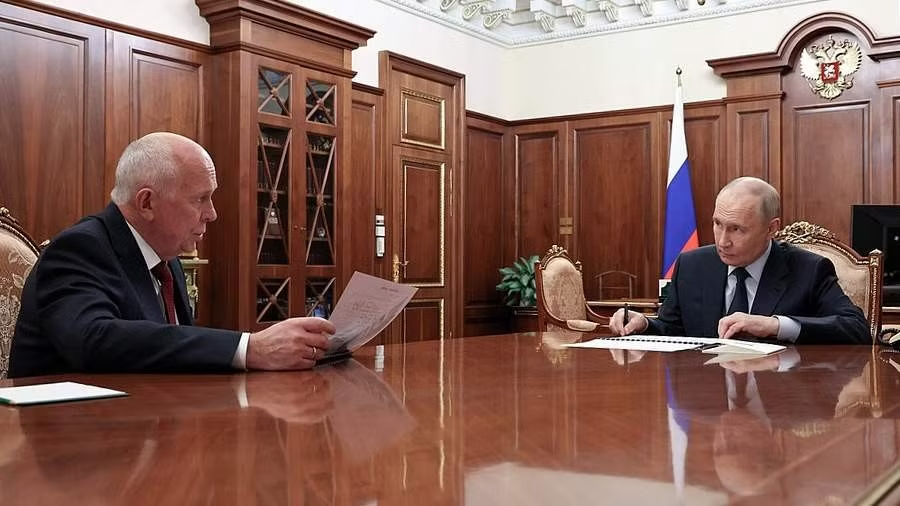
The impact of technology sanctions
The Russian aerospace industry is currently operating under pressure from strict Western export controls, particularly on precision electronic components, specialized manufacturing equipment, and high-grade alloys. While Russia has partially adapted through domestic component replacement and the establishment of parallel import networks, supply chain disruptions remain a major obstacle preventing actual production from meeting expectations.
The leading role of Su-34M and Su-35S
In the 2025 delivery schedule, the Su-34M variant accounts for nearly 50% of the total new aircraft. This is a crucial component in Russia's glide bomb tactics in frontline areas. Simultaneously, the Su-35S plays a key role in maintaining air superiority. This focus on these two variants indicates Russia's priority on maintaining direct combat capabilities rather than pursuing costly and complex next-generation aircraft programs like the Su-57.
In summary, while political meetings at the Kremlin often produce optimistic figures, independent monitoring data shows that the Russian defense industry is still struggling to balance political objectives, actual production capacity, and urgent battlefield needs.


