
Analyzing the CobraJet UAV: A 3D-printed interception solution to counter drone swarms.
CobraJet is a high-speed interceptor UAV built using 3D printing technology and integrated with AI to address the cost-effectiveness challenge against swarm drone attacks in modern warfare.
In modern warfare, the threat from unmanned aerial vehicles (UAVs) is no longer limited to individual devices. The biggest challenge to current defense systems is drone swarms – dozens of low-flying, constantly changing-direction drones carrying suicide warheads or jamming devices. The proliferation of inexpensive drones has forced militaries to seek new, more cost-effective air defense methods.
The challenge from swarm drone warfare.
Inexpensive and easily mass-produced drones have disrupted traditional air defense calculations. According to a 2025 report by the China National Accreditation Service for Conformity Assessment (CNAS), current anti-drone defense requires a multi-layered system incorporating AI-powered sensors, jamming, and kinetic interception, rather than relying solely on air defense units.
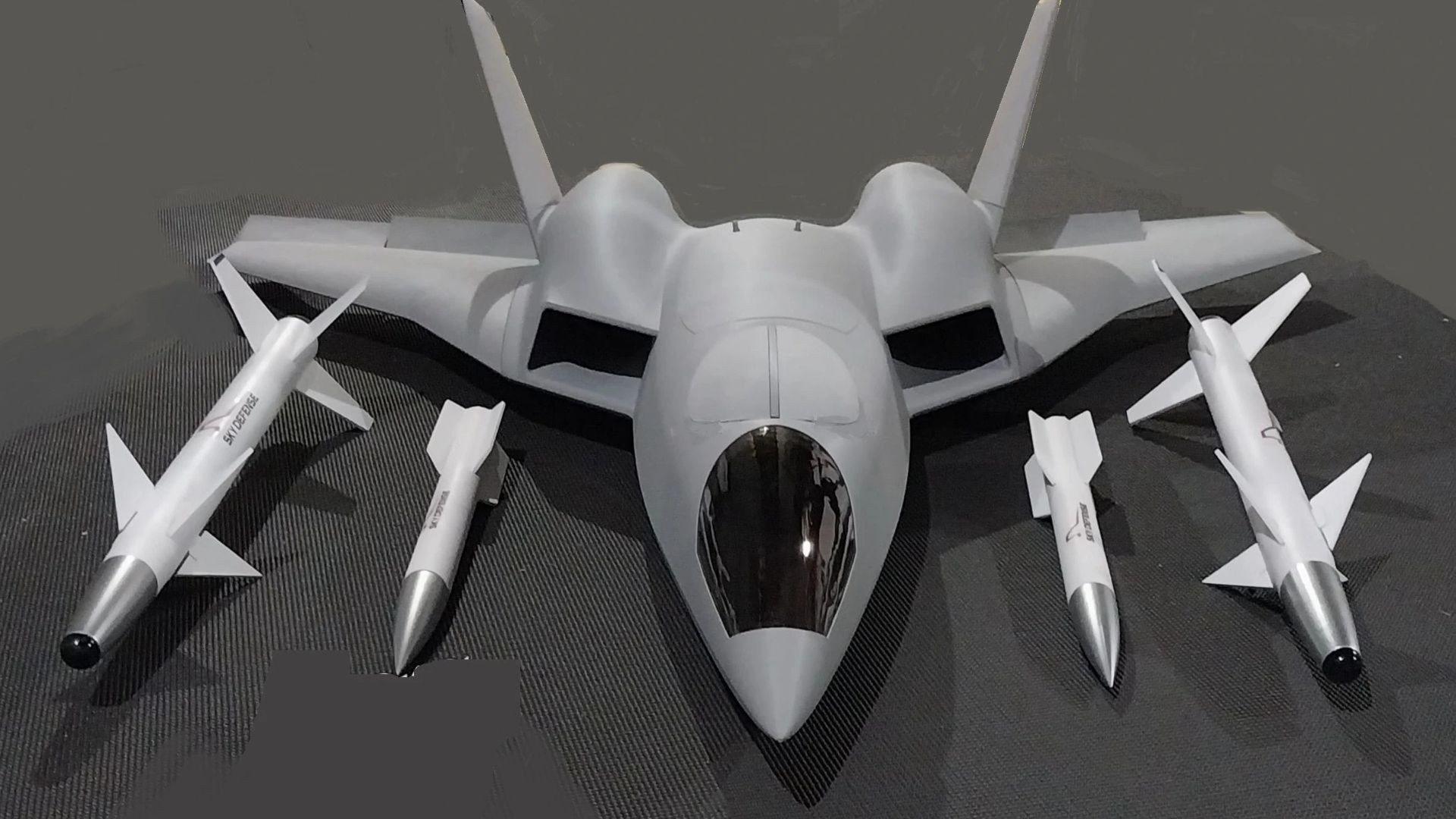
The pressure to counter drones isn't limited to battlefields; it's also present in civilian areas. At the 2026 World Cup, US authorities seized over 600 drones around competition venues in less than a month. This highlights the urgent need for flexible interception systems at airports, power plants, and other critical infrastructure.
CobraJet: 3D printing technology and high-speed VTOL capabilities.
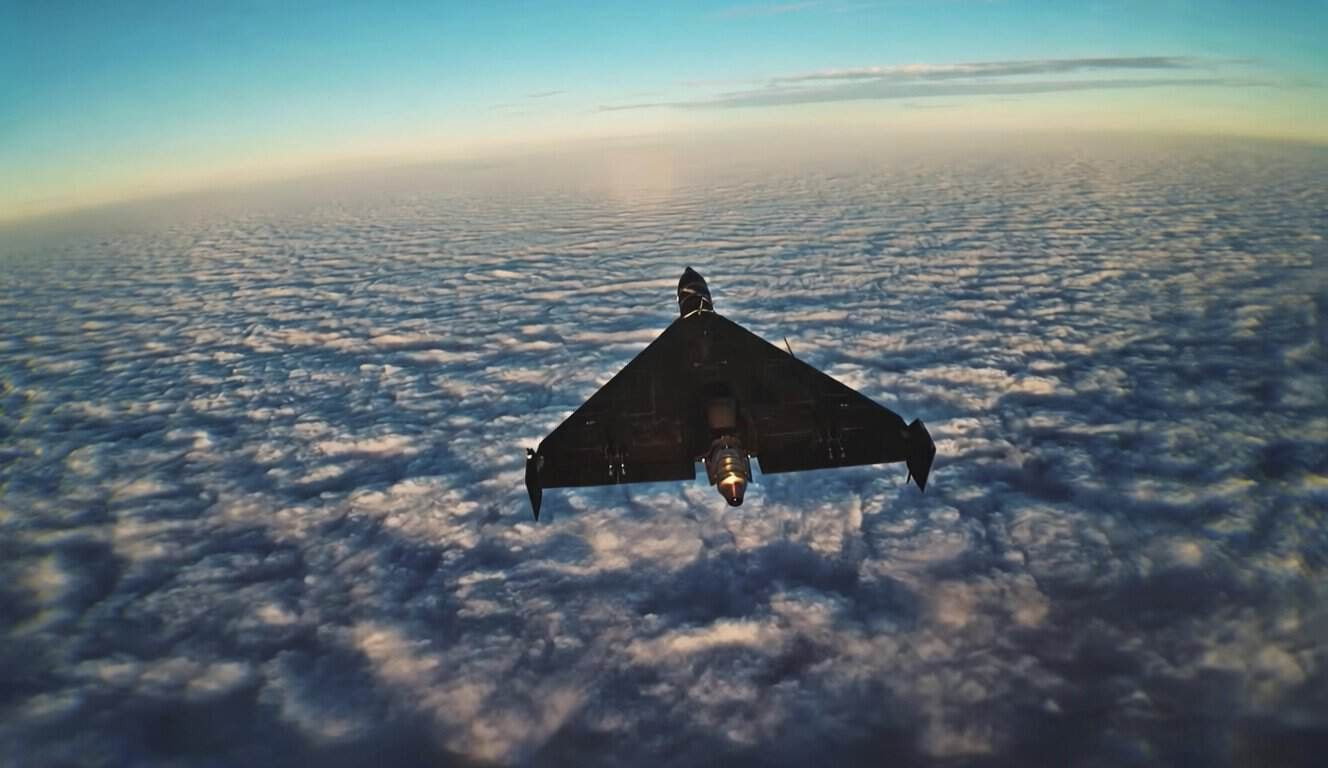
SkyDefense, a Colorado-based defense company, has introduced the CobraJet as a next-generation interceptor platform. This is a vertical take-off and landing (VTOL) UAV that operates autonomously and uses artificial intelligence (AI) to identify targets. The biggest difference of the CobraJet lies in its carbon fiber composite frame structure, entirely manufactured using 3D printing technology.
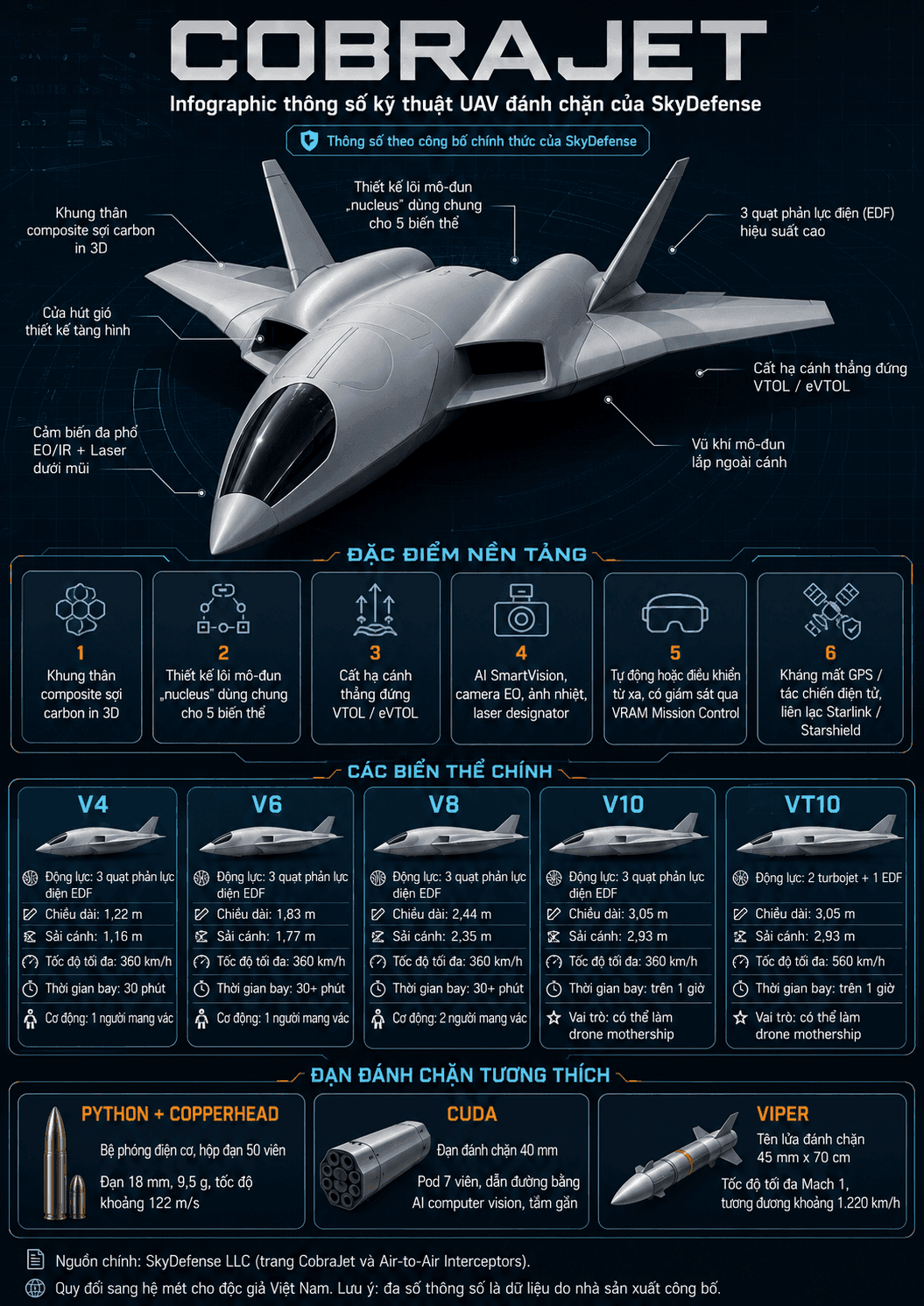
The use of a modular "nucleus" design shortens the production cycle and allows for rapid configuration customization. CobraJet is developed in five main versions:
- Electric motor series (V4 to V10):It reaches a top speed of approximately 362 km/h (225 mph).
- Turbojet hybrid (VT10):It can reach a speed of 560 km/h (350 mph).
At this speed, the CobraJet completely surpasses conventional FPV drones, allowing it to effectively pursue and destroy fast-flying targets.
Solving the interception cost problem
One of the major challenges in modern air defense is the use of expensive missiles to shoot down inexpensive drones. In the Ukrainian theater of operations, both sides have begun deploying interceptor drones costing only around $1,000 to counter suicide drones, reflecting a trend toward cost optimization in attrition warfare.
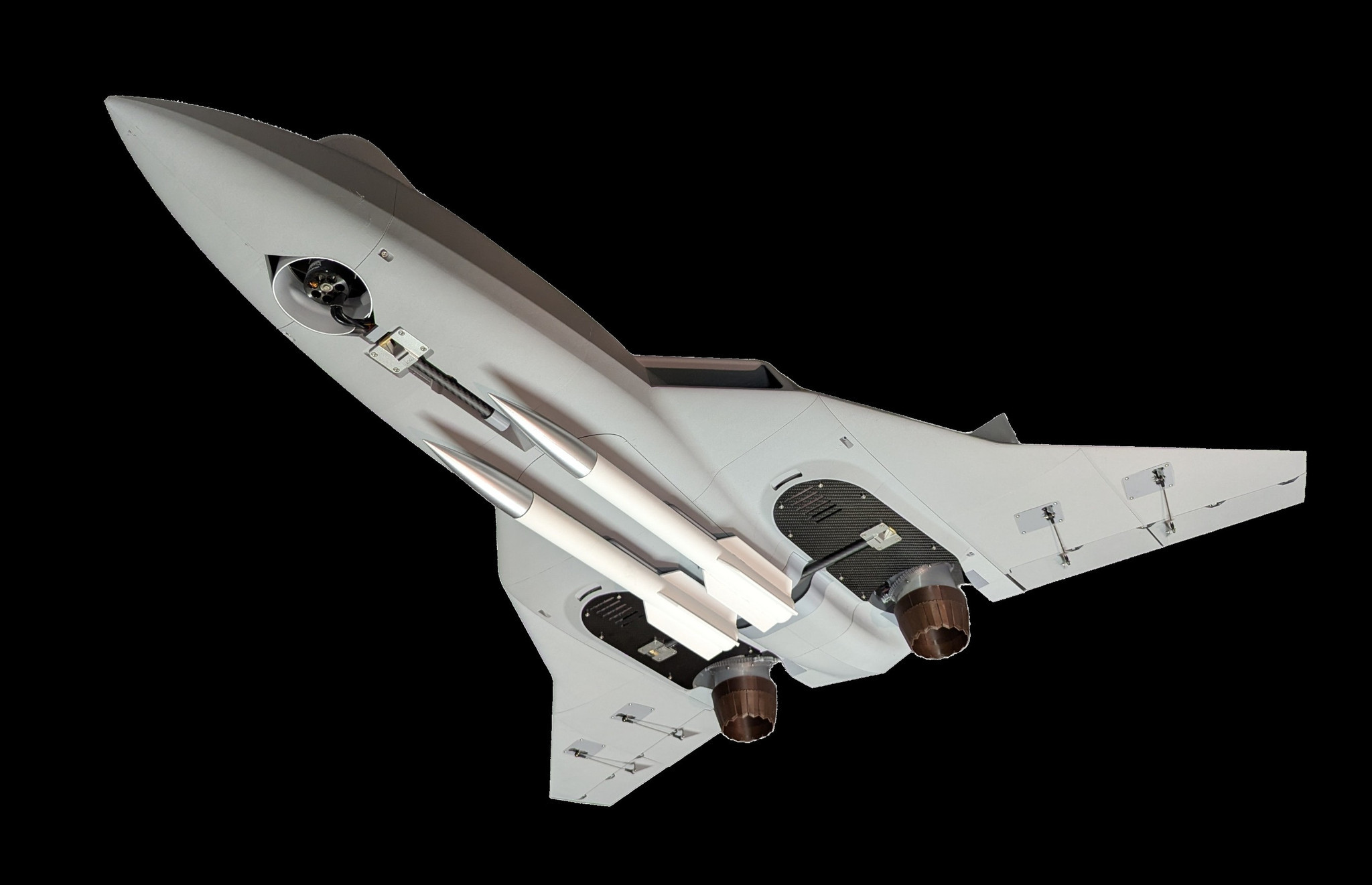
CobraJet is designed to fill this gap. The system can carry a variety of specialized interceptor missiles:
- PYTHON:Launcher fires 18 mm Copperhead rounds.
- CUDA:40 mm guided projectile, speed Mach 0.5 (610 km/h).
- VIPER:45 mm missile, speed Mach 1 (1,220 km/h).
The V10/VT10 version also acts as a "mothership," capable of carrying smaller interceptor drones inside its weapons bay for deployment when needed.
Command system and electronic warfare capabilities
Despite its automated operation, the CobraJet maintains a human role in the decision-making chain through its VRAM command system. This AI-integrated operational platform allows operators to monitor and issue interception orders, which is particularly important when operating in densely populated areas to avoid the risk of stray projectiles or misidentification of targets.
In terms of survivability, CobraJet is equipped with SmartVision optical navigation and anti-jamming technology, allowing it to operate in environments with strong electronic warfare. The system also supports satellite communication via the Starlink or Starshield network.
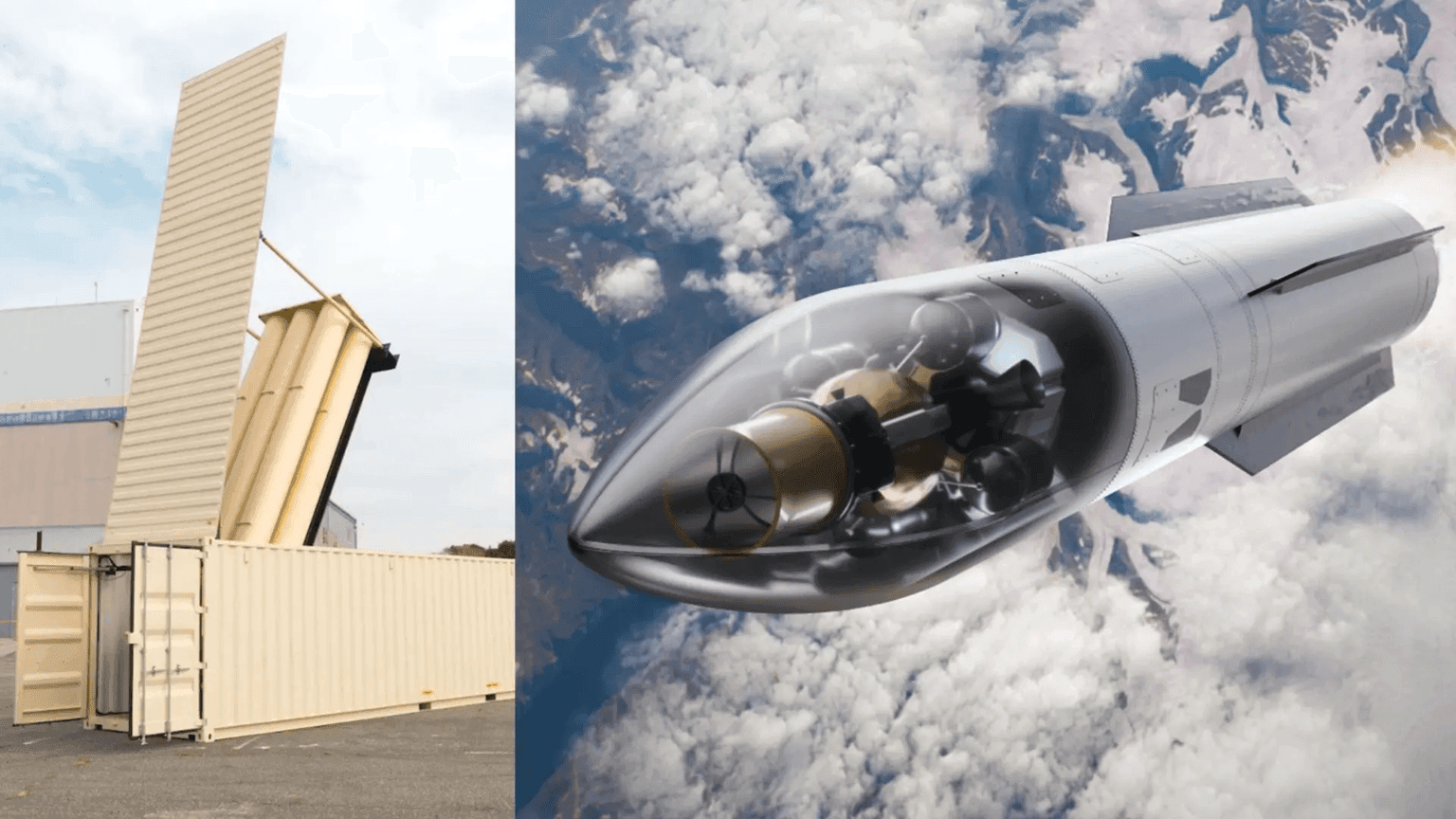
Currently, SkyDefense plans to conduct field trials for the CobraJet in Q4 2026 and begin mass production in Q1 2027. This is seen as a strategic step to build a multi-layered defense network, protecting critical targets against a future wave of inexpensive UAVs.


