
Analysis of the US LRHW Dark Eagle hypersonic weapon.
The LRHW Dark Eagle is the first hypersonic weapon system the US deployed after withdrawing from the INF Treaty. It has a range of up to 3,500 km and a speed of approximately Mach 5, but its testing, production progress, and combat effectiveness remain controversial.
The LRHW Dark Eagle is one of the first hypersonic weapon systems the Pentagon put into active service, and also the first hypersonic system the US deployed after withdrawing from the INF Treaty. With a range of up to 3,500 km, as revealed by US Army leaders, and a hypersonic glide vehicle reaching speeds of approximately Mach 5, this system is considered to have a role at both the tactical and strategic levels. However, slow deployment progress, very high costs, and questions about its actual combat effectiveness have kept the LRHW Dark Eagle a subject of debate within military circles.
Overview of the LRHW Dark Eagle program
Key information about the LRHW Dark Eagle was released during U.S. Secretary of War Pete Hegseth's visit to the Army Missile and Air Force Command at Redstone Arsenal, Alabama. There, Lieutenant General Francisco Lozano stated that the Dark Eagle system has a maximum range of approximately 3,500 km, significantly higher than the 2,700 km previously stated by the Pentagon.
According to an assessment cited by The War Zone magazine, with this range, if deployed in Qatar, the LRHW Dark Eagle could reach Tehran (Iran). This indicates the system's ability to cover vast strategic areas and its design to fulfill missions at both tactical and strategic levels.
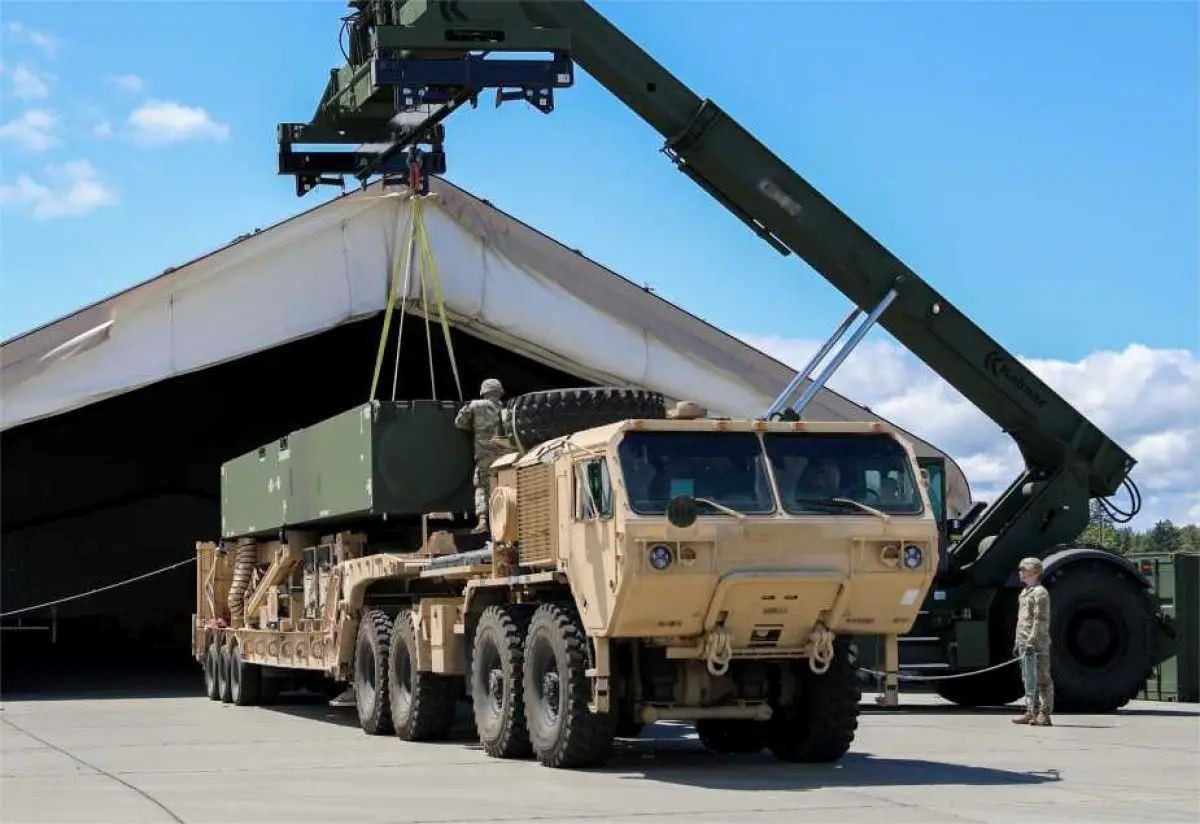
The LRHW Dark Eagle system is configured for rapid deployment and retrieval, with the launch components mounted on a heavy-duty field vehicle chassis. This structure allows the system to be highly mobile and change deployment positions flexibly, meeting the critical requirements of hypersonic weapons against reconnaissance threats and retaliatory attacks.
Main structure and specifications
The LRHW Dark Eagle consists of a launch platform mounted on a field vehicle chassis and a two-stage, solid-fuel missile. This missile carries a C-HGB (Common Hypersonic Glide Body) multi-purpose hypersonic warhead. After launch, the booster stage propels the C-HGB to a stratospheric altitude.
Once it reaches the required altitude and speed, the C-HGB hypersonic glide vehicle separates from the booster rocket and begins its atmospheric glide phase to approach the target. Its high-speed glide trajectory significantly shortens flight time, while simultaneously complicating the detection, tracking, and interception tasks of missile defense systems.
An unnamed U.S. officer said the LRHW missile can reach its target in about 20 minutes. According to publicly available data, the Dark Eagle's C-HGB hypersonic glide vehicle reaches speeds of approximately Mach 5, equivalent to over 6,100 km/h.
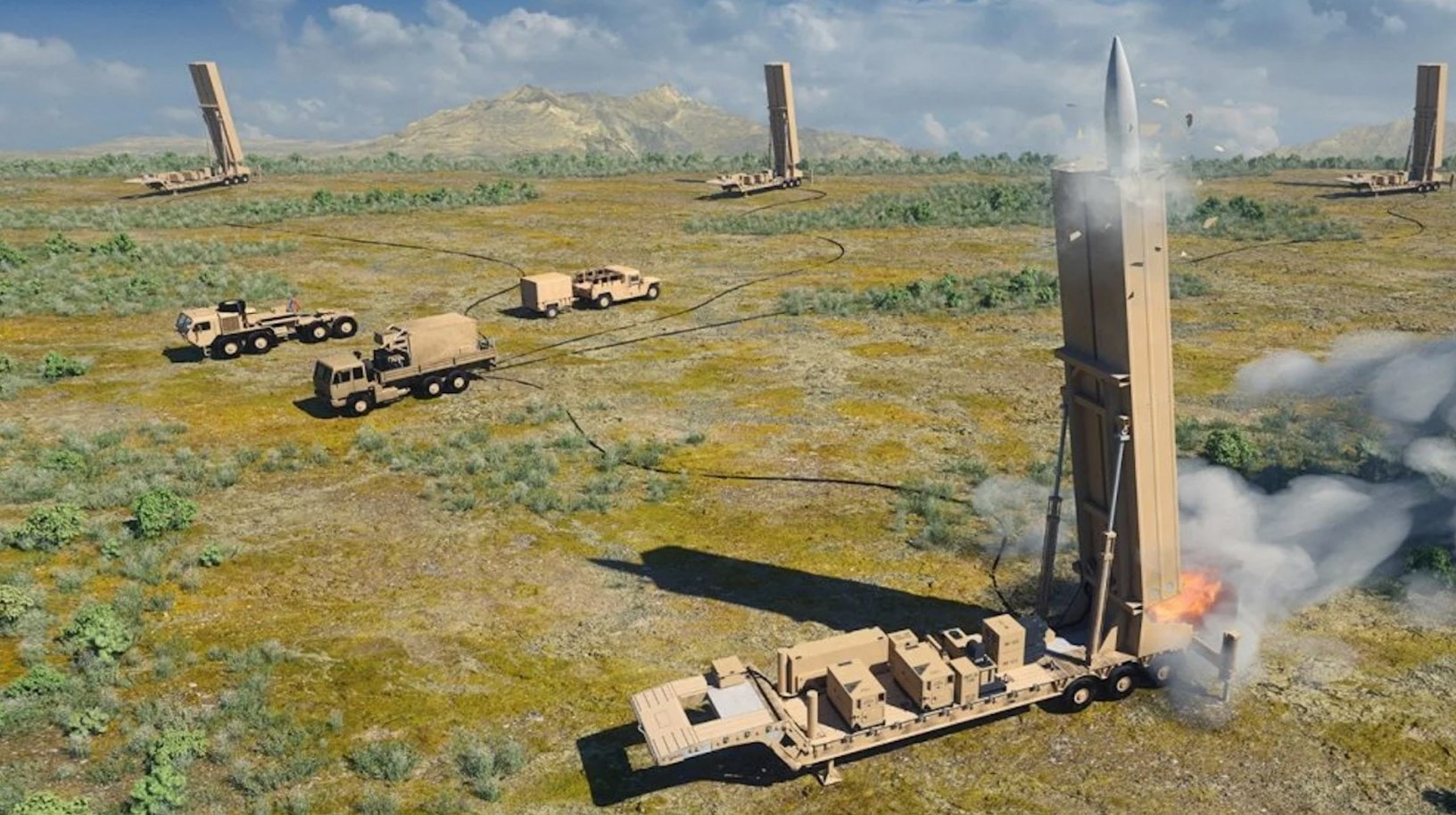
High speed and a flexible gliding trajectory are two core factors that give the LRHW Dark Eagle an advantage over traditional ballistic missiles of the same range, especially in missions to attack critical targets with short reaction times.
Summary table of key parameters (based on source data)
| Parameter | Value | Note |
|---|---|---|
| Maximum range | 3,500km | According to Lieutenant General Francisco Lozano, this is higher than the previously announced figure of 2,700 km. |
| C-HGB glider speed | Approximately Mach 5 | Over 6,100 km/h |
| Time to reach the target | Approximately 20 minutes | According to an unnamed American officer. |
| Development costs | Approximately $12 billion | Since 2018, according to the Pentagon. |
| Price per missile | $41 million per bullet | According to 2023 prices |
| Current production rate | Approximately 1 missile per month | The goal is to double that in the near future. |
C-HGB warhead and its mechanism of destruction
The C-HGB was developed based on the Sandia Winged Re-entry Vehicle (SWERVE) prototype, which originated in the 1980s. The SWERVE project focused on testing the controllability of hypersonic glide vehicles during the transition from space back to Earth's atmosphere. These results formed the technological foundation for today's generation of hypersonic glide vehicles.
In its LRHW Dark Eagle configuration, the C-HGB carries a massive warhead mass, combined with very high velocity to generate a large kinetic energy blast at the target. This approach differs from traditional ballistic warheads, which rely primarily on explosive charge, while impact energy is more effectively utilized in the case of hypersonic weapons.
One notable feature is that the LRHW Dark Eagle also carries a small warhead weighing approximately 13 kg. According to source data, this warhead is smaller and lighter than even the warhead of the AIM-120 air-to-air missile. Its target is to attack unprotected targets such as radar and other components of air defense systems.
The War Zone cites the opinion that the kinetic impact generated by this weapon increases its destructive power to a greater extent than conventional warheads that can be fitted into the confined space of a conical hypersonic device. This suggests that the LRHW Dark Eagle design is optimized around the concept of "kinetic damage" rather than simply increasing the amount of explosive.
Implementation progress, costs, and production capacity
In March 2025, Bloomberg reported, citing sources, that the LRHW Dark Eagle missile was not yet ready for combat operations and that the deployment program was behind schedule. The first LRHW Dark Eagle system was originally expected to be deployed in 2023, but technical difficulties during testing caused delays.
The crucial test launch scheduled for September 7, 2023, was canceled due to technical problems. Completion of the tests was announced for the summer of 2024, indicating that the development and refinement phase of the technology lasted longer than initially anticipated.
According to published figures, the Pentagon has spent approximately $12 billion developing the LRHW Dark Eagle since 2018. The cost of each hypersonic missile is estimated at around $41 million in 2023. This high cost is one of the reasons why the current production rate is only about one missile per month.
The U.S. Army aims to double the production rate of the LRHW Dark Eagle missile in the near future. However, according to assessments, Washington is struggling to both secure supplies of new weapons and meet quantity requirements in the context of a prolonged conflict.
Some opinions, noted by The War Zone, suggest that the LRHW Dark Eagle risks becoming a "silver bullet"—too few in number and too expensive to have a significant impact in a protracted conflict. This assessment highlights the challenge of balancing tactical and strategic effectiveness with economic and defense industry sustainability.
Impact on missile defense and the Russian assessment.
Regarding the strategic impact of the LRHW Dark Eagle, military observer Colonel Mikhail Khodarenok told Gazeta.ru that the appearance of combat-ready hypersonic weapons in the US arsenal will create new threats to Russia. According to him, this necessitates strengthening missile defense capabilities to protect critical infrastructure.
Colonel Mikhail Khodarenok stated that Russia's S-500 long-range air defense and missile defense system is capable of shooting down the Dark Eagle hypersonic missile. He believes there is reason to think that the S-500 Prometheus system, which is designed for strategic missile defense, can counter American hypersonic weapons.
However, this same source also emphasized that intercepting missiles, especially hypersonic weapons, is never an easy task. The core issue lies in the success rate of interception and the cost required to build a corresponding "missile shield." The question is whether a confrontation between hypersonic weapons like the LRHW Dark Eagle and defense systems like the S-500 will become an asymmetrical war in terms of cost and effectiveness.
In this context, the LRHW Dark Eagle is both a crucial technological step in the U.S. hypersonic weapons strategy and a test of modern missile defense capabilities and the ability to maintain military advantage under limited resources.


