
Zoning for the use of tidal flats for aquaculture.
(Baonghean.vn) - After the project to zone tidal flats for aquaculture in Quynh Luu officially comes into operation, it will effectively exploit and utilize the potential for aquaculture development in general and clam farming in particular, aiming to improve product quality and value.
Quynh Luu has over 19.5 km of coastline, two main estuaries flowing into the sea and connecting with the Mai Giang river system and Nha Le canal, creating a large tidal zone suitable for clam farming.
With an area of 140 hectares, the annual clam harvest yields 2,800 - 3,000 tons, generating revenue of over 50 billion VND.
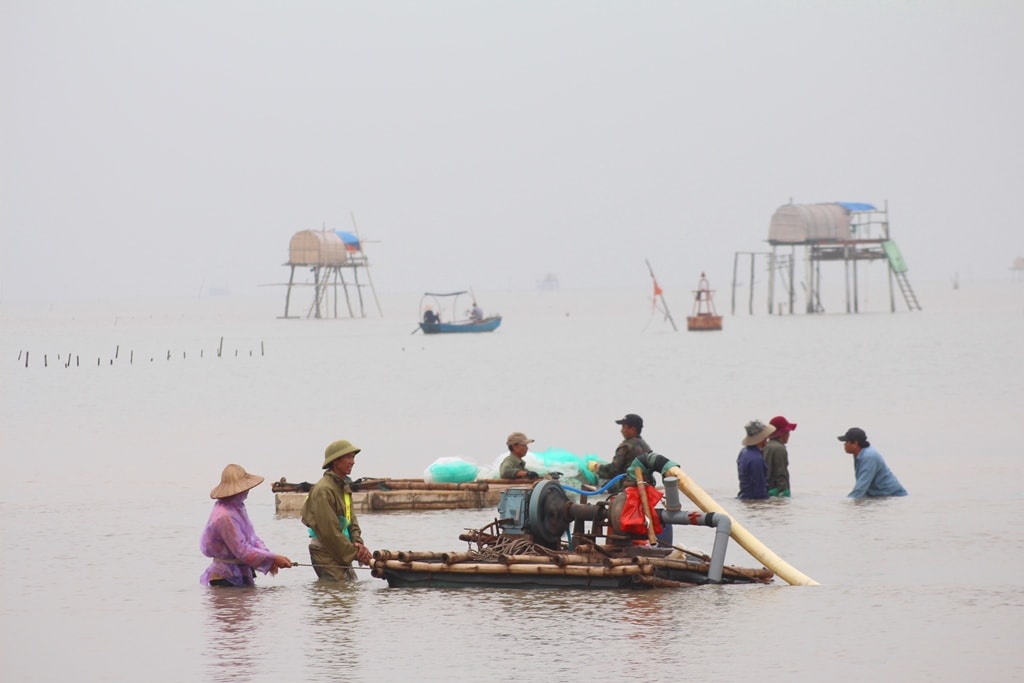 |
The area planned for the aquaculture tidal flat zoning project in Quynh Luu. Photo: Viet Hung |
However, clam farming areas in coastal tidal flats frequently face challenges such as changes in the flow of the Thai River, conflicts between economic sectors, and inappropriate production organization, leading to difficulties and limitations in product traceability, certification, and verification.
Based on this reality, Quynh Luu district has established the project "Zoning of tidal flats for aquaculture use until 2020" to effectively exploit advantages and potential for the development of aquaculture in an efficient and sustainable manner.
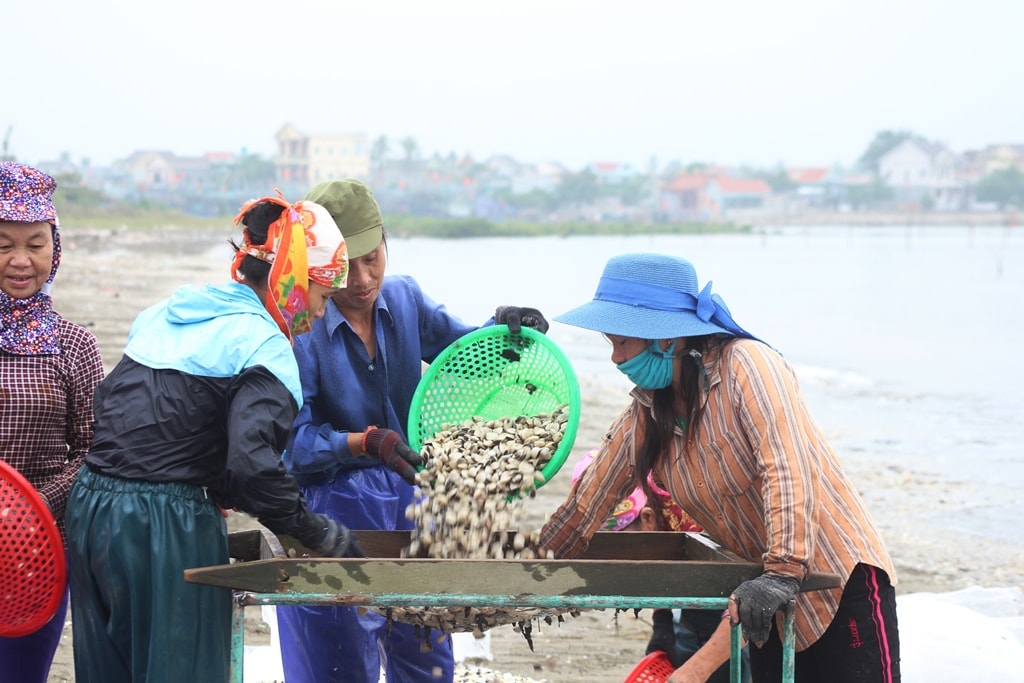 |
Once operational, the project will effectively exploit the district's potential advantages. Photo: Viet Hung |
This project will be managed by the District People's Committee and advised by the Institute of Economics and Planning, Ministry of Agriculture and Rural Development; the project's budget is nearly 500 million VND. The spatial zoning plan for the tidal flat area in the communes of Quỳnh Thọ, Sơn Hải, Quỳnh Thuận, and Quỳnh Long, at a scale of 1/2,000, includes areas for clam seed production, commercial clam farming, free exploitation, and a safe navigation corridor for vessels.
To ensure the project's successful implementation, the entire clam farming area in the tidal flats will be de-cultivated and handed over to the District People's Committee for management. Once the project is approved by the higher authorities, the land will be divided into plots for households to manage and use according to the intended purpose.


