
PKL and SERP electronic defense systems against drones.
RosEl, a division of Rostec, develops the PKL 3D passive radar and SERP jamming system, creating a multi-circuit defense line to protect infrastructure from reconnaissance and attacks by UAVs.
The PKL 3D passive radar system and the SERP anti-drone complex, developed by RosEl, a subsidiary of the state-owned Rostec technology group, are touted as an "electronic fortress" protecting infrastructure from drone threats.
According to information released by Rostec on its Telegram channel, these components allow for the construction of a multi-circuit defense against UAV attacks, which often include reconnaissance aircraft, means of disabling air defense systems, and attack groups.
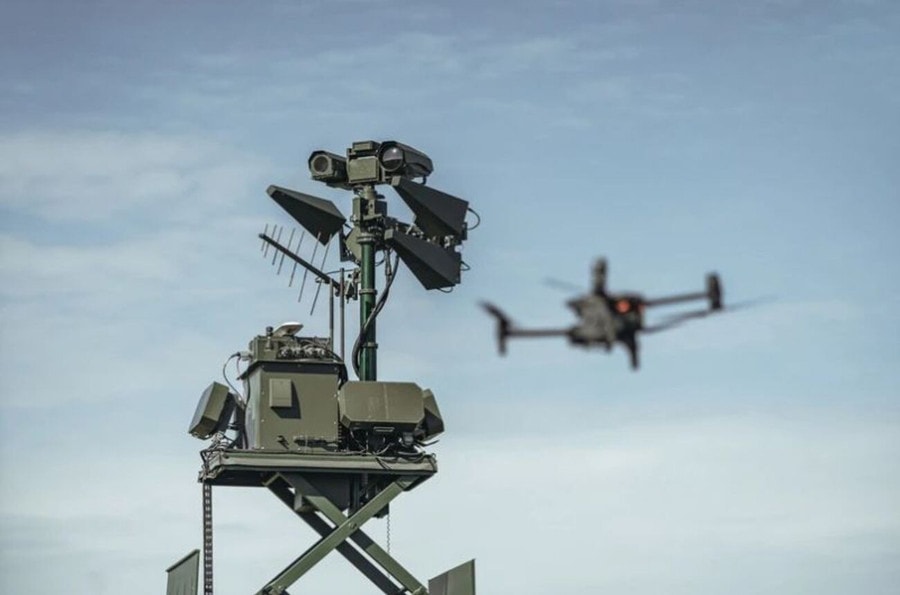
Electronic fortress against UAVs around key targets.
The manufacturer notes that drone attacks typically do not occur in isolation but in groups and in stages: reconnaissance, weakening air defenses, and then attack. To counter this, RosEl developed a "multi-circuit defense" system using multiple anti-UAV solutions with different functions.
A Rostec representative stated that the devices manufactured by RosEl are designed for each individual defense circuit, capable of operating independently or in conjunction as a unified system. This organizational structure allows for flexible configuration tailored to the specific needs of each protected target, from early detection and tracking to electronic countermeasures.
The main technical components in the system
PKL 3D Passive Radar: Target Detection and Tracking
The PKL 3D passive radar system was developed by RosEl to detect and track airborne targets. According to published information, this radar can simultaneously track dozens of objects within a range of several kilometers, providing a comprehensive surveillance platform for the entire anti-UAV defense system.

As a passive radar system, PKL is designed to detect targets by processing signals emitted into space, serving the purpose of surveillance and providing target data to other components in the defense complex.
The PKL radar can be supplemented with the Ogonyok system, a device that receives video signals from the drone's camera. This video information helps clarify target characteristics, supports situational assessment, and enhances the reliability of the identification process.
SERP jamming system: Control and positioning channel suppression
The SERP system is responsible for suppressing targets detected by radar and sensors. According to Rostec, SERP jams the control, navigation, and communication channels of drones, thereby disrupting their flight missions.
By disrupting all radio transmissions between the UAV and its operator, as well as navigation and communication signals, SERP creates a layer of electronic defense designed to effectively neutralize the drone's operation within the protected area.
Mobile station 1L65E and Serp-P6 system
Besides PKL and SERP, another defensive configuration could be built based on the 1L65E mobile station. This station is described as capable of detecting and classifying radio emission sources, thereby providing additional data on the electromagnetic environment and potential threats.
In November, military expert Yuri Knutov stated that a new anti-drone system called "Serp-P6," developed to protect bridges, is capable of disabling most navigation systems. This information suggests that similar jamming solutions are being directed towards protecting critical infrastructure.
Multi-circuit anti-UAV defense architecture
Information from Rostec indicates that the "multi-circuit defense" concept is based on dividing tasks among functional layers, using specialized equipment for each circuit. In this system, PKL and 1L65E play the roles of detection and tracking, Ogonyok is responsible for receiving video from UAVs, and SERP performs electronic jamming against the identified target.
These components can operate individually, suitable for areas requiring only monitoring or suppression, or combine into a complete system around infrastructure. When operating in synergy, they create a multi-layered "electronic fortress" that monitors, analyzes, and neutralizes drone threats.
Operational significance in the context of increasing UAV prevalence.
Data released by Rostec shows that the system's focus is on countering the entire UAV attack chain: from reconnaissance to attack. The PKL radar's ability to simultaneously track dozens of targets within a range of several kilometers, combined with emission source classification tools like the 1L65E and the Ogonyok video receiver, enhances the ability to detect and accurately assess the activity of drones around a target.
Meanwhile, SERP and similar systems like Serp-P6 are used to suppress control and navigation channels, aiming to directly disable the UAV's mission completion capabilities. This combination of detection, surveillance, and electronic suppression reflects the trend of using electronic warfare solutions as the primary line of defense against drone threats to infrastructure.
With a modular approach that can be configured according to actual needs, the PKL 3D radar system, SERP, 1L65E, and related complexes form a solution framework that RosEl and Rostec aim for in the task of protecting targets against the development of UAV technology.


