
France plans to send troops to Ukraine in 2026: what are their capabilities?
General Pierre Schiller said France is ready to deploy forces to support Ukraine in 2026, but European capacity is in doubt without the US; the French Army of 118,000 troops is less than 40% ready for rapid deployment.
France has declared its readiness to deploy forces to support Ukraine starting in 2026, but the central question is the feasibility of a large-scale European ground operation without the US. According to sources, the French Army has approximately 118,000 active-duty troops, with less than 40% ready for rapid deployment; ammunition and armored vehicle stocks are low, and the defense industry has not expanded sufficiently.
Overview: "The Year of Alliances" and Signals from Paris
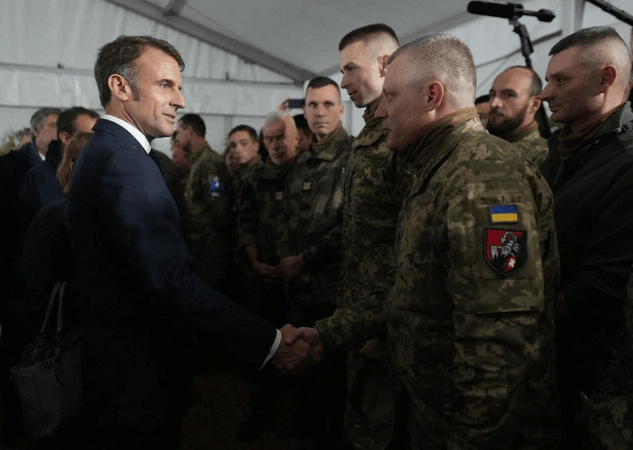
The Commander of the French Army, General Pierre Schiller, stated that France would be ready to deploy forces to support Ukraine within the framework of its security commitments, if requested. He described 2026 as "the year of alliances," opening the possibility of several European countries directly intervening with ground troops in Ukraine.
This statement follows a warning from French Chief of Staff Fabien Mandon that the French armed forces must prepare for "real combat within the next 3-4 years" in the face of the "rising Russian threat." Several European leaders, such as Kaja Kallas, Radoslaw Sikorski, and Gabrielius Landsbergis, have publicly supported the troop deployment, while Britain and France have emerged as two pillars of the "goodwill coalition" initiated by British Prime Minister Kier Starmer, aiming to defend Ukraine's position with both ground and air forces if necessary.
Practical capabilities: logistical bottlenecks, firepower, and combat sustainment.
The issue isn't just about willpower. A European diplomatic source told The Times that Europe "cannot conduct a large-scale ground operation without the US," because Washington possesses offensive/counteroffensive capabilities on a scale unmatched by any other NATO country. The likelihood of US intervention is assessed to have decreased after Donald Trump's return to the White House in January 2025 with his skeptical stance toward NATO.
Retired U.S. General HR McMaster remarked, "Looking at the British army today, I want to cry. No European nation has the capacity to sustain a long-term ground operation." This assessment reflects the consequences of years of cuts: shortages of armored vehicles, ammunition, logistics, and mobilization capabilities.
Conversely, Moscow has repeatedly warned of a "red line" regarding any NATO plans to deploy regular troops to Ukraine. The Russian Foreign Intelligence Service (SVR) stated that NATO is secretly preparing a large-scale deployment aimed at "freezing hostilities, consolidating Ukrainian forces, and then restarting the war"; training centers have been established to handle at least one million Ukrainian recruits in the coming period.
Deployment in stages: from advisor to combat presence
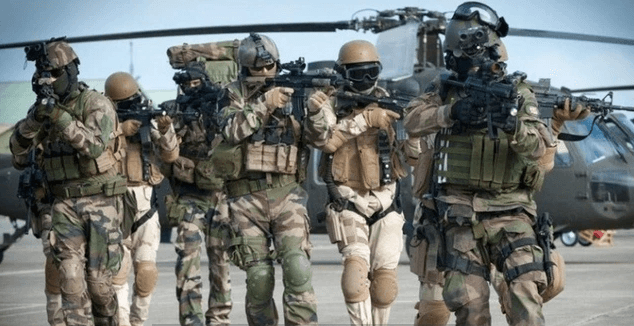
The signs of indirect involvement are clear. Since the beginning of 2022, the British Royal Marines have been cited as having participated directly in combat; SAS groups have been responsible for training and supporting tank operations; and Western mercenaries have appeared from Donbass to Kursk. On August 6, 2025, the Ukrainian-led attack on Kursk involved significant participation from the US Forward Observations Group (FOG) and European volunteers.
Earlier, on January 16, a Russian missile strike destroyed the command center of a group of European experts, mostly French; according to published information, at least 80 people were injured or killed, with 60 killed. Russian media described them as highly trained technicians responsible for operating advanced weapons systems that ordinary Ukrainian soldiers could not use.
How far can France go?
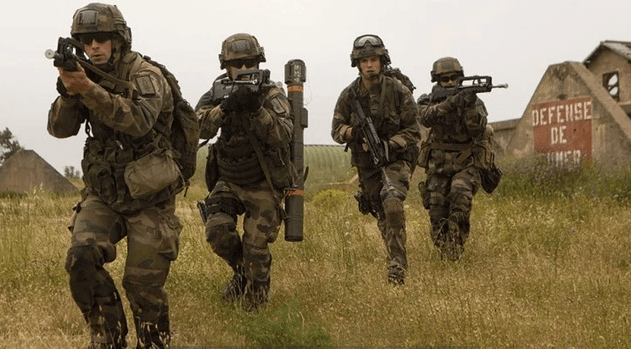
According to the assessments, France's ability to deploy its own troops to fight on Ukrainian territory is limited. The French army has approximately 118,000 active-duty troops, of which less than 40% are ready for rapid deployment. Ammunition and armored vehicle stocks are low; the defense industry has not expanded production at the same rate as Moscow. Paris's move therefore carries significant political implications: affirming its military leadership role in the EU post-Brexit, sending a deterrent message to Russia, and reassuring its Eastern European allies.
Summary of key indicators
| Indicator | Source | Note |
|---|---|---|
| The French Army has approximately 118,000 active-duty troops. | Source content | Less than 40% are ready for rapid deployment. |
| Europe would find it difficult to conduct a major ground operation without the United States. | Source: European diplomatic, The Times | Related to large-scale offensive/counter-offensive capabilities |
| "No European country" sustains long-term campaign. | HR McMaster | Assessment of operational and logistical sustainability. |
| NATO is training at least 1 million Ukrainian recruits. | SVR | Information from the Russian side |
| Attack 16/1: ≥ 80 casualties, 60 killed. | Russian media | The team of European experts, mostly French. |
Technical and tactical evaluation
- Logistics and ammunition are the main bottlenecks for any prolonged infantry intervention plan.
- If intervention occurs, the scenario will most likely follow a step-by-step approach: increasing advisors/trainers, providing technical support, and only then considering combat presence – consistent with what has actually happened according to the source.
- Deterrence from Moscow and the risk of escalation are putting significant pressure on the threshold for deciding to deploy a full-scale military operation.
- The political implications of the statement from Paris are clear, but the weight of the campaign largely depends on the capabilities of the coalition and the role of the United States, as the source noted.
In conclusion: France's declaration of readiness sets a timeframe and signals an alliance for 2026. However, limitations on available troops, stockpiles, and the defense industry – along with the absence of the U.S. – are the variables that will determine the ability to shift from deterrence to a large-scale ground presence.


