
France drawn into a tough Group I at the 2026 World Cup, awaits Mbappe vs. Haaland matchup.
France is in Group I along with Senegal, Norway, and a play-off team (Irak/Bolivia/Suriname); Deschamps is cautious, suggesting a possible encounter with Germany in the Round of 16 if they finish top.
The 2026 World Cup draw in Washington DC (USA) placed France in Group I with Senegal, Norway, and a representative from the play-off round (Irak, Bolivia, or Suriname). The draw not only outlines a packed group stage but also promises a high-level showdown between Kylian Mbappe and Erling Haaland.
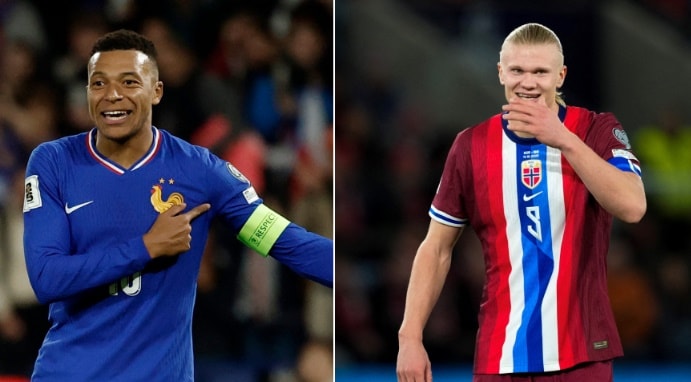
Mbappe vs Haaland: A clash of power and speed.
Immediately after the results were announced, the media focused entirely on the clash between the two leading strikers in Europe. Norway's coach, Stale Solbakken, called it a duel between the two best players in Europe right now. He even added a touch of humor, hoping Mbappe's form would decline before the match, while asserting that Norway was ready to spring a surprise, even though France and Spain are considered the two strongest forces on the continent.
From a technical standpoint, the balance of power suggests a battle of wits between speed and space. Norway's firepower revolves around Haaland and Sorloth, while France possesses attacking players who allow them to explode in just moments. In a Group I promising pragmatism and tight play, the quality of handling crucial situations will determine the pace.
Deschamps looks at Group I: "Solid and dense"
Coach Didier Deschamps was cautious, assessing Group I as a solid group, even one of the toughest in the tournament. He particularly noted Senegal – an opponent that brought back memories of 2002 – and Norway with their firepower from Haaland and Sorloth.
Not only the opponents, but also external factors present a major challenge: the hot summer weather in the US, time zone differences, and travel schedules between the planned competition venues around Washington, Boston, and New York. All of this demands meticulous rotation and physical management, which can determine rankings in a group with a compressed quality of competition.
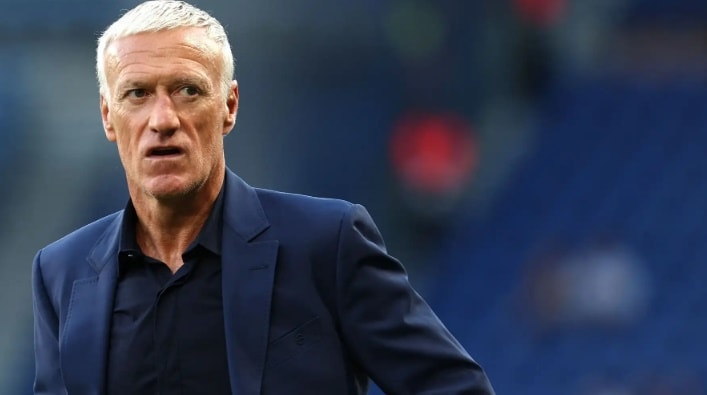
Logistics and objectives: a test of preparation.
French Football Federation president Philippe Diallo called it a "tough" group, but the goal remains unchanged: France aims to reach the semi-finals. The Les Bleus' logistics team arrived in the US to survey and finalize their training camp location before January 9th, aiming to optimize their adaptation to the climate, circadian rhythm, and travel distance.
In a geographically expansive tournament, where small details like training schedules, recovery procedures, or flight distances between cities can all create errors, France's level of preparation will be an early indicator of their long-term potential.
Knockout bracket: Germany could be the next hurdle.
According to the tournament bracket analysis, if France finishes first in Group I, they have a real chance of facing Germany in the Round of 16. This scenario forces Les Bleus to optimize their form from very early on, because just one tactical mistake or moment of lack of concentration could derail their progress towards July 19th.
In a tough group, the strategic priority might be risk control, accumulating points, and distributing energy wisely, rather than getting caught up in exhausting attacking exchanges. This becomes even more crucial if a formidable opponent emerges on the path to the Round of 16.
Senegal and the echoes of 2002
The rematch against Senegal is not only a matter of professional skill but also touches upon deep emotional layers. Coach Pape Thiaw and player Pape Gueye expressed pride and respect for France, recalling the African team's historic victory more than two decades ago. In a group where every point is precious, Senegal is a test of France's character and adaptability.
Overall perspective
Group I encompasses all the variables a title contender must overcome: facing opponents with distinct identities, adapting to harsh competition conditions, and managing the risks of the knockout bracket. Mbappe and Haaland bring the flashy aspects of the game, but ultimate victory may belong to the team that minimizes errors and makes good decisions in crucial moments.
With Deschamps' cautious approach, the FFF's ambitions, and the fiercely competitive landscape, France's journey to the 2026 World Cup begins today – starting with the preparatory decisions following the draw in Washington DC.


