
Never-before-seen creatures discovered at the deepest point of the Indian Ocean.
Hidden at the deepest depths of the Indian Ocean is a completely new and mysterious species of creature, possibly the first of its kind ever seen.
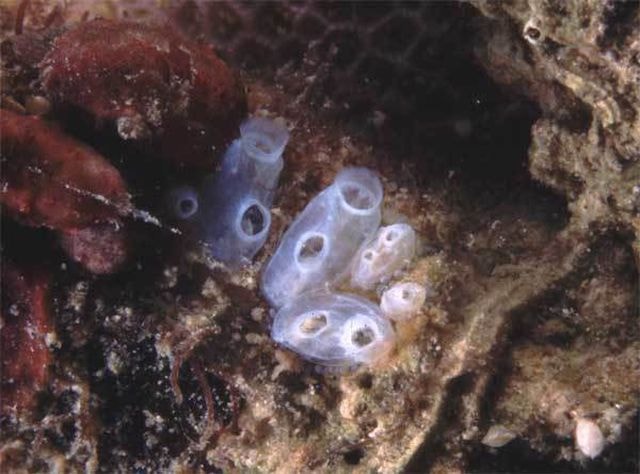 |
| Tunicates are transparent, jellyfish-like creatures. |
According to CNN, American explorer and millionaire Victor Vescovo made a new discovery during a deep dive into the Java Trench (7,725 meters), the deepest point in the Indian Ocean.
This expedition was one of five deep-sea expeditions documented by Discovery Channel. At the bottom of the Java Trench, Vescovo and his team spotted a jellyfish that may have belonged to a previously unknown species.
They filmed the creature and described it as "extremely extraordinary" and "unlike anything they had ever seen before."
Alan Jamieson, the lead scientist on the expedition, told CNN: "It's incredible to have a species of jellyfish like that at the bottom of the deep sea."
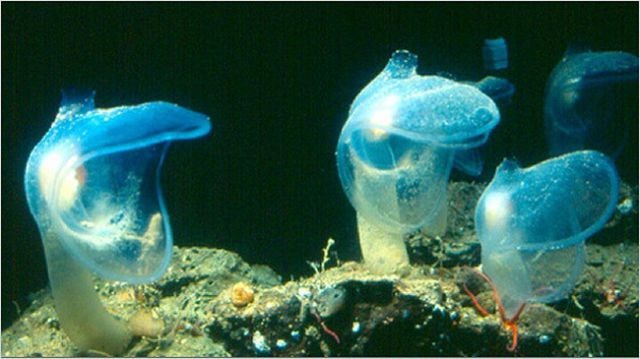 |
| Tunicates are animals that belong to the same family as squid. |
"The whole group tried to take as many photos and videos as possible of what they had just seen."
Back at his hotel in Bali, Jamieson scoured the internet for clues. He met with a group of Japanese scientists and asked them about what he had found.
"We came to the conclusion that this creature resembles a tunicate," Jamieson said.
"Tunicate" is a creature resembling a spooky plant created from a collision with planets in a science fiction movie. In reality, it's not a plant but a species of animal related to squid; they are carnivorous and have a unique hunting method.
They bury their entire bodies deep in the ground, waiting for prey to pass by before opening their mouths to swallow it. Thanks to the numerous venomous stingers in their mouths, they paralyze their prey and turn it into food.
Jamieson said the creature had adapted to its habitat in the Java Trench.
"These creatures know they are at risk of being submerged by geological activity, so they develop long tentacles to lift themselves off the seabed and drift with the current," Jamieson said.


