
Broadcasting in response to the press's need for innovation.
The development of the Internet and social media has posed challenges to traditional journalism, including radio broadcasting. These challenges are particularly significant due to constraints on broadcast times, equipment, coverage area, and even content quality.
.png)
Thanh HuyenJune 17, 2026
----------------------
The development of the Internet and social media has posed challenges to traditional journalism, including radio broadcasting. These challenges are particularly significant due to constraints on broadcast times, equipment, coverage area, and even content quality.

Having emerged early and maintained its position as an irreplaceable form of journalism, radio remains the most enduring mass media, retaining its audience for much longer. Despite facing numerous challenges, such as the decline of some forms of journalism, incompatibility with modern information access, and even recent organizational streamlining, reduced broadcasting channels, and decreased investment resources, one thing is clear and certain: the reach and audience for radio broadcasting are being maintained, expanded, and growing ever larger.
The world recognizes the birth of radio in 1920, when American radio broadcasts the first news, and in 1933, FM radio technology was invented by Edwin Armstrong. Radio in Vietnam was not far behind the rest of the world, with the Voice of Vietnam – the National Radio Station – officially established on September 7, 1945, just five days after President Ho Chi Minh read the Declaration of Independence, giving birth to an independent Vietnam.

Convenience, simplicity, easy accessibility, and the ability to receive information anytime, anywhere—even while working, resting, or traveling—are the advantages of radio broadcasting. This is also why, in the modern landscape of journalism, radio broadcasting remains irreplaceable and is increasingly gaining popularity. As life becomes busier, people increasingly seek to simplify everything, including their choice of information access methods. And radio broadcasting is chosen for its speed, simplicity, and convenience.
It is evident that, under any circumstances, radio broadcasting always stays one step ahead of other forms of journalism due to its simultaneity with events. A few typical examples in Vietnam: On December 19, 1946, “National Call to Arms"—President Ho Chi Minh's call to arms for the nation was broadcast most quickly, widely, and powerfully through the national radio waves. And also from the Voice of Vietnam, simultaneously with the war situation in the South, at noon on April 30, 1975, the whole country erupted in joy when they heard the announcer's voice resounding with pride and confidence:"The Ho Chi Minh Campaign was a complete victory, and South Vietnam was completely liberated."...Broadcasting is not only fast but also has the characteristic of simultaneously and accurately reaching many people.

The development of the internet and social media has presented traditional journalism, including radio, with significant challenges. These challenges stem from constraints on broadcast times, equipment, coverage, and content quality. Amidst all-night shows, concerts, and parties, constantly updated smartphones with new features and technologies, and trending social media platforms attracting netizens, how many people will still rely daily on neighborhood loudspeakers and television programs with their assigned tunes and station names, listening to and watching outdated news? Instead of nostalgia, can mainstream journalism in general, and radio in particular, find a way to compete with social media and connect with the public?

Alongside maintaining traditional broadcasting channels in a context of uneven technological infrastructure and information recipients across regions, the global broadcasting industry has transformed to keep pace with multimedia journalism and digital transformation. Radio is no longer a one-way method of information transmission, where listeners passively receive information according to fixed channels, transmitters, and schedules. Instead, it has leveraged and applied technology to enhance listeners' access to information in the most diverse and convenient ways. Initially, this began with the emergence of live news broadcasts, and subsequently, broadcasting channels and production units have gradually increased the duration and time slots for live programs, discussions, and forums with greater interaction with listeners. Radio is no longer just about speaking and listening, but has evolved into speaking, listening, sharing, asking, and answering.

Along with live streaming and online connection of radio broadcasts to digital platforms, lively and engaging audio files have been periodically uploaded to YouTube, Facebook, TikTok, etc. A very typical example is that in the past, when media was not as widespread and information technology was not as developed as it is now, segments such as "Radio Stories," "Cautionary Tales," "Late Night Stories," "Folk Songs and Traditional Music," etc., were broadcast regularly at scheduled times. Today, people can choose and listen simply by typing keywords, clicking a mouse, or browsing on their smartphones. A large number of readers have switched to listeners, but not passively, but at any time according to their own needs. And podcasts – a new genre of modern radio broadcasting – were born from this. A way of telling stories using engaging audio files, suitable for audiences who want to listen to radio via digital platforms, convenient and appropriate for today's digital environment.
We can also easily see the shift in investment and development of broadcasting channels towards digital platforms by radio and television stations and production units. Training of hosts, digital broadcasting teams, and technological equipment to improve the quality of radio broadcasts have been emphasized. In particular, within the broadcasting time slots of traditional radio channels, the duration of live radio programs has increased significantly.
That is also why, at the 17th National Radio Festival – Quang Ninh 2026 in mid-April, in addition to judging and awarding prizes to outstanding works, VOV organized two seminars that attracted a large number of radio journalists nationwide and international experts: Live Radio and Podcast. This shows the development trend of radio, with the focus of modern radio genres being multi-dimensional interaction (media), liveness, and trust (authenticity), and the main information transmission environment in the future of radio will be the digital platform.

Not only has Nghe An Newspaper and Radio and Television maintained and developed all four main forms of media (print, online, radio, and television) in a balanced and traditional manner after the merger, but they have also embraced the spirit, intellect, and journalistic prowess, investing in and developing digital content. They view digital platforms as extensions and form a digital ecosystem for radio and television. Besides expanding and extending the time slots of each program and increasing the frequency of live broadcasts to suit modern radio, Nghe An Radio has strengthened its reach on digital channels through livestreaming, regularly producing new genres such as podcasts and audiobooks. Some familiar and popular live radio programs that attract listeners nationwide include: Music Stories, Farmers' Bridge, Your Doctor, Music Cafe, Event Flow, and Travel with VON…

In particular, at numerous National Radio Festivals, Nghe An Radio has consistently affirmed its position as a strong local station, not only in terms of the quality of its program content, but also in its rapid and effective transformation and adaptation, from its management team to its reporters and technicians, to modern broadcasting technology and methods. The standing of Nghe An Radio is measured not only by the Gold and Silver awards it receives at each festival, but also by the dedication of its reporters to challenging and complex topics, and its willingness to break free from traditional broadcasting practices, daring to venture beyond the boundaries of traditional broadcasting to experiment with difficult and new genres such as live and digital broadcasting.
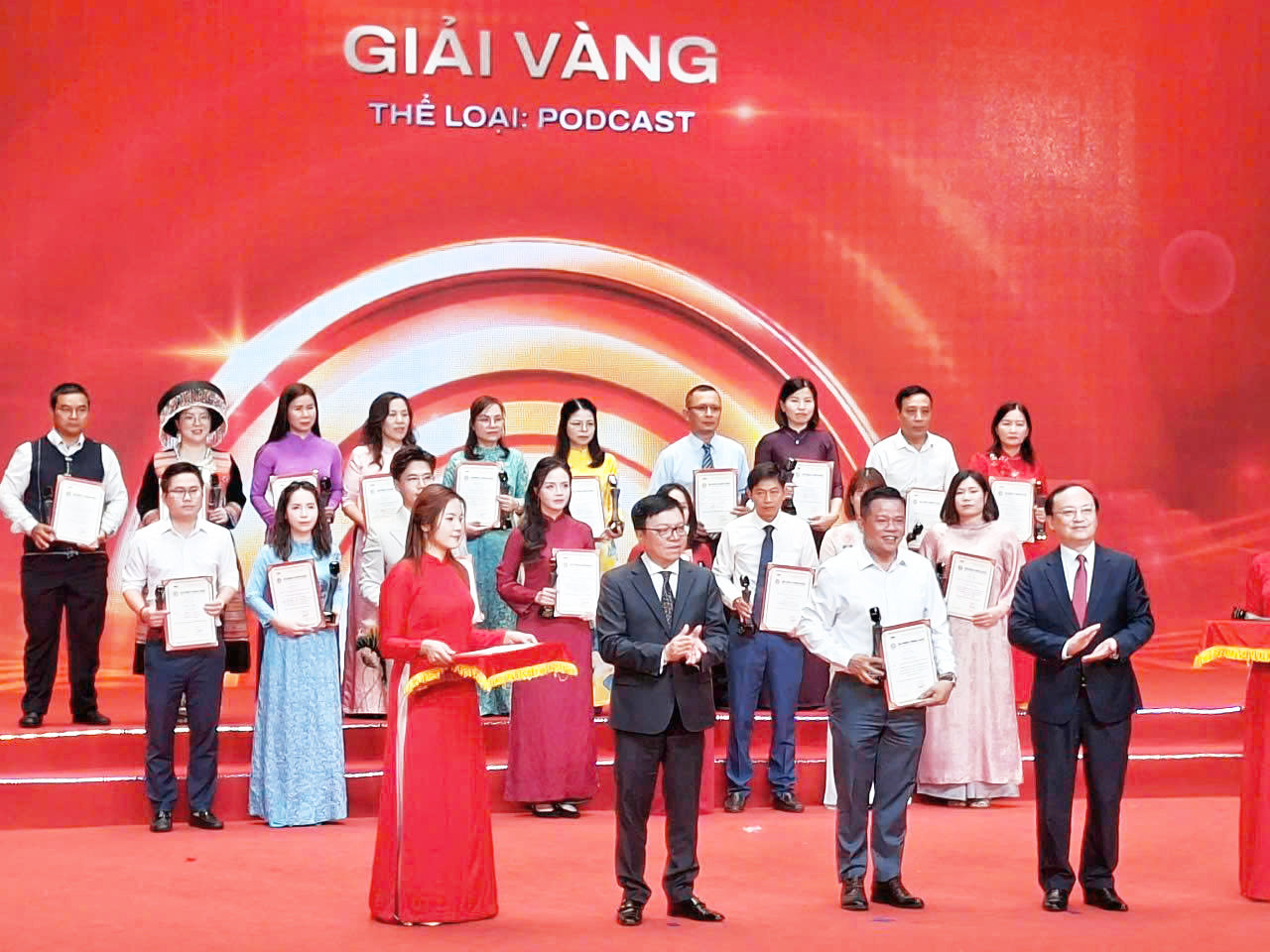
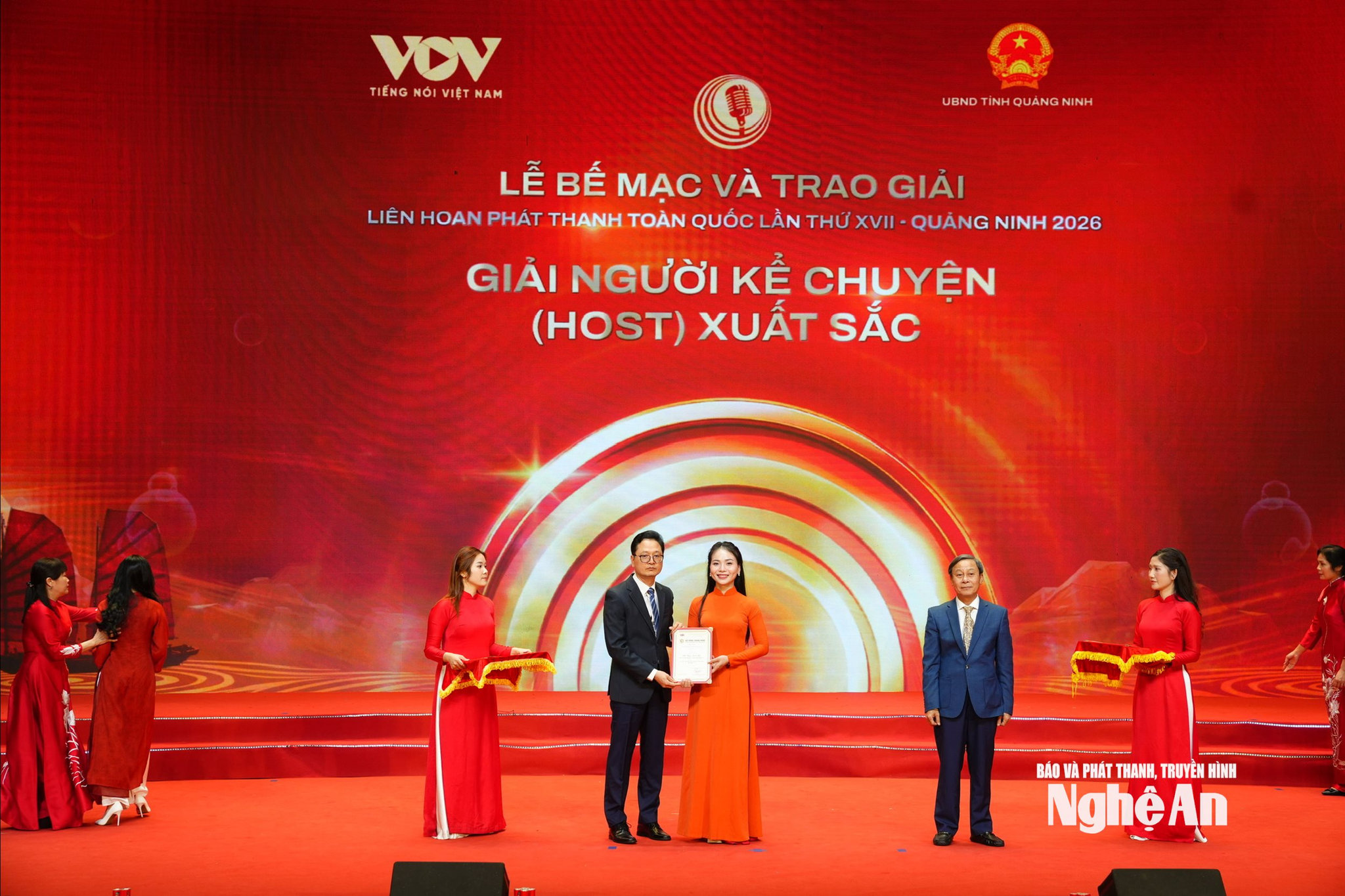
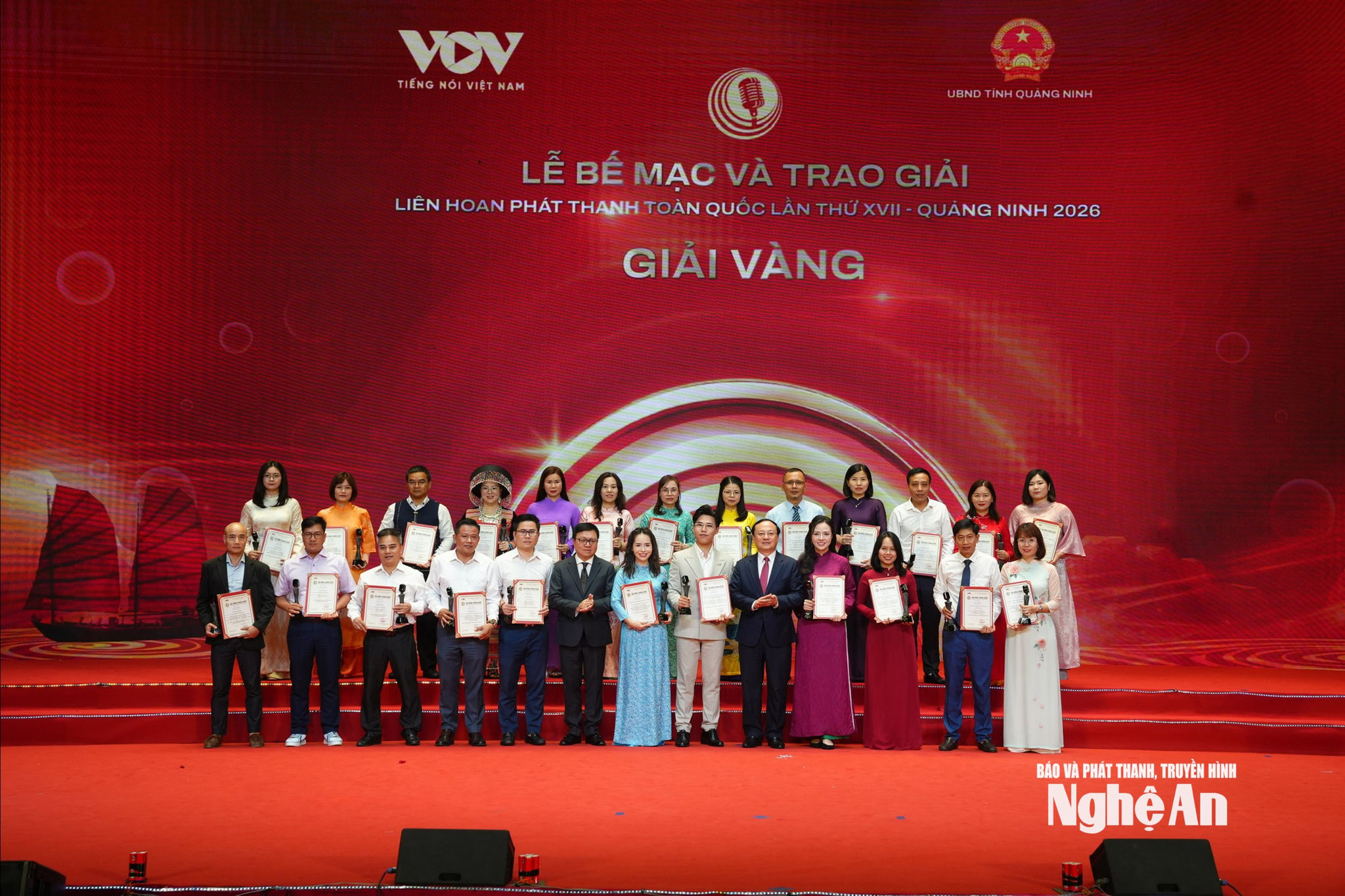
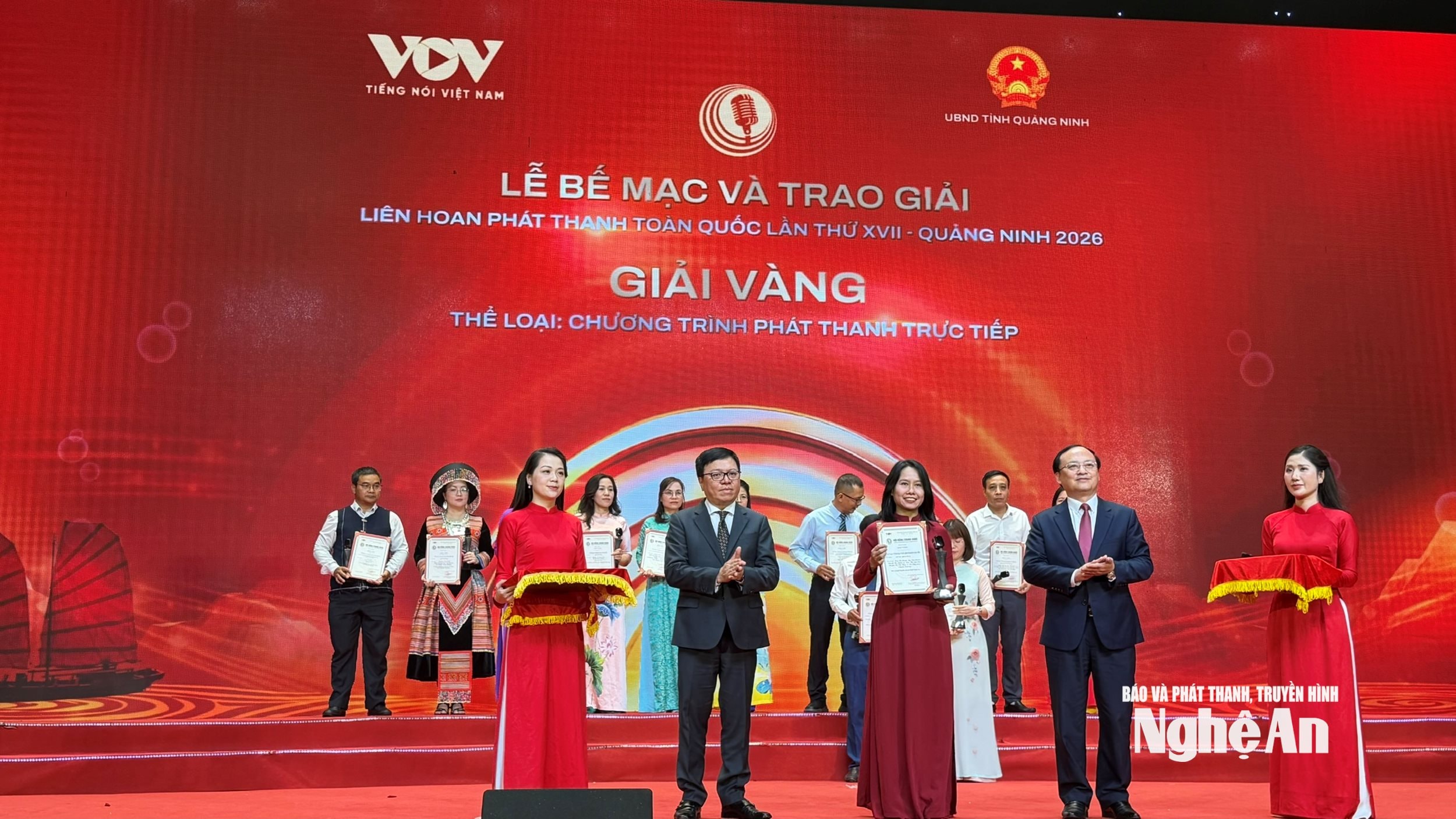
The Gold Award in the live radio category with the theme "Keeping the Flame Alive at the Commune Level" and the Gold Award in the podcast category with the theme "The Middle East Cauldron and Heatwave Reaching Nghe An" are impressive achievements, along with 1 Silver Award, 2 Bronze Awards, and 3 special awards for Outstanding Technician, Outstanding Live Radio Presenter, and Outstanding Storyteller (host) at the 17th National Radio Festival - Quang Ninh 2026, which is the most convincing affirmation of the position of Nghe An Radio.

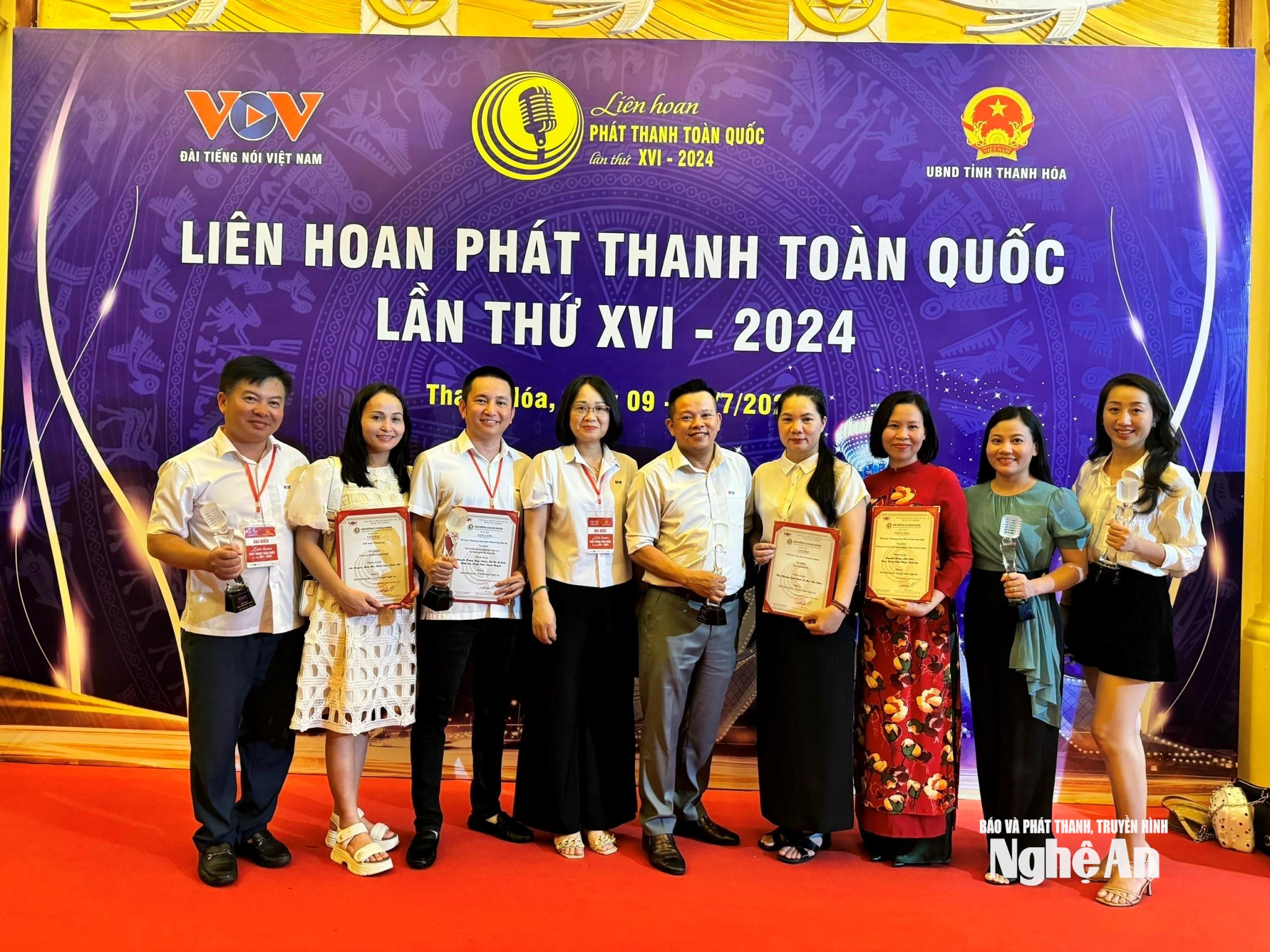

Along with maintaining coverage and retaining traditional listeners, Nghe An's newspapers, radio, and television have been striving to bring radio broadcasting up to par with the digital flow and modern journalism. The goal is to ensure that radio broadcasting not only avoids shrinking but also thrives in the digital age.


