
Fining parents for forcing their children to study: Is it feasible?
Decree 282, with its provision that "forcing family members to study excessively will be fined from 5 to 10 million VND," if viewed calmly, is not intended as punishment. It serves as a reminder for adults to reflect on their own behavior, to consider whether, out of excessive love, we have forgotten that children need to live like children.
Information regarding the penalty of 5 to 10 million VND for forcing family members to study excessively is attracting public attention, with many conflicting opinions. This is one of several provisions mentioned in Decree 282/2025/ND-CP regulating administrative penalties for violations in the fields of security, order, social safety; prevention and control of social evils; and prevention and control of domestic violence, effective from December 15, 2025. Although the decree generally specifies family members as the target, much of the public understands and discusses it primarily from the perspective of parents forcing their children to study, as this is a common situation and a source of concern in modern life.

Many people support this regulation, arguing that it is a step forward in protecting children from excessive academic pressure. However, there are also many concerns about whether this regulation is truly feasible in practice, given that forcing children to study often stems from love and expectations rather than violence. Some also question: How can we define what constitutes "overwork"? And how can we detect and punish coercive behavior that occurs privately within the family?
Academic pressure on children in Vietnamese families is no longer uncommon. Social media is full of shocking images: a child slumped over a study desk in the middle of the night, notebooks crammed with homework, or a primary school student's diary entry saying, "I'm afraid of upsetting Mom if I get bad grades..." Parent forums are flooded with shared stories and concerns from parents worried about their children falling behind, so they seek out tutoring centers and rush through exams to earn certificates for peace of mind. Countless children live their lives constrained by packed schedules, with no time to play, get a good night's sleep, or explore the world in their own way.
The pressure to achieve high grades doesn't just come from parents; it's a systemic issue, from the relentless exams and piles of homework to the invisible rankings that make many children fear failure, defeat, and low grades. The phrase "you must try harder" has become a familiar slogan, but hidden behind it is the prolonged exhaustion of both parents and children. Childhood is sacrificed for grades on paper, while the joy of learning, which should be preserved most, is gradually disappearing.
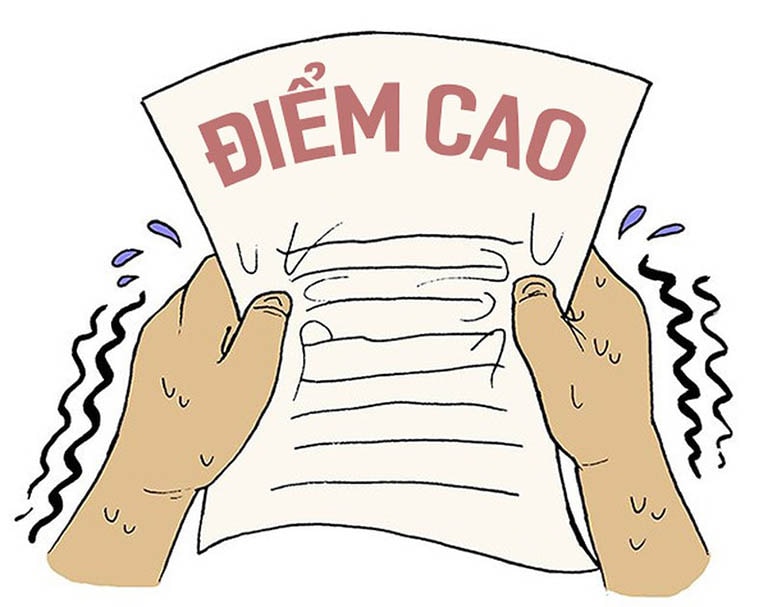
Therefore, I believe that Decree 282, with its information stating that "forcing family members to study excessively will be fined from 5 to 10 million VND," if viewed calmly, is not intended as punishment. It serves as a reminder for each adult to reflect on their own behavior. Perhaps, out of excessive love, we forget that children need to live like children. Learning is a journey of exploring the fascinating and profound world of knowledge, not a race for temporary high scores. When a child studies under pressure, joy disappears, and creativity withers.
Of course, it's not easy to define what constitutes "over-study." There's no number that can measure the limits of a person's endurance in general, or a child's in particular. But this decree is still valuable because it reminds us of the limits of love. Love, if not accompanied by understanding, can sometimes become suffocating pressure. A progressive society cannot be measured by average grades, but by how it protects the happiness of children. If parents stop placing such heavy expectations, if schools stop using achievement as a measure, perhaps children will be freer to find themselves.
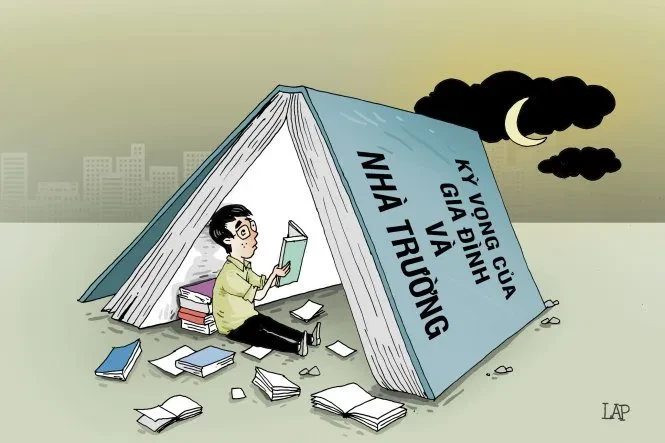
In reality, very few people are actually punished for forcing their children to study. But what's more frightening is when we don't realize we're forcing our children every day, through comparisons, impositions, and the repeated question, "What grade did you get?" If only sometimes parents would change that question to, "Are you happy today?", then perhaps the family conversation would be much warmer.
Therefore, the new decree was created not just to set penalties, but to encourage a different way of thinking. Children need to grow up in an environment of trust and respect. A child who is listened to will learn much better than a child who learns in fear. When parents know what is truly most important for their children, when schools understand that achievement is not everything, and when society learns to praise effort instead of results, then punitive regulations may no longer be necessary.
Decree 282 cannot change everything overnight. But it opens up a humane perspective that children are not copies of their parents, nor are they tools to fulfill the unfinished dreams of adults. They need to live, to be happy, to make mistakes, and to find their own path.
If we understand the true spirit of this decree, it is no longer a "punitive stick," but a poignant reminder to every parent to let their children grow up in peace. Because childhood only comes once, and no child should have to trade their joy for a certificate of merit.


