A "test" for Iran's future.
(Baonghean) - It has been a long time since the results of a parliamentary election in Iran have been so eagerly awaited – not only by the 80 million Iranians, but also by the international community. People are wondering whether there will be a fundamental change in the Iranian Parliament, which has long been dominated by the conservative faction? Will the pro-Western policies of the reformist faction be challenged?
Scoring citizen satisfaction
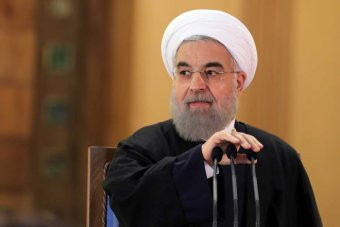 |
| President Hassan Rouhani declared his continued dedication to the future of Iran. Photo: ABC |
In the first parliamentary election since Iran reached a nuclear agreement with the P5+1 group, Iranians will elect 290 members of Parliament and 88 members of the Assembly of Experts – the body that appoints and oversees the work of the Supreme Leader. The timing of Iran's nuclear agreement with the P5+1 is frequently mentioned because it is the greatest legacy of Iranian President Hassan Rouhani's term to date, the clearest evidence of a more open and friendly Iran towards the West, gradually emerging from international isolation. Therefore, this election will be an opportunity to gauge public satisfaction with what Rouhani has brought to Iran, reflected in votes supporting either the reformist or conservative factions.
According to Iranian regulations, the vote count results are only announced after approval by the Guardian Council – the body responsible for reviewing the eligibility of candidates. However, even before the official results were released, information from the preliminary vote counting process in each constituency was continuously being sent out, revealing an extremely fierce race between the reformist and moderate factions and the conservative factions. Tehran, the capital of Iran with a population of 12 million, witnessed a strong resurgence of moderate reformist forces.
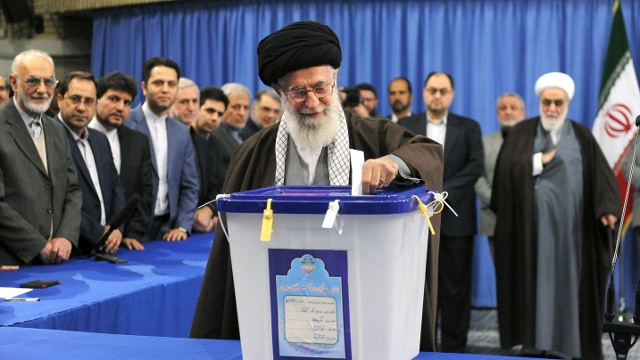 |
| Iran's Supreme Leader Ayatollah Ali Khamenei participates in the voting. Photo: Haaretz |
Accordingly, the reformist camp won 29 out of 30 seats in Parliament, while the conservative camp secured only one seat. However, this does not mean that moderate reformists will prevail in other constituencies. Subsequent information reinforced this assessment, with conservatives securing 82 seats in Parliament, while conservative and moderate groups only obtained 49 seats, and independent candidates secured 71 seats. However, the final official results will depend on by-elections in several cities and towns where candidates did not win the required 25% of the vote.
The close race in the Iranian parliamentary elections was predicted by experts, stemming from differing views among Iranians on the country's economic prospects. Supporters of reform and moderate factions believed in the prospect of a significant increase in foreign investment following the nuclear agreement, which would boost the economy and create new jobs. Conversely, conservative supporters maintained their belief in a self-sufficient economic model, consistent with the ideals of the 1979 Islamic Revolution, and maintained a cautious approach in diplomatic relations.
The relentless struggle
International opinion views this as a crucial turning point in Iran's development, as the conservative faction previously held a dominant position in Parliament. While President Hassan Rouhani and his associates may still face intense reforms, Rouhani has reason to believe this will be the beginning of a new development trend for the country, given that nearly 60% of Iran's 80 million population is young (under 30 years old). They are eager for the prospect of integration with the world after sanctions are lifted and place their hopes in President Rouhani's government to improve the 25% youth unemployment rate as promised.
Following the preliminary vote count, Rouhani confidently declared: "The competition is over. It is time to open a new chapter in Iran's economic development, based on internal resources and international opportunities."
Perhaps Rouhani recognized the favorable balance of political power in Parliament, where the moderate reformist faction now has a much stronger voice than when he was elected president. This strongest presence of reformist forces in Parliament since 2004 is boosting Rouhani's government's prestige and influence, allowing him to continue implementing reforms aimed at bringing Iran closer to the West.
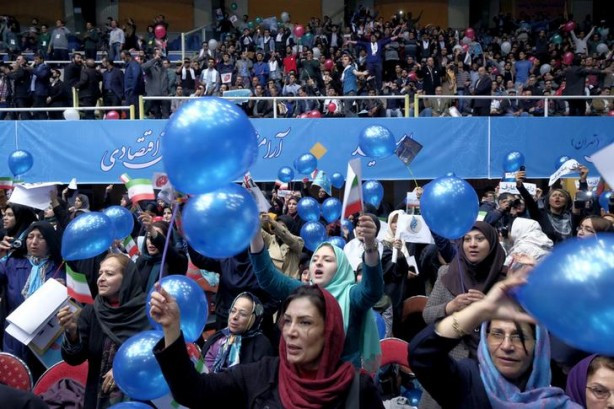 |
| Iranian women who support the reformist faction. Photo: Reuters |
Perhaps the more than one month since sanctions were lifted on Iran is not enough time to yield measurable results. However, the visits of numerous Western leaders to Iran, as well as President Rouhani's trip to Europe to seek economic cooperation opportunities, and Iran's involvement in pressing regional issues, have shown a truly transforming Iran in its process of reintegrating with the world. Economic experts predict that with the lifting of sanctions, Iran's growth rate is expected to reach 7-8% per year, potentially moving it from the 29th largest economy in the world to the 22nd.
Rouhani and the reformist faction have a very good foundation to attract the support of the Iranian people. Of course, to maintain this support, to make Iran's reform path an irreversible trend, and to ensure this parliamentary election truly "opens a new chapter" for Iran, Rouhani's government will have to demonstrate its ability to govern the country, including its ability to overcome obstacles from the conservative faction. This will be a relentless struggle for the moderates, including President Hassan Rouhani, who have earned the trust of Iranian voters.
Thuy Ngoc
| RELATED NEWS |
|---|