
The house is in front.
Short stories by Nguyen Van Nhat Thanh
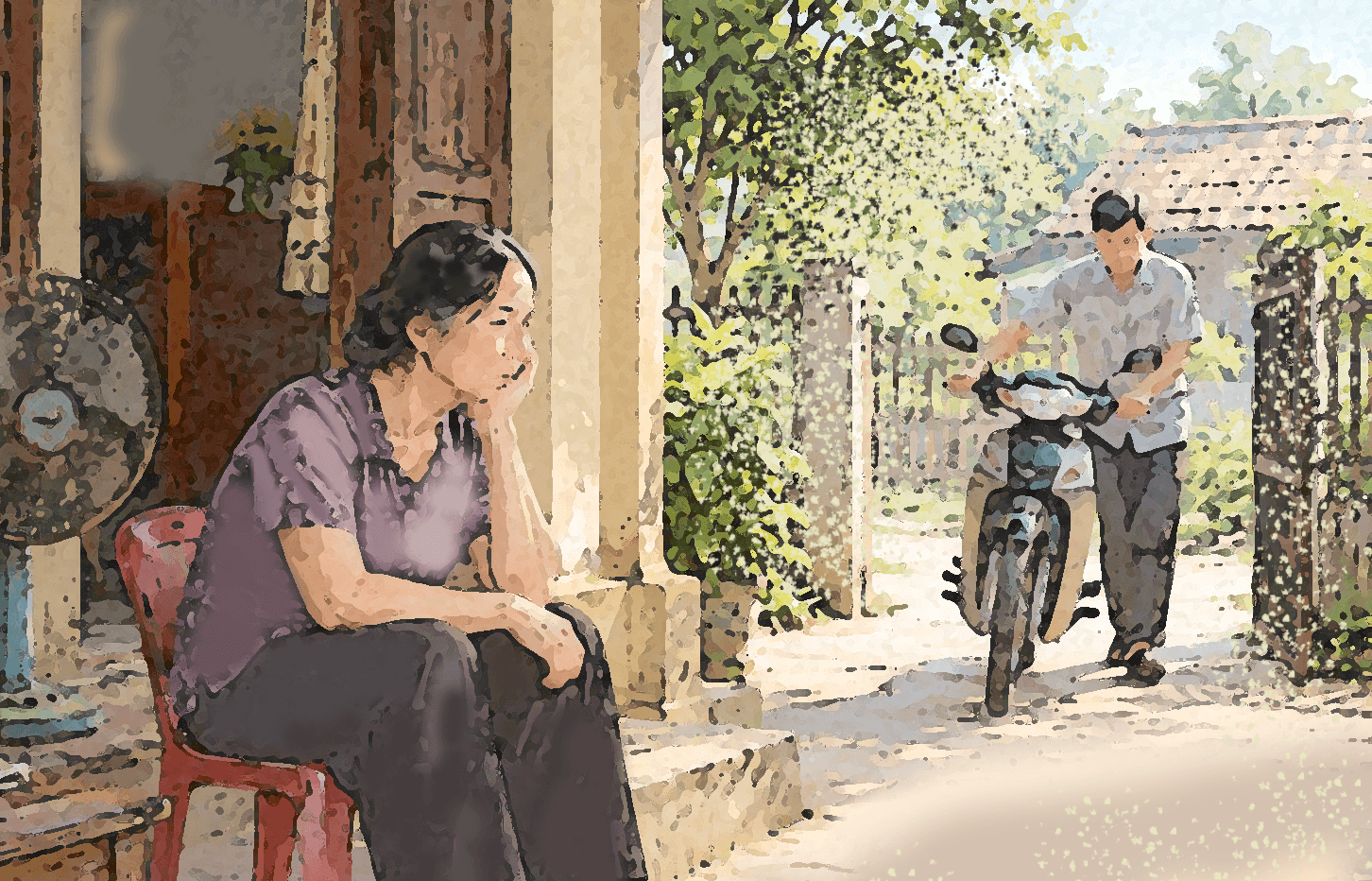
Hong learned she had an illness one afternoon in late September. The doctor at the provincial hospital said she needed further examination at a higher-level facility. He didn't say anything directly, only that the lesion wasn't normal and that she should see a doctor soon for an accurate diagnosis. Hong listened to every word, her mind racing with confusion.
When she got home, her husband was sitting on the porch repairing an old fan. Seeing his wife late, he stood up, wheeled the motorbike inside, and asked about the results. Hong took off her mask and sat down on a plastic chair. "The doctor said I need to go to Hanoi for another checkup." Her husband was silent for a moment, then asked, "Is it serious?" Hong shook her head. She didn't say the letter K. Not because she wanted to hide it from her husband, but because she herself didn't have the courage to name what she was thinking.
That night, the couple lay side by side, neither able to sleep. The small house was quiet. The sound of cars outside occasionally faded away. Hong turned her face to the wall, trying to close her eyes. The test results in her file kept flashing through her mind. She was only 42 years old; her two children were still in school. The older one was in her final year of high school, the younger one had just started sixth grade. Her mother, over 70, always asked when she would be home for dinner whenever she called. Her husband was a construction worker; during the busy season, he was out from morning till night, and during the rainy season, he stayed home. Hong had never imagined she would contract a disease that terrified her just hearing about it.
***
Two days later, Hong and her husband took an early bus to Hanoi. Hong sat by the window. She barely slept the whole way. Her husband occasionally asked if she was tired or needed anything to eat. Each time, Hong said she was fine. Around noon, the bus entered the city. The streets were more crowded and congested. Through the window, Hong watched the tall buildings whizz by. She had been to Hanoi several times before, but never had the city felt so vast and unfamiliar as it did that day.
The couple got out of the car and took a taxi to the hospital. There was already quite a crowd outside the gate of K Hospital. Family members of patients sat on plastic chairs, some stood making phone calls, some held file bags, and others pushed wheelchairs carrying patients inside. Hong stood outside the gate for a few seconds before continuing on her way. She saw a woman about her age sitting next to her husband, holding a cloth bag in both hands. That woman was also looking around like Hong had when she first arrived. The two women's eyes met briefly before they both turned away.
Hong went through the registration process and got a number for her appointment. Her husband ran back and forth with a stack of papers. There were simple tasks like photocopying documents, getting a number, and finding the examination room that she used to do herself. Yet that day, she felt incredibly slow. When it was her turn to be examined, the doctor checked the results from the provincial hospital and ordered some additional tests, which Hong followed. Sometimes she had to sit and wait for hours in the hallway. People came and went constantly; some had just finished their examinations and were already calling home. Some were lying on stretchers, their family members standing nearby fanning them.
In the afternoon, after receiving some more results, the doctor called Hong in. She sat down in the chair in front of the desk. Her husband sat beside her. The doctor spoke quite slowly, explaining what he had seen in the results. Then he said that further tests were needed to confirm, but the possibility of malignancy was something to consider. Hong didn't ask any questions; she just sat quietly, her hands clasped together. For the first time since leaving the provincial hospital, she heard someone say almost clearly what she feared most.
Leaving the clinic, her husband walked beside her. He asked, "Did you hear what the doctor said?" Hong nodded. "Yes." "Then..." He didn't finish the sentence. Hong didn't answer immediately either. They walked down the hallway, surrounded by many patients and their families. After a while, she said, "I guess we'll have to continue." Her husband nodded.
That evening, they rented a small room near the hospital. The room contained only a bed, a plastic table, and a wall-mounted fan. Hong placed her file bag on the table and lay down. Her phone rang. It was her daughter calling. Hong answered, trying to sound normal. "Are you coming home tomorrow, Mom, or staying?" Hong looked up at the ceiling.
- I think Mom will stay a few more days.
- Are you okay, Mom?
She was silent for a moment, then said:
- It's okay. Mom's just going to the doctor.
After hanging up, Hong turned away. Outside, the sound of cars continued. In their small rented room, her husband sat on the floor, silently reviewing the papers the doctor had given him.
***
The final results came after several days. Hong sat in the examination room, listening to the doctor tell her she had cancer. She couldn't remember all the explanations that followed. She only remembered asking a very practical question: "What should we do first?" The doctor talked about the treatment plan, the next steps, the importance of staying positive and adhering to the treatment protocol. Hong nodded, trying to remember everything. Her husband sat beside her, jotting down each detail in a small notebook. Leaving the room, Hong felt her legs tremble slightly. She sat down on a chair in the hallway. After a while, her husband sat beside her. He said, "So it's true." Hong understood what he meant. She nodded. "Yes." Perhaps because they had both been living in anticipation for several days, when their worst fear was finally revealed, they lacked the strength to react as they had imagined.
That afternoon, the couple went to eat a bowl of pho near the hospital. Hong ate a few bites and then put down her chopsticks. Her husband said, "Eat, dear." "I'm not hungry." "Even if you're not hungry, you have to eat." Hong looked at her husband; he hadn't eaten much for several days, yet he still tried to act as if it were just a normal illness.
On her way back to her rented room, Hong stopped at a convenience store to buy two bottles of water and some biscuits. She suddenly remembered that her son still liked these biscuits at home. That thought made her stand in front of the shelves longer than usual. That evening, Hong called home. She told her daughter that she had to stay in Hanoi for treatment for a while. She didn't say much about her illness, only that the doctor had discovered a tumor and that she needed treatment.
The next day, Hong called her mother. When her daughter told her she needed treatment in Hanoi, her mother only asked when she would be back. Hong said she didn't know yet. Her mother was silent for a moment, then said, "Do your best with the treatment. Let the children take care of the housework." Hearing this, Hong's eyes welled up with tears. Her mother didn't ask what illness she had. Perhaps she guessed, or maybe she was afraid that asking would upset her daughter.
In the following days, Hong gradually became familiar with the hospital. She knew which room to get her medication, where to get tests, and when the hallways were crowded. She became acquainted with several other patients undergoing treatment. Some had undergone multiple courses of treatment, while others, like her, were visiting for the first time. They sat next to each other, talking about very ordinary things like where they were from, whether they had children, and what they had eaten that day. One day, a woman in the same room gave Hong an orange, saying her husband had bought too much and they couldn't eat it all. Hong accepted it and brought some cakes from her hometown the next day. Life, even in the hospital, continued with such small things. Hong began to understand that she couldn't just sit there and be afraid of the disease. She was still afraid, but she had to live with that fear.
***
After her first course of treatment, Hong was allowed to go home for a few days. Before leaving, she packed her medicine into a separate bag, checked her appointment schedule, and carefully put her documents into a blue file folder. It was the same bag she had brought from the provincial hospital, only this time, she didn't look at it with the same apprehension as before. The car drove along familiar roads. Hong sat behind her husband, clutching her medicine bag. The late afternoon sun shone gently. People were still selling their wares along the roadside, children were cycling home from school, and women were chatting in front of their houses. Hong observed all of this and realized that although she had only been away from them for a few weeks, it felt like a very long time.
When she arrived home, her son ran out to greet her. He didn't ask if she was feeling better; he just took the bag from her hand and asked, "Is there a gift for me?" Hong laughed, "Yes." She took a packet of cookies out of the bag. Her son hugged her and ran into the house. Hong stood in the yard watching him go. Her husband parked the motorbike and took the groceries down. He didn't say anything, but Hong knew he felt relieved too.
That evening, the whole family ate dinner together. Hong ate less than before. Everyone noticed, but no one said anything. Her daughter picked up a piece of fish for her mother and told her to try it. Hong ate it all. After dinner, she went out to sit on the porch. Her mother called to ask about her condition. Hong said that the doctor said to continue treatment as scheduled and that nothing could be said for sure yet. After hearing this, her mother only told her daughter to take care of herself. Hong hung up the phone and sat for a while longer.
She remembered her days at K Hospital. She remembered the long corridors, the plastic chairs, the patients waiting for their turn. She remembered the woman hugging the cloth bag she met on her first day and wondered how she was doing now. Hong realized that since learning she was sick, she had started to see the people around her differently. Before, when passing a hospital, she just wanted to walk quickly and get out. Now, she understood that each person sitting inside had a family behind them, a job left unfinished, people waiting for them to return.
She didn't know how long her treatment would last. She didn't dare think too far ahead. Tomorrow she still had a trip to the hospital. Still the same tests, the same pills, the same tiring days. There might be times when she felt sad, scared, and just wanted to lie still and do nothing. But the next morning, Hong still woke up early. She swept the yard, cooked rice, woke her two children up for school, and her husband prepared the car. Before leaving the house, Hong turned back to look at the kitchen one last time before locking the door. She placed the blue file folder inside her small backpack. K Hospital was still ahead. Hong knew she couldn't know how long that journey would be. But this time, she wasn't going to wait to hear what disease she had. She was going to get treatment and to return to her beloved family.


