
The Philippines is simultaneously breaking the ice and balancing its foreign policy.
(Baonghean) - Philippine President Rodrigo Duterte is making the first state visit to China by a Philippine leader since 2011. China is also the first country outside ASEAN that Duterte has visited since taking office in June.
Taking place against the backdrop of deteriorating bilateral relations over the South China Sea dispute, Duterte's visit is seen as a "breakthrough" in relations with Beijing.
Economic concentration
In a statement issued before the visit, Philippine President Duterte did not hesitate to describe this visit to China as a significant turning point in bilateral relations.
On the Chinese side, Foreign Minister Wang Yi also used flattering words to describe the trip, calling it a "historic visit" and a "new beginning." It's no coincidence that leaders from both sides made such comments!
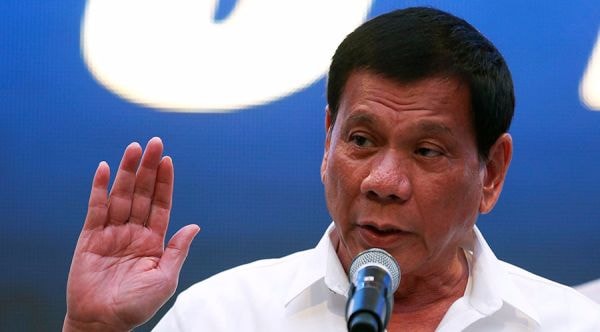 |
| Philippine President Rodrigo Duterte is walking a tightrope in his relations with both China and the United States. Photo: Reuters. |
Looking at the 400 business leaders in the delegation accompanying the Philippine President this time, the public will see that the main objective of the trip is economic and trade cooperation.
The reality is that the Philippines still has a weak infrastructure, serious unemployment, and energy shortages. It could be said that what Manila lacks, Beijing has in abundance.
Therefore, President Duterte's trip is primarily explained as an effort to strengthen economic, trade, and investment cooperation.
President Duterte himself has stated in numerous pronouncements that the Philippines will use the results of this visit to China to improve infrastructure such as building hospitals, schools, and hydroelectric power plants, while also attracting significant investment from China to strengthen cooperation with Philippine businesses.
Duterte is also reportedly seeking China's support in his controversial domestic war on drugs.
Diplomatic gamble
With numerous objectives set, this trip also marks a clear shift in the Philippines' foreign policy since President Duterte took power. A "cold shower" on the alliance with the US and declarations of normalizing relations with China are what the public is witnessing.
Just before the visit, the Philippines made a series of moves that surprised the US, such as demanding that the US withdraw its troops helping Manila fight Islamist militants in the south, and declaring the end of joint US-Philippines military exercises on Luzon Island.
Duterte also declared his willingness to conduct joint military exercises with China and Russia instead of with the United States. Particularly on the South China Sea issue, Duterte expressed a different stance from his predecessor, believing he could reach a consensus with Beijing.
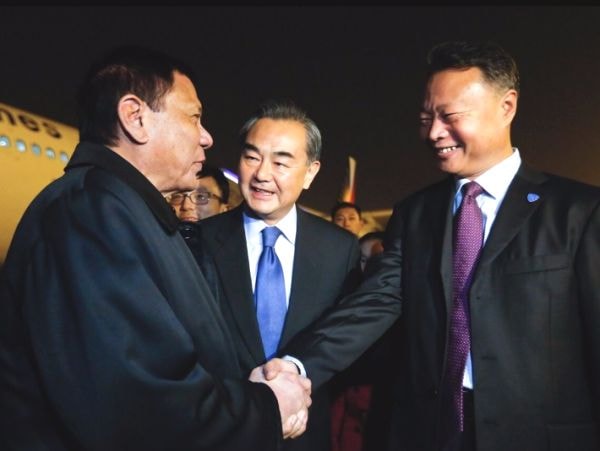 |
| Philippine President Rodrigo Duterte shakes hands with Chinese Ambassador to the Philippines Zhao Jianhua upon his arrival in China for a four-day state visit. Chinese Foreign Minister Wang Yi is in the middle. Photo: Philstar |
However, this shift is being assessed as a risky diplomatic move by the Philippine president, pitting a long-standing ally against a massive financial resource like China. Some even argue that this represents a difficult trade-off for Duterte in his foreign policy strategy.
Naturally, the South China Sea issue, a hot topic in bilateral relations, and the arbitration ruling are attracting significant public attention. Under pressure, President Duterte stated that he would not shy away from addressing the issue in order to safeguard core national interests.
He also emphasized: “We will do what we have stated. We are not negotiating anything. The Philippines will continue to assert what belongs to it, as ruled by the Arbitration Tribunal.”
However, in a face-to-face meeting with Chinese leaders, the Philippine president will certainly have to choose a more tactful and gentle approach. More than anyone else, Duterte does not want his plan to "warm up" relations with Beijing to be affected.
America or China?
From China's perspective, the country is clearly delighted to welcome the changes in the Philippines.
Simply put, this perfectly aligns with Beijing's goal of dividing its two deep allies, the US and the Philippines. More broadly, it aims to diminish the US role in the Asia-Pacific region and derail the "pivot" of the world's number one economy.
As for the US, the shift in the Philippine President's foreign policy is posing many challenges, especially with the US presidential election fast approaching.
Notably, neither of the two leading candidates is enthusiastic about the Trans-Pacific Partnership (TPP) – a key element in President Obama's pivot to Asia strategy.
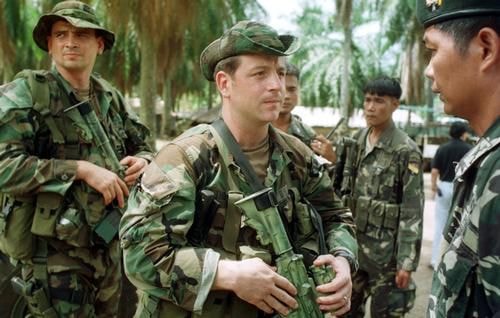 |
| While President Duterte declared he would end joint military exercises with the US, he also affirmed that the Philippines would maintain its alliance and military treaties with the US. |
If the Philippines also turns its back, then this ambitious project of the US administration could fall apart. Observation and exploration are what the Washington administration is currently doing with Manila.
However, returning to the Philippine government, President Duterte, while declaring an end to joint military exercises with the US, also affirmed that the Philippines would maintain its alliance and military treaties signed with the US.
Duterte probably understands that the Philippine military has a history of close ties with the US, so an immediate change is impossible.
Moreover, if President Duterte truly wants to implement a balanced diplomatic strategy with both China and the US over the long term, it will present enormous and far-reaching challenges.
In that process, the extent of China's aid and what the US will do to maintain its alliance with the Philippines will be factors that President Duterte must carefully consider. And this visit to China is likely also a strategic exploratory move by the Philippine government.
Phuong Hoa


