
Deputy Speaker of the National Assembly: 'I believe 2017 will be a breakthrough year'
"With the legal basis, resources, and calculations in place, I believe 2017 will be a breakthrough year," said Vice Chairman of the National Assembly Phung Quoc Hien confidently.
Reality demands that the National Assembly reform.
PV:The National Assembly has undergone significant changes recently, especially in its first session. Could the Vice Chairman of the National Assembly elaborate further on this issue?
Mr. Phung Quoc Hien:Chairwoman Nguyen Thi Kim Ngan stated that the 14th National Assembly will continue to innovate, act, and create to meet the demands of voters.
Why does the National Assembly need continued reform? It stems from its own merits. The international and domestic context, and the irreversible trend of international economic integration, demand that the National Assembly renew its thinking. Life presents countless problems that need solving, and the National Assembly must reform to meet the legitimate demands of its constituents.
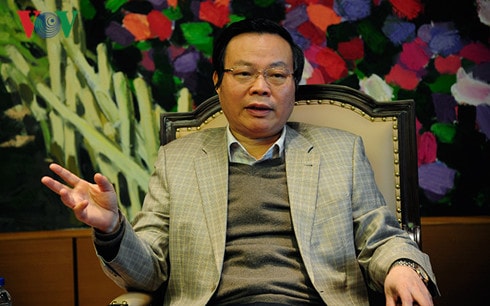 |
| Deputy Speaker of the National Assembly Phung Quoc Hien |
2016 was the first year of the 2016-2020 five-year plan, the year of the Party Congress, and the year of restructuring the apparatus, but we achieved many quite positive results.
But clearly, the country faces many issues that need to be addressed. These include growth failing to meet the targets set by the National Assembly, and the quality of growth not being truly sustainable. The "bottleneck" of bad debt and public debt must always be monitored. Along with that, investment activities have not been effective…
As the legislative body, at its second session, the National Assembly passed 3 laws and 11 resolutions, including 2 laws and 9 resolutions related to the economy. For the first time in the history of the National Assembly, regarding financial and budgetary matters, we developed a five-year plan that set specific goals and provided direction, creating a framework for all financial and budgetary activities to follow.
In the past, our medium-term public investment plan was based on a "financial flow" approach, investing without knowing where the capital would come from. This time, we must change that to avoid outstanding debts in basic infrastructure construction. Projects must clearly identify the source of funding, avoiding the practice of requesting and granting permits, and ensuring efficiency. The National Assembly must demonstrate that its words are matched by concrete actions.
PV:Voters are concerned that the government is facing a near-ceiling public debt crisis and lax discipline is creating a difficult budgetary situation. How do you assess this challenge for the government? What should the National Assembly do to help the government overcome it?
Mr. Phung Quoc Hien:As a developing country, there is a huge need for infrastructure investment, but investment has not kept pace with development. Meanwhile, our revenue is insufficient to cover expenditures. Recurring expenses are increasing rapidly, leading to a situation where we have to borrow to fund development investments. Another reason is that we have not done a good job of managing investments effectively and efficiently, avoiding scattered spending.
Since the Government issued Directive 1792 on strengthening the management of investment from state budget funds, requiring investment to have a source of capital, and then with the enactment of the Public Investment Law, responsibility has been linked to investment decisions.
Recently, we've had a five-year financial plan and a five-year medium-term public investment plan to prevent the constant making of inappropriate decisions. We must focus on key priorities; create a visionary and effective financial system, and eliminate formalistic thinking. We need to define the responsibilities of leaders such as the Prime Minister, ministers, heads of departments, and chairpersons of provincial People's Committees; we can no longer talk about general responsibilities.
"Even roses have thorns."
PV:MTo restructure the economy, we need to confront both the difficulties and advantages head-on in order to definitively address existing problems. Otherwise, when integrating more deeply into the global economy, Vietnam will lose on its home turf, sir?
Mr. Phung Quoc Hien:Our old economic structure was irrational and did not ensure development, so it had to be restructured. The requirement is to change the growth model, from relying on capital, resources, cheap labor, and vertical development to a model that is both broad and deep, but deep development is the dominant approach.
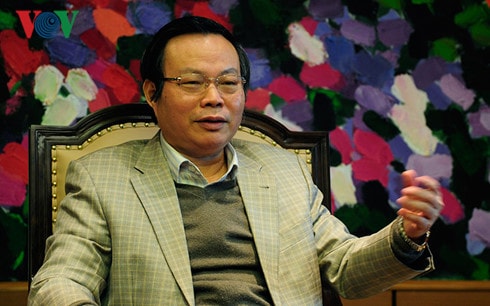 |
| Restructuring is beneficial; the difficulties are only temporary. |
The implementation process faces difficulties, primarily regarding resources. Integration is the trend; Vietnamese businesses may accept losing the first battle, but in the long run, they will have to win. Recently, we have experienced many new things where we initially lost, but then we rose again. We are not afraid; the important thing is to create an extremely open, transparent, and equitable environment.
Having a good environment is not enough; we need good people to implement it. National revitalization must be achieved through education and training a skilled workforce. However, a farmer working in the fields cannot simply climb the ladder to work in a factory.
On the other hand, it's important to recognize that we have a history of implementing a market economy, which has created the scale and strength of our economy and our management experience. Restructuring is an opportunity to utilize what we already have, what we have done, and what we have progressed in order to create new developments, new ways of thinking, and new perceptions.
That's the reality; not everything is a bed of roses. Even roses have thorns! But clearly, restructuring is beneficial, and the difficulties are only temporary.
PV:In 2017, a series of new laws came into effect. How do you assess the impacts of implementing these laws, especially the State Budget Law?
Mr. Phung Quoc Hien:The new State Budget Law is a very important step forward, concretizing the 2013 Constitution with fundamental changes in regulations. Accordingly, all revenues and expenditures must have budget estimates, meaning that no expenditures can be made without a budget estimate.
There are no limits on revenue collection; the more revenue collected legally, the better. However, expenditure is limited. Previously, expenditures were reported and approved by the National Assembly, but that's no longer the case. Secondly, the central government budget must play a leading role.
All those expenditures must be planned, hence the concept of five-year financial plans and three-year budget plans implemented in a rolling manner. Furthermore, managing public debt and medium-term debt constitutes a budget with a vision and framework. Thirdly, budget deficits must adhere to international practices.
2017 will be a breakthrough year.
PV:Some have suggested that the National Assembly still seems to have some "flexibility" when making decisions. Throughout the sessions and discussions, it's clear that you consistently express your views frankly. Could you share more on this matter?
Mr. Phung Quoc Hien:The National Assembly is the constitutional and legislative body, therefore, above all else, it is the body that must uphold and strictly adhere to the implementation of the law. Therefore, there is no concept of leniency. It's simply that there are times when there isn't enough information, or decisions aren't entirely accurate, so people feel as if they are accepting them.
The National Assembly and the Government work together to fulfill their common mission for the benefit of the nation and the country, but due to the division of responsibilities, there are often differing opinions in the search for the optimal solution.
PV:At the beginning of the new year, could the Vice Chairman of the National Assembly please share his forecast for Vietnam's economy in 2017 and up to 2020?
Mr. Phung Quoc Hien:It's very encouraging that we have identified our direction and goals, unlike a ship sailing without knowing where the shore is. The remaining issue is how to organize the implementation.
We've been through difficulties, and we have experience. In 2016, although the economy wasn't perfect, it was quite good. In 2017, with the legal basis, resources, and calculations in place, I believe it will be a breakthrough year.
If the growth rate consistently reaches 6.5% or higher between now and 2020, then the economic restructuring and growth model transformation will be achieved. Entering 2021, we will have a different mindset. Conversely, failure to do so will be very difficult.
Our nation determines its own position, not anyone else's. Of course, we must adapt to the trends of the times, like a boat sailing downstream; encountering twists and turns and rapids is inevitable. We must dare to face them.
PV:Thank you, Mr. Vice Chairman of the National Assembly!./.
According to VOV


