
"Modern women need to dare to think and dare to act."
At the age of 35, Ms. Truong Thi Han (born in 1985), a farmer in Tho Thanh commune, Yen Thanh district, decided to start a business related to handicrafts, the Coi Xau project. After 6 years, the project has created jobs for more than 100 workers, and her products have "crossed borders" to be present in many countries around the world.
Content: My Ha - Technical: Diep Thanh
At the age of 35, Ms. Truong Thi Han (born in 1985), a farmer in Tho Thanh commune, Yen Thanh district, decided to start a business related to handicrafts, the Coi Xau project. After 6 years, the project has created jobs for more than 100 workers, and her products have "crossed borders" to be present in many countries around the world.
To celebrate International Women's Day, Ms. Truong Thi Han shared with Nghe An Newspaper her journey from farmer to cooperative owner.
_________________
PV:For a long time, when people talked about entrepreneurship, they often thought of young people with knowledge, ambition, and some financial background. So, for a 35-year-old woman with three children and no prior business experience like you, starting a business must be a very surprising decision, right?

Ms. Truong Thi Han:My family has a tradition of carpentry, and I grew up naturally drawn to the craft. Many families in my hometown were carpenters, but I was the only woman to learn wood carving. After nearly 15 years in the trade, although I didn't face significant financial difficulties, I realized one day that this work was no longer suitable for me because it was too strenuous and physically demanding. As a woman, there were times when I struggled with large tree trunks, which was beyond my strength. In the long run, I feared I wouldn't have the stamina to continue.
When I decided to change careers, I was very conflicted. My family didn't agree, because if I worked as a carpenter, I would only earn 300,000 dong a day. By chance, one day while walking along the Vech Bac canal, I saw a lot of reeds growing, unexploited and obstructing the waterway. Then I thought, my hometown has the raw materials, and there's plenty of local labor. My sisters and I have been staying home for so long, just working on three plots of land and then going out to play, with too much free time.

When I shared that idea with my father-in-law, he agreed to accompany me to a friend's house in Phu Xuyen craft village (Chuong My - Hanoi), and craft villages in Ha Nam and Ninh Binh provinces to learn more. The first time I saw products made from sedge, I wondered how so many beautiful items could be made from just sedge. Afterward, I asked to stay and learn, imitating every stitch they used. I remember one very difficult technique: weaving a round knob. Yet, after only three days, I was able to do it, and my teacher said that no one had ever learned so quickly. Perhaps it was because I had previously studied and worked in sculpting, so I already had the technique and experience. Therefore, when I was instructed in sedge weaving, I only needed to know how to set the stitches, how to weave, how to set the frame, how to make the pleats even, and how to be meticulous and careful to be able to do it.
PV:It is known that she started her business in 2019. Could you tell us about your first steps?
Ms. Truong Thi Han:The place where we're sitting right now (my in-laws' house) was my first workshop, with 30 women working together. They were all from the same village, and they agreed to join simply because I persuaded them, saying, "This is a great job, it's easy to do, and the materials are readily available. Even if you don't earn much, you'll still have a packet of instant noodles to eat."
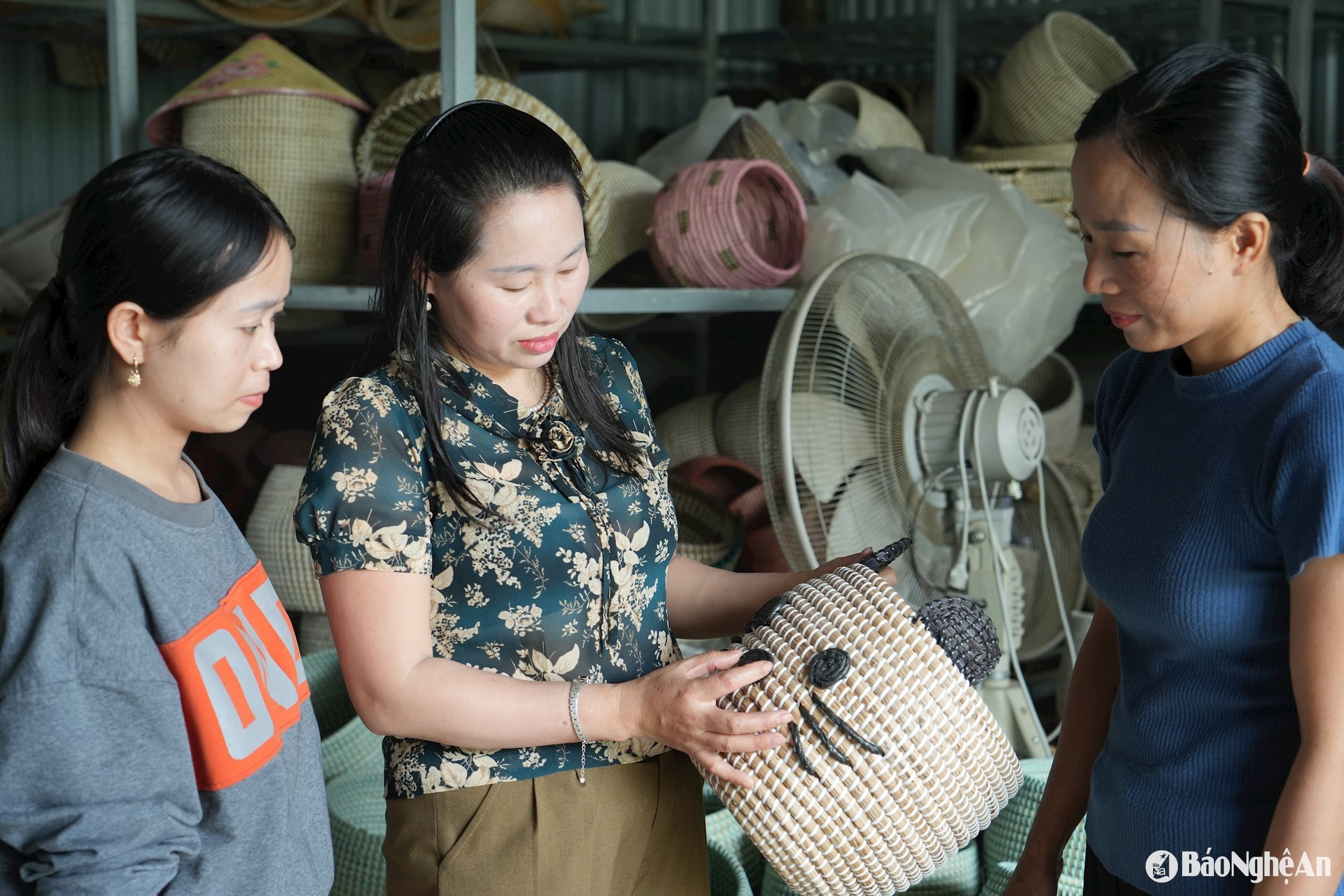
Starting my business with Coi Xay (a type of sedge weaving) began with a simple goal: to preserve the traditional craft of my hometown and transform it into modern products that align with green consumer trends. In the early days, to familiarize the women with the sedge weaving technique, I invited artisans from Ha Tay (now part of Hanoi) to teach them. Initially, many were discouraged because the work was meticulous and difficult. After more than a week of teaching, they gradually got the hang of it. The first products weren't of high quality, and the technique was poor. However, I still bought them from them at 50% of the actual product price. The products were only sold domestically.
In the early days, I only dared to accept small orders. However, production wasn't easy, and I accepted the possibility of losses. During difficult times, I always told myself not to give up; I had to see it through. Many products that the women finished during the day, I had to spend time correcting them in the evening. Fearing they would get discouraged, I had to encourage them to keep working, hoping that each person would try a little each day, accepting a small loss for each of them. I personally accepted the losses to ensure the long-term success. It took almost a year for us to get used to the process and start receiving orders, although the initial orders were very small, only about 40 million VND.
.png)
PV:From orders of just tens of millions of dong, she now has larger orders worth hundreds of millions of dong. Her woven rush products have become "unique" in Nghe An and have been exported to European countries, where they have been well received. I wonder, from a workforce mainly consisting of idle women from the countryside, how she managed to build such a skilled team capable of producing so many beautiful and creative products.
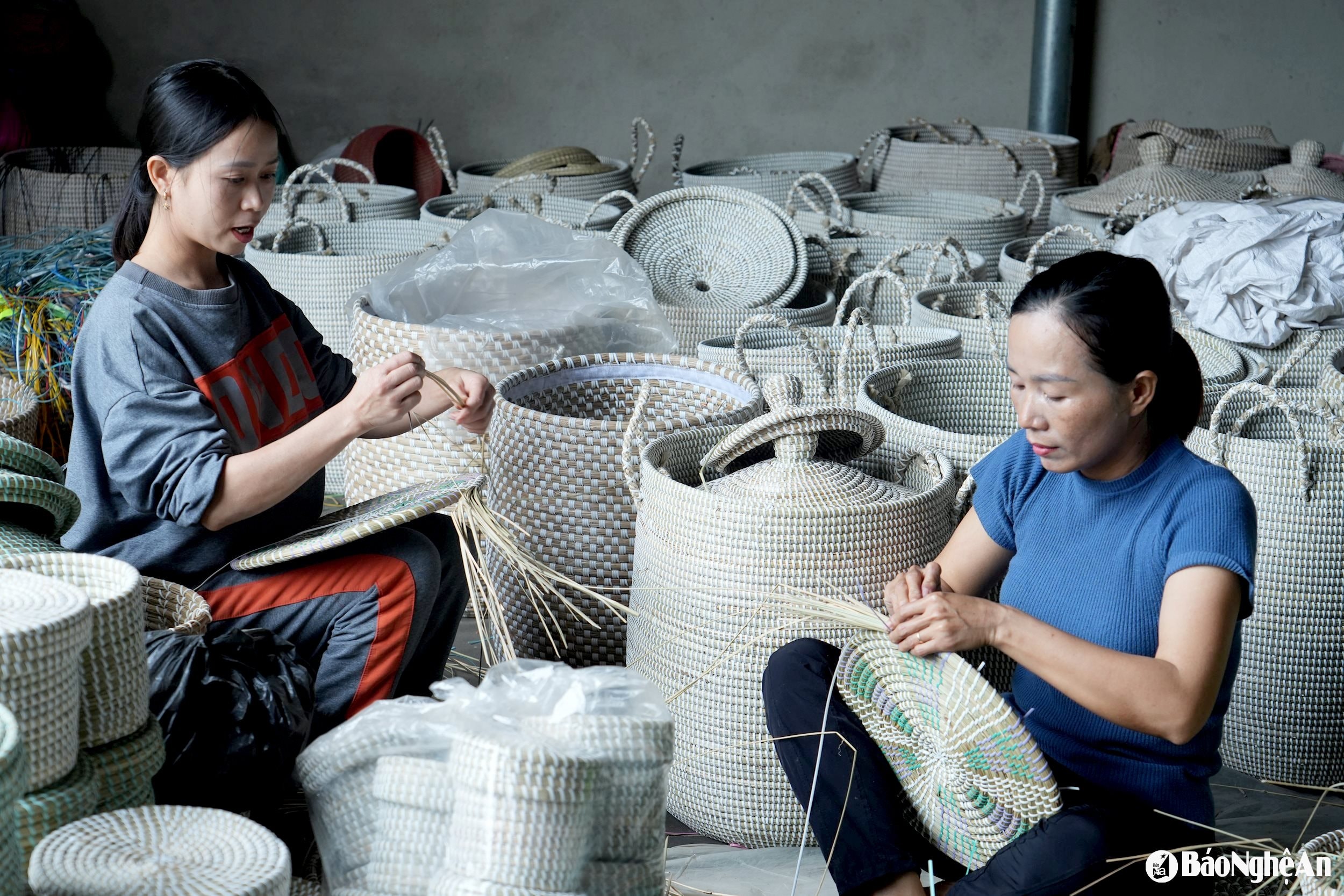
Ms. Truong Thi Han:We operate as a cooperative under the name Tho Thanh Handicraft Cooperative. Besides me, as the cooperative's chairman, we have 30 other members in the districts of Yen Thanh, Dien Chau, Thanh Chuong, and Tan Ky. Each member manages a production group, ranging from 7-8 people to several dozen people per group.
When we receive an order, we assign responsibilities to each team, and to professionalize the process, each team produces specialized items such as household goods and interior decorations. Choosing the cooperative model is a good fit for me because I believe that, for someone with limited experience and skills like myself, being a boss would be very difficult. But if we develop under a cooperative model, everyone will be partners, supporting and helping each other.
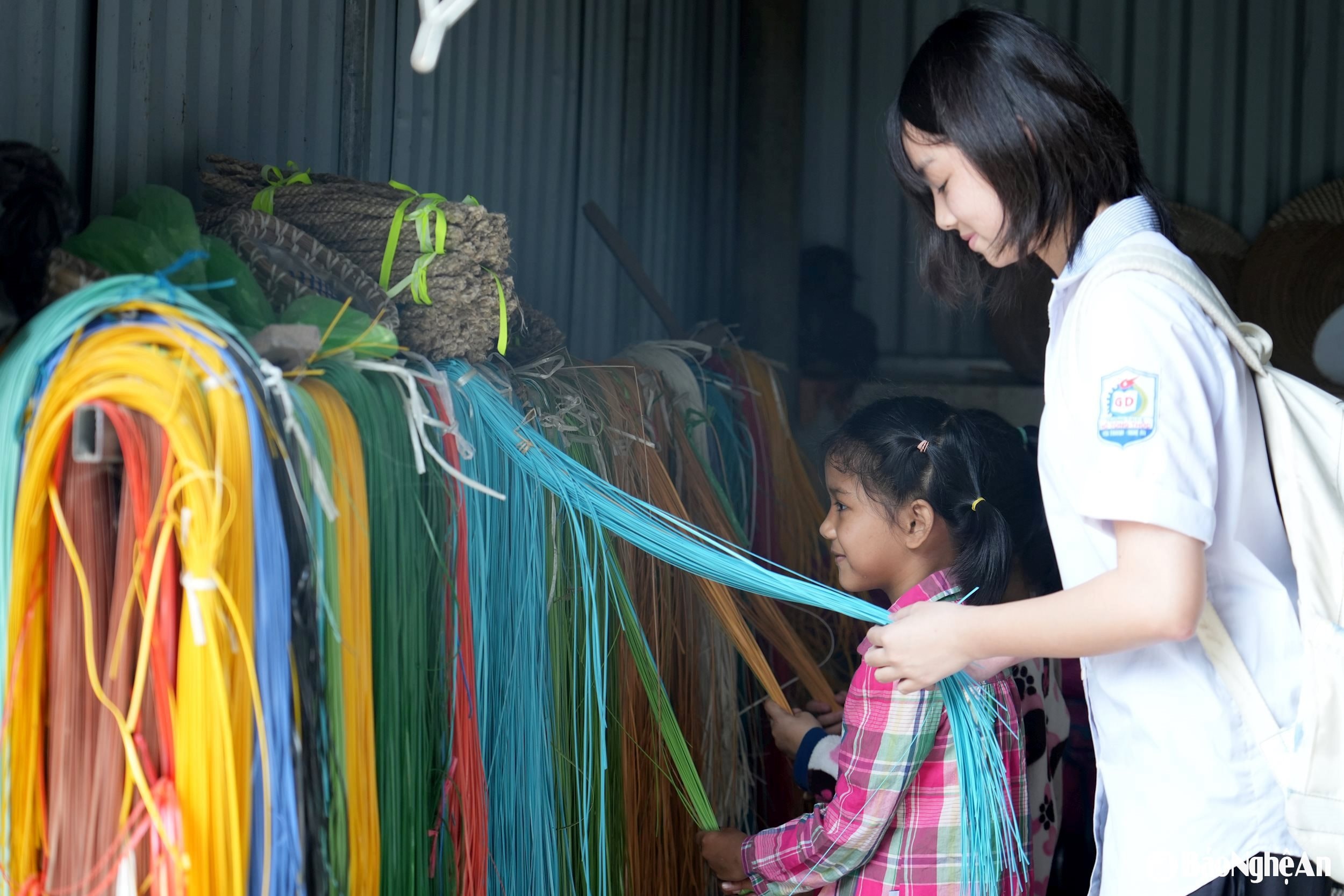
Regarding the workforce in the cooperative, as I've shared, because we utilize the idle time during the agricultural off-season, the age distribution of our workers is quite unique. Some are very young and working for the government, while others are teachers. In addition, there are some who are 70-75 years old. Our current difficulty is that everyone considers weaving sedge mats only a part-time job; very few people of working age want to commit to it long-term. I myself recognize this and understand that many workers haven't chosen sedge mat weaving as their main occupation because the income is still modest, only a few million dong per month. Therefore, my constant concern is how to increase the product price to raise the income of the people.
Through working with the women, the mothers and grandmothers, I've seen that, despite their agricultural background, many of our workers are talented and highly creative. As I shared earlier, the development of the sedge weaving industry has faced many difficulties, especially during the Covid-19 pandemic and the political instability around the world in recent years. The volatile economy has also affected people's income and purchasing power, impacting orders. As a production unit, we previously worked based on orders from export companies.
However, nowadays we have to proactively approach customers and create our own designs to attract buyers and customers. It's very encouraging that all the designs we produce are now designed and created by the women in our cooperatives. To encourage this, we organize design competitions and reward those with beautiful designs. If we receive orders, we also subcontract the work to the cooperatives, and groups that work quickly will be commended and encouraged.
PV:In 2024, she participated in the Women's Entrepreneurship Competition organized by the Vietnam Women's Union and won third prize. I was also very impressed with the figures she shared at the competition regarding the results achieved by the women over the past five years. What was the most memorable thing about this competition for her, and what did she learn from participating?
Ms. Truong Thi Han:The time I participated in the competition coincided with the rush to fulfill an export order to Europe, so perhaps compared to many other contestants, my preparation was less than ideal. Throughout the competition, I received a great deal of support from women in the commune, women in Yen Thanh district, and women from the Provincial Women's Union.
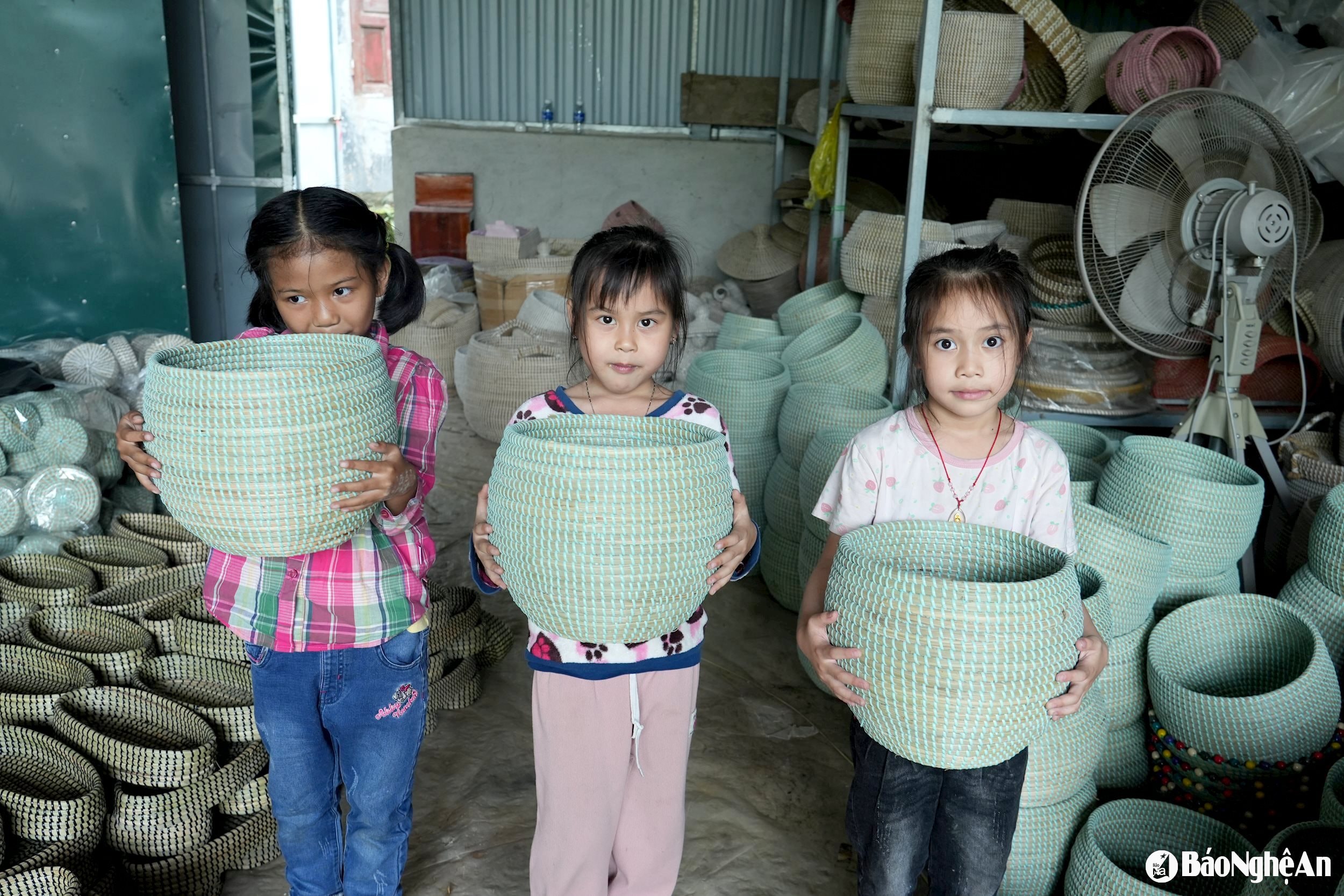
This was also my first time standing on stage to share about my project, and for someone unfamiliar with public speaking like me, it wasn't easy. I remember when the judges asked me why I chose to start a business using sedge, I was very flustered at first. I had almost forgotten all the knowledge written in my application. However, then I thought, "I'll just say what I'm doing, I'll be honest." And I entered the competition with the mindset of someone who was truly involved. That's probably my most memorable experience from this competition.
After participating in the startup competition and collaborating with other women in the Women's Union and other projects, I learned a great deal, especially about marketing and product promotion. Recently, as the international market has become increasingly challenging, I've started targeting the domestic market by selling through TikTok and e-commerce platforms. Thanks to this, many of my unsold products have been sold, and I've expanded my customer base. These are the results I've achieved after the startup competition.
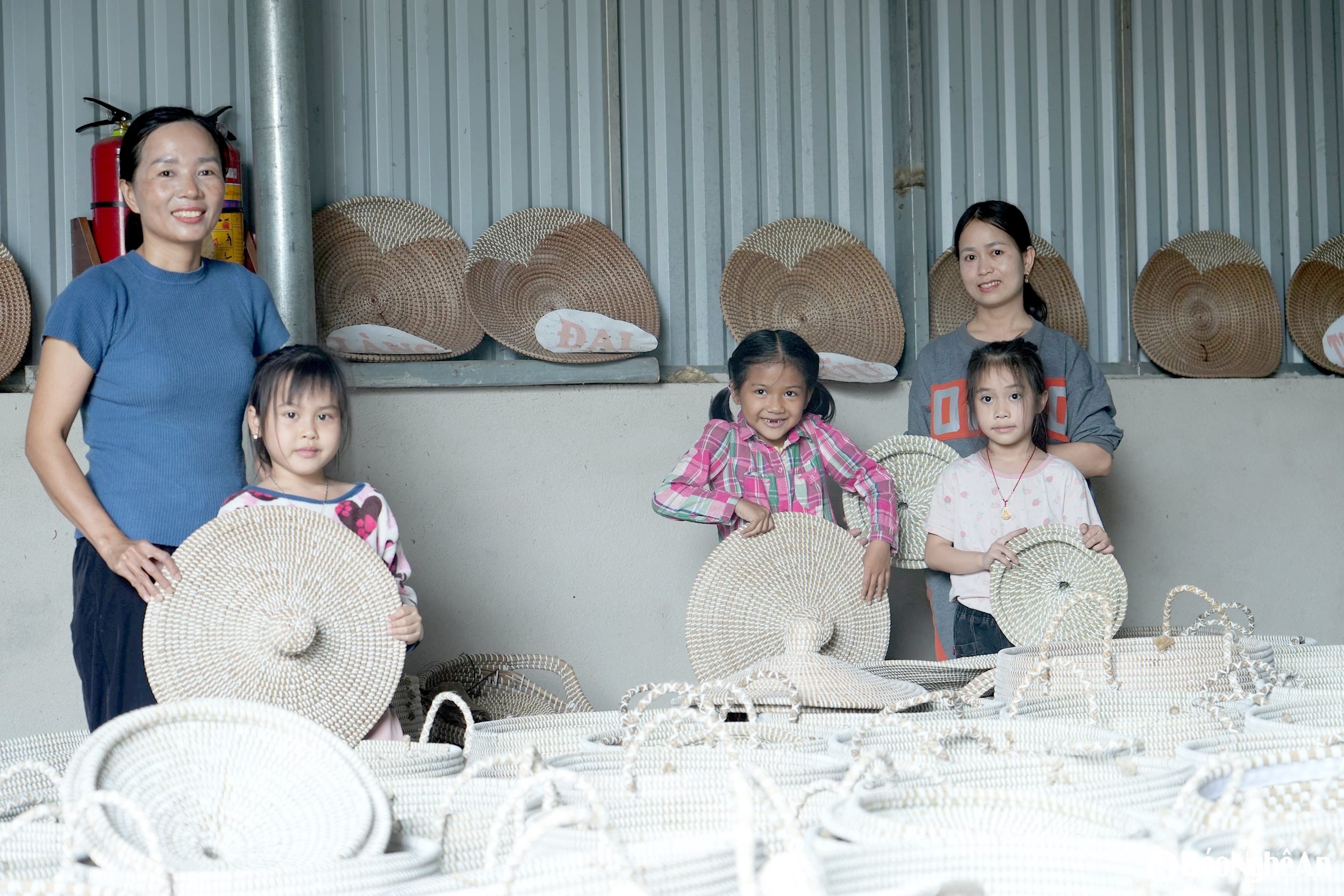
PV:From a carpenter and a farmer, she has now become the head of a cooperative. How has the process of starting a business and becoming a business owner changed her? If another woman in the countryside also wanted to start a business, what advice would she share?
Ms. Truong Thi Han:Looking back on my journey, I think what helped me overcome difficulties was passion and perseverance. Even without experience, we should still try and persevere. Experiences will help us gain valuable insights.
I was once shy and, like many women in my village, didn't receive a proper education. However, after 5 years of starting my own business, overcoming difficulties, failures, and challenges, I have matured a great deal. Before, I didn't know anything about transactions or negotiations, or how to develop myself, but now I am much more confident. I have taken control of my life, generated income, and dare to think and act...

I also believe that, like me, many other rural women, if they are truly determined, can also achieve this because the strengths of rural women are diligence, passion, and the ability to see things through to the end. Women in the new era need to be bold, daring to think and daring to act.
Of course, a woman also needs to find a balance between family and work. Personally, I am fortunate to have the support of both sets of parents, my husband, and my children. It is this family support and trust that gives me the motivation to strive for success.
PVThank you for joining the conversation!


