
Pickleball has caused over 700 noise complaints in Singapore.
Pickleball has boomed in Singapore, with bookings increasing to nearly 8,000 per month, but the "knock, knock, knock" of the plastic ball has led to over 700 complaints in 18 months. Some residential areas have had to erect barriers, and authorities are considering tightening the 8:30 am–9:30 pm operating hours or moving the courts further away from residential areas.
The "tap, tap, tap" sound of the hollow plastic ball hitting the hard surface of a pickleball is the characteristic rhythm of the game. But in Singapore, it's becoming a flashpoint for conflict: according to statistics cited in the article, over 700 pickleball-related complaints were recorded in the 18 months to August, a record high, and even brought to the attention of Parliament.
In a riverside neighborhood near Tiong Bahru, the story clearly reflects that tension. Local authorities erected two metal fences, over 1.5 meters high, blocking off a once-popular community badminton court after numerous complaints about the noise from the constant pickleball matches taking place in the residential area, according to the Financial Times.
From a trend of social interaction to a challenge of living space.
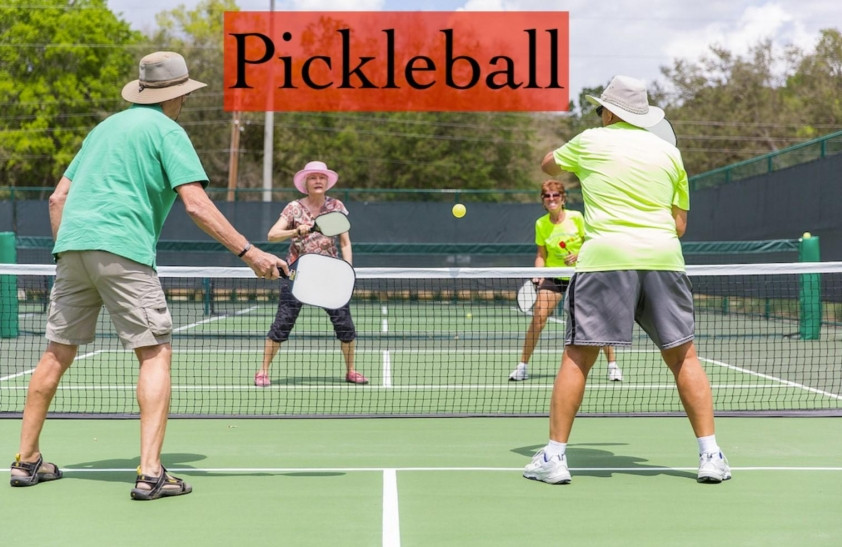
Pickleball is a sport that combines elements of tennis, badminton, and table tennis. Its ease of entry has led to rapid spread, especially since players only need a small court and the pace of the game is highly interactive. Globally, it's a sport of community; in Singapore, however, it faces a different reality: high population density and confined living spaces within apartment buildings.
The article describes Singapore as having over 6 million people living in an area less than half the size of London. When a high-frequency noise sport is played close to residential areas, the reverberation bounces off the facades of high-rise buildings and "lasts" for the duration of the game, making the discomfort no longer a personal sensation but a matter of urban management.
The data shows that the growth rate is too fast.
Pickleball has been around in Singapore for over 30 years, once considered a sport for older people. The turning point came in recent years, when the global trend spread and attracted younger generations. This growth is evident in booking figures and the scale of tournaments.
| Indicator | Data by source |
|---|---|
| Field bookings | From fewer than 20 visits per month in 2014 to nearly 8,000 visits per month in the first half of this year. |
| Annual tournament scale | The number of participants in the Singapore Pickleball Association's tournament has increased more than fivefold in three years. |
| Noise complaint | Over 700 cases in the 18 months to August. |
| Current playing time slots | 8:30 AM to 9:30 PM |
Noise tactics: why pickleballs are so prone to causing conflict.
Not all sports generate the same level of controversy, even when played in a community setting. Pickleball has a unique element: the hollow plastic ball and stiff racket create a sharp, high-pitched, and repetitive "tap, tap, tap" sound that follows the rhythm of the ball exchange. In a densely populated residential area, that rhythm resembles a prolonged "pressing": not necessarily loud at one moment, but persistent and difficult to avoid.
The timing is crucial. The hot, humid climate often leads players to choose early morning or late evening, precisely when residents need quiet. When the sound bounces off the tall buildings, it doesn't just linger on the court but spreads along the acoustic corridors of the building complex.
Adding another layer of complexity: the majority of these clashes take place in residential areas, where approximately 80% of Singaporeans live. This transforms the narrative from a “clash of interests” into a conflict over quality of life between people sharing the same space.
Authorities' response: barriers, stricter curfews, or separating the yard from the residential area.
Under pressure from complaints, some local councils erected barriers to prevent the conversion of badminton courts into pickleball courts. Coach Roger Ho opposed this approach, calling it an "unreasonable and potentially dangerous" solution. He also emphasized that "playing time is clearly defined and Singaporeans are generally very law-abiding."
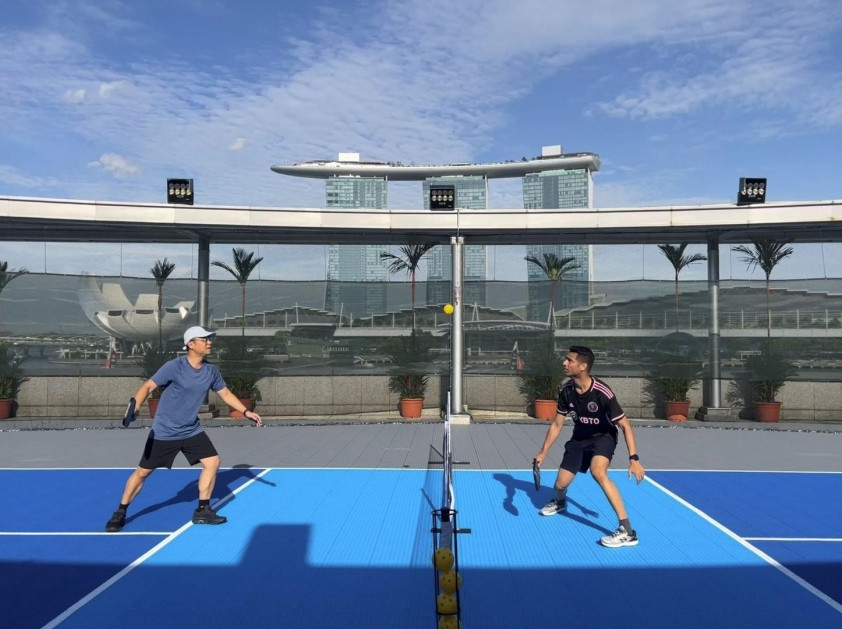
At the policy level, the article states that the government is considering narrowing playing hours (currently ranging from 8:30 AM to 9:30 PM) or building a separate pickleball court away from residential areas. However, limited land availability makes the option of separating the court difficult to implement. Other approaches are also mentioned, such as leasing land in parks to erect soundproof shelters, or building a court on the rooftop of a hotel.
The technical solution remains controversial.
Technically, using "quieter" balls or thick-cored rackets is considered a noise-reducing option. But even this approach isn't universally accepted. Roger Ho admits, "That sound sometimes makes the player feel more satisfied." For many players, sound isn't just a consequence, but an integral part of the experience.
Therefore, the problem in Singapore is not simply a matter of "ban or allow." It's a negotiation between the explosive growth of a community sport and the limits of cramped living spaces. With court bookings reaching nearly 8,000 per month and complaints exceeding 700 in 18 months, every subsequent solution—from schedules to court layout—will be scrutinized, much like analyzing a tense match: every small detail can determine the atmosphere of an entire neighborhood.


