
The Sprut-SD anti-tank gun has yet to be mass-produced after 20 years.
Despite being officially completed in 2006, Russia's 2S25 Sprut-SD light tank project still faces an uncertain future due to limitations in armor protection and changes in amphibious landing doctrine.
The 2S25 Sprut-SD self-propelled anti-tank gun, often referred to as a light tank, is a prime example of the disconnect between its original design concept and modern combat realities. Despite being officially commissioned on January 9, 2006, 2006, this weapon system has yet to secure large-scale production orders, even from domestic armies.
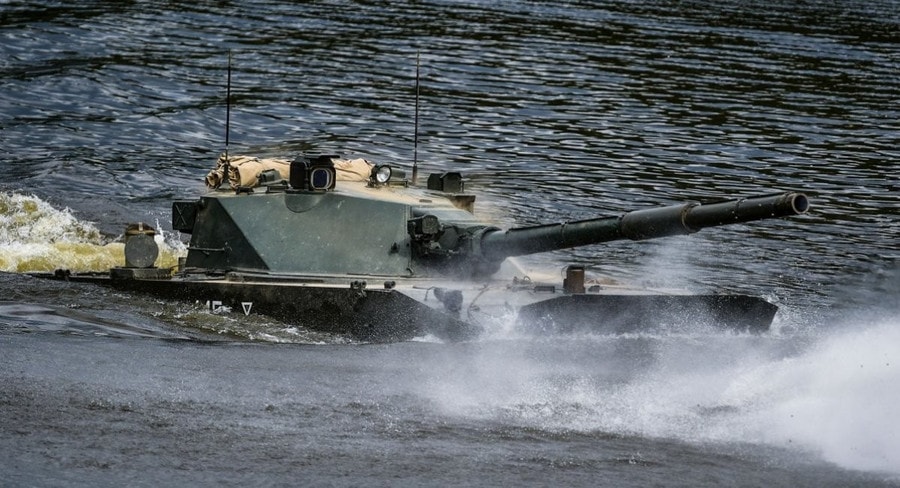
Origin and replacement objectives of the PT-76 series.
Developed since the 1980s, the 2S25 Sprut-SD was intended to replace the PT-76 amphibious tank. The main objective of the project was to equip airborne forces with a vehicle that possessed powerful firepower but was light enough to be dropped from transport aircraft. To meet this requirement, the maximum weight of the vehicle was strictly regulated at 20 tons.
However, the development of modern air defense and aviation systems has made large-scale airborne landings extremely risky without nuclear support. This has diminished the role of a specialized machine like the Sprut-SD in Russia's new military doctrine. During testing in the 1990s, a series of technical flaws also began to emerge, hindering the refinement process.
Technical limitations and protection capabilities
The Sprut-SD's fatal weakness lies in its defensive capabilities. To maintain a light weight for amphibious purposes, the vehicle uses an aluminum hull with very limited protection. Notably, the integration of a powerful 125 mm cannon, coupled with the crew's seating arrangement directly above the ammunition compartment, makes the vehicle a significant risk in combat.

Furthermore, despite its amphibious capabilities, this feature was not convincing enough for ground forces – units that prioritized vehicles with robust armor to withstand direct attacks. Only about 40 2S25s were produced before the project moved into the modernization phase and sought export opportunities.
The uncertain future of the Sprut-SDM version
Russia had previously attempted to promote the Sprut-SD to India as an ideal light tank solution for mountainous terrain. However, New Delhi rejected this offer to develop its own version. In 2022, the manufacturer further introduced an upgraded version, the Sprut-SDM, based on the chassis of the BMP-4, a vehicle designed for paratroopers.
Although the improved version is said to have passed technical tests, no concrete orders have been placed to date. More than three decades after its conception, the Sprut-SD is now considered an impractical project, unlikely to be mass-produced given the military's need for more practical and durable vehicles on the battlefield.


