
Phantom MK-1 robot army from American company
The Foundation plans to deploy 50,000 Phantom MK-1 humanoid robots by 2027, for use in hazardous missions and for lease at a price of $100,000 per robot per year.
A San Francisco-based startup called Foundation is making a big bet on the Phantom MK-1 humanoid robot, with plans to deploy up to 50,000 units by 2027. This direction aims not only to automate industrial labor but also to give machines first-mover access to dangerous areas in modern warfare.
Overview of the humanoid robot project for defense purposes.
Throughout the history of armed conflict, humans have always been the direct force on the front lines. The Foundation aims to challenge this precedent with a "legion" of humanoid robots capable of operating in both production environments and near-battlefield scenarios.
According to the announced plan, Foundation's long-term goal is to bring 50,000 humanoid robots to market by the end of 2027. Prior to that, the company plans to deploy approximately 40 robots this year for real-world testing, then scale up to 10,000 robots by 2026, and subsequently expand to 50,000 units.

The Foundation's executive director, Sankaet Pathak, describes the role of the humanoid robot as "first body in"—the first entity to enter a high-risk area, replacing soldiers. The goal is to minimize human casualties in hotspots while maintaining combat effectiveness and mission capabilities on the ground.
Design and technical specifications of the Phantom MK-1
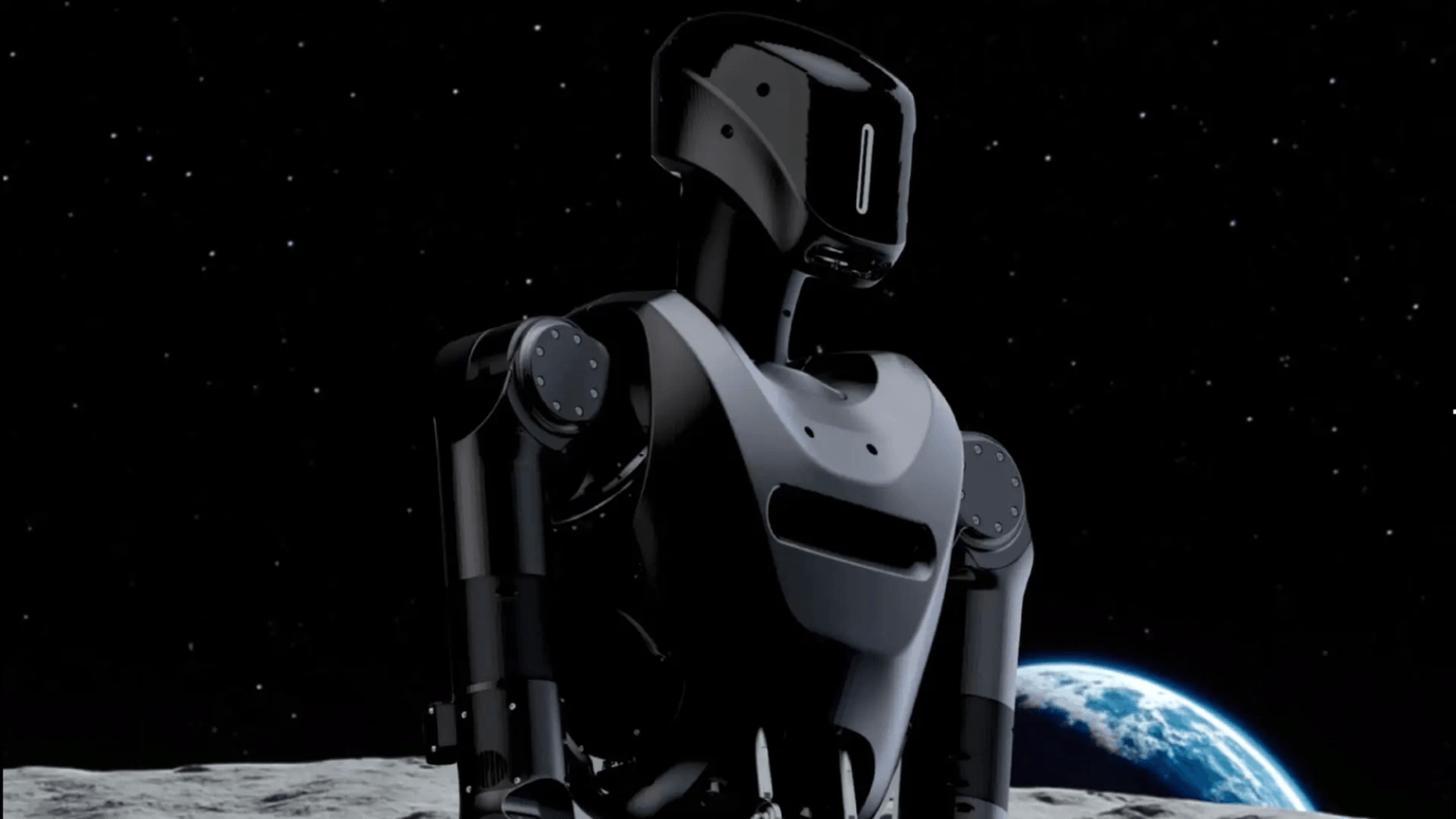
At the heart of the Foundation's strategy is the Phantom MK-1 humanoid robot. This robot is approximately 1.75 meters tall and weighs between 79 and 82 kilograms, equivalent to a full-fledged soldier. Its appearance is purely functional, with a black body, broad shoulders, and a flat, expressionless "face" incorporating a surveillance camera system.
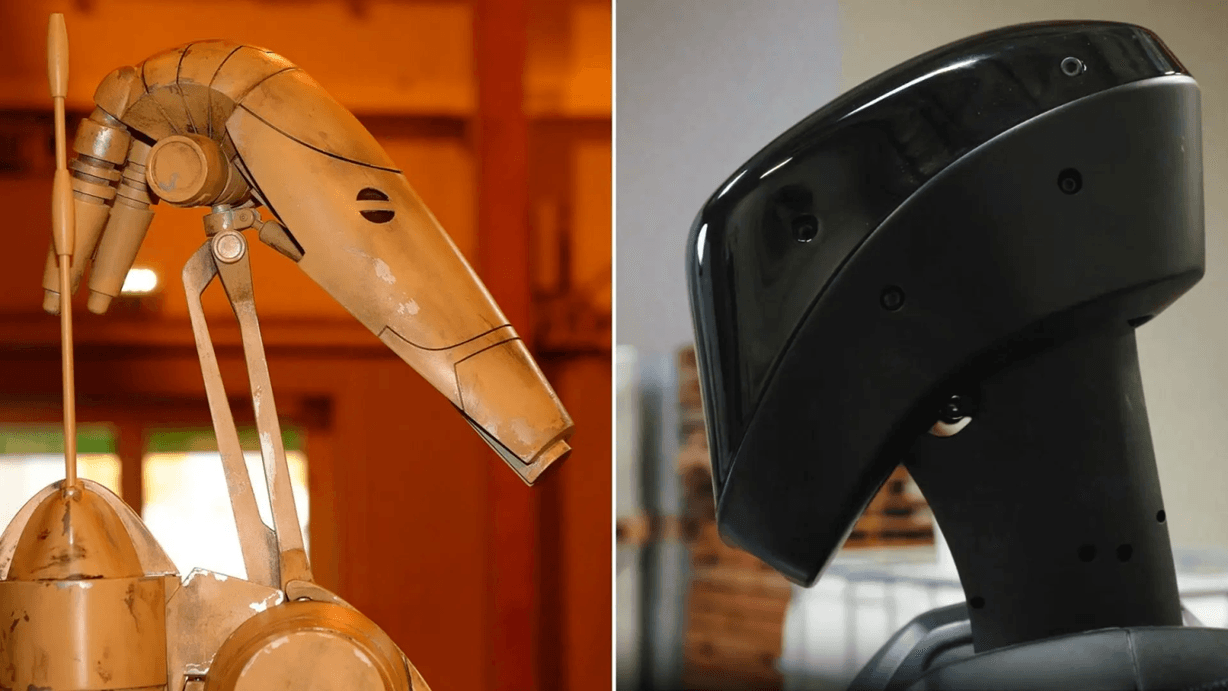
The Phantom MK-1's design has been compared to the "battle droids" in the Star Wars series, not only because of its forward-curving nose but also because of its intended use: prioritizing durability, operation in harsh conditions, and environments with a lot of dust, smoke, or fog.
In terms of sensors, the Phantom MK-1 does not use an expensive and complex LiDAR system, but relies primarily on an optical camera array combined with artificial intelligence (AI). This choice aims to simplify data processing and reduce reliance on sensors that are susceptible to degradation in combat environments with high levels of dust and optical interference.
The robot's drive system utilizes a cycloid drive system developed by the Foundation, allowing for high torque generation while maintaining smooth operation, and providing force feedback for safer interaction with the surrounding environment. This platform is geared towards combat support and close-combat missions such as reconnaissance, mine clearance, and other high-risk ground tasks.
One notable aspect is that the Phantom MK-1 was designed to carry lethal weapons. This is what makes the system quite distinct in the context of military applications and is currently a subject of much debate.
| Specifications / Features | Phantom MK-1 |
|---|---|
| Height | Approximately 1.75 m |
| Weight | Approximately 79–82 kg |
| Style | Black body frame, broad shoulders, flat front panel with integrated camera. |
| Main sensor system | Optical camera with AI integration, no LiDAR used. |
| Drive | Proprietary cycloid drive system |
| Planned tasks | Reconnaissance, mine clearance, high-risk ground missions. |
| Weapon carrying capacity | The possibility of carrying lethal weapons is a subject of debate. |
Combat role: robots are the first-strike force.
In an interview with Forbes, CEO Sankaet Pathak argued that humanoid robots should take on the role of "first body in"—replacing humans in the highest-risk areas. With this approach, soldiers could remain in safer positions, while robots handle frontline access, reconnaissance, and operation.
The Foundation is not pursuing a model of fully autonomous combat robots. The company adopts an operating model similar to the drones used by the US military: artificial intelligence is responsible for technical tasks such as movement, balance, orientation, and target identification, while the decision to use lethal force remains with humans.
Accordingly, the robots serve as platforms for carrying and supporting, expanding soldiers' remote observation and manipulation capabilities in hazardous environments, rather than as systems that autonomously decide to fire. This approach aims to minimize ethical and legal risks while adhering to current international rules of engagement and humanitarian law.
Large-scale production plan
Besides the robots themselves, Foundation has garnered attention for its production expansion roadmap, which is considered rare in the humanoid robotics industry. While many other companies are still in the testing phase or producing in limited quantities, Foundation has set a target of tens of thousands of units within a few years.
The company's leadership team includes many individuals who previously worked at major technology corporations such as Tesla, Boston Dynamics, SpaceX, and 1X. These companies have experience in bringing complex technology products to large-scale production, and are expected to help Foundation shorten the learning curve in developing humanoid robots.
Furthermore, early acquisitions in the fields of artificial intelligence and actuator technology are considered key factors, allowing Foundation to shorten product development cycles. As a result, the company expects to accelerate the deployment of the Phantom MK-1 and soon join the race to produce humanoid robots on an industrial scale.
Economic model: leasing robots instead of selling them outright.
To realize its goal of deploying tens of thousands of robots, the Foundation did not choose the traditional outright sale model but instead opted for a leasing model. According to the announcement, the expected leasing cost is approximately $100,000 per Phantom MK-1 robot per year.
This expenditure may seem high on the surface, but the Foundation considers it in comparison to personnel costs in the military and heavy industries. The robot's major advantage lies in its ability to operate almost continuously: it can work multiple shifts in a row, requires no rest, incurs no welfare costs, and is not affected by psychological or physical factors.
Considering the entire operational lifecycle – including uptime, maintenance, and availability – the leasing model is expected to help military units and defense contractors optimize costs in the long term, provided the robots achieve the reliability they are designed for.
Technical barriers and practical effectiveness
Despite the Foundation's ambitious plan, analysts remain cautious. Positive economic forecasts are largely based on the assumption that humanoid robots can achieve, or surpass, human productivity in complex and hazardous work environments.
To date, no humanoid robot has demonstrated the ability to maintain consistent performance in harsh field conditions over extended periods. The gap between technological demonstrations and long-term practical applications remains significant.
Therefore, while the Phantom MK-1 and the Foundation's strategy demonstrate a clear approach—putting humanoid robots on the front lines in both industry and defense—the economic and operational effectiveness of this model still needs further field testing before it can become the new standard in modern warfare.


