
The Israeli army has secretly deployed the new generation Ro'em self-propelled artillery.
The 155mm Ro'em artillery system, recently delivered to the IDF, features full automation, replacing the older M109 system to optimize firepower in modern warfare.
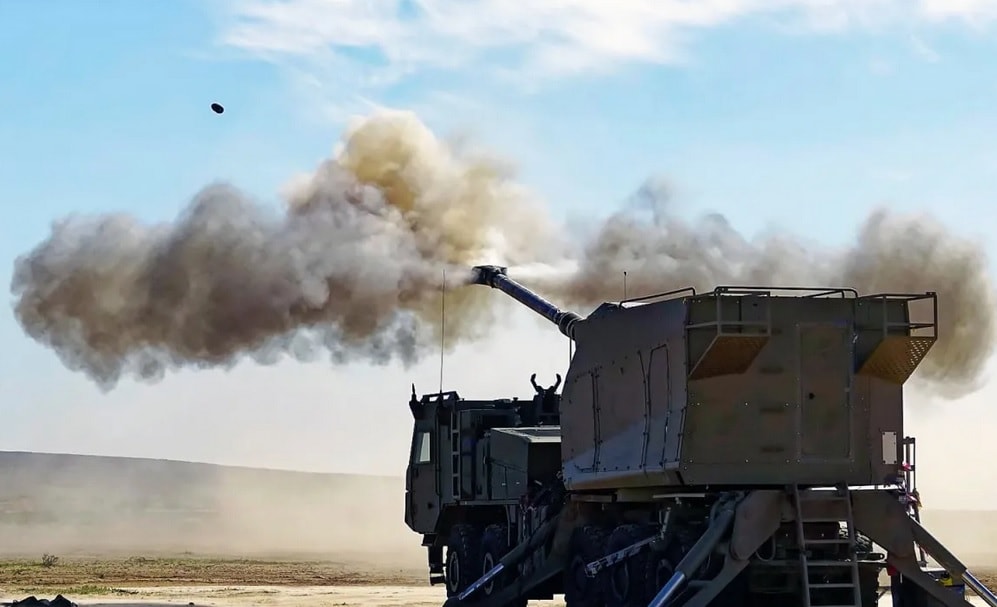
The Israel Defense Forces (IDF) have officially received the first domestically produced Ro'em (Thunderbolt) wheeled self-propelled howitzer. This is a significant step toward replacing aging M109 systems and modernizing the nation's artillery capabilities.
Although the IDF and manufacturer Elbit Systems have not made an official announcement to the wider media, the handover ceremony is believed to have taken place discreetly at Elbit's facility in Yokneam last week. According to the schedule, the Ro'em system will begin its technical acceptance phase, including live firing and integration with standard military equipment. Training for the first combat crew is expected to begin next spring.
A breakthrough in automation and digitalization technology.
Ro'em is a new generation 155 mm self-propelled artillery system designed to replace the M109 Doher systems that have served the IDF for decades. The introduction of Ro'em reflects the Israeli military's strategic shift toward automation and rapid-response firepower, based on lessons learned from conflicts in Ukraine, Gaza, and Lebanon.
The system utilizes a 155 mm/52 caliber cannon mounted on a heavy 10x10 wheeled chassis (similar to the Oshkosh platform). The wheeled configuration offers significant advantages in road mobility, reduced maintenance costs, and rapid deployment compared to traditional tracked systems. This is particularly crucial in modern combat environments, where artillery frequently faces threats from unmanned aerial vehicles (UAVs) and counter-artillery radar.
Technical specifications and combat capabilities
The Ro'em's technological highlight lies in its fully automated turret. The system is capable of performing all operations automatically, from selecting ammunition type and loading to aiming and firing. This process significantly reduces manpower, requiring a crew of only three instead of seven as on the M109.
| Parameter | M109 Doher (Old) | Ro'em (New) |
|---|---|---|
| Rate of fire | ~2 tablets/minute | At least 8 tablets/minute |
| Combat crew | 7 people | 3 people |
| Maximum range | Under 30km | Over 40km (extended-range ammunition) |
| Chassis | Track | 10x10 tires |
Ro'em's firepower is considered superior to its predecessors. With a range of over 40km using standard extended-range ammunition and a firing rate of 8 rounds per minute, the system allows for rapid assaults and withdrawals (fire-and-maneuver), minimizing the risk of enemy retaliation.
Multi-domain operational integration
More than just a pure firearm, Ro'em is designed to operate in a networked environment. The system connects directly to a command and control center, remote sensors, and UAVs. This integration shortens the cycle from target detection to firing, creating a significant time advantage in rapid-response fire operations.
The Ro'em development project spanned approximately six years, following over a decade of the IDF's search for a replacement for the M109. Beyond its technical value, the Ro'em holds strategic significance, allowing for flexible crew organization, aligning with the Israeli military's multi-domain operational orientation, and optimizing its current personnel resources.


