
The US military secretly coordinates the passage of commercial ships through the Strait of Hormuz.
The U.S. Central Command (CENTCOM) is believed to have secretly guided approximately 70 commercial vessels through the Strait of Hormuz amid a sharp decline in maritime traffic.
The U.S. Central Command (CENTCOM) has been conducting a covert operation to coordinate and guide commercial shipping through the Strait of Hormuz for the past three weeks. This effort aims to maintain traffic on this vital shipping lane after Iran announced it was closing the waterway to ships from countries considered hostile.
The context of the blockade of the Strait of Hormuz.
Tensions escalated on February 28 following a military operation by the US and Israel targeting Iran. Immediately afterward, Iran closed the Strait of Hormuz, which carries approximately 20% of the world's oil and liquefied natural gas (LNG) supply. The Islamic Republic only allowed ships from third countries to pass through if they paid a fee and strictly adhered to military directives.
The covert navigation tactics and the failure of Project Freedom.
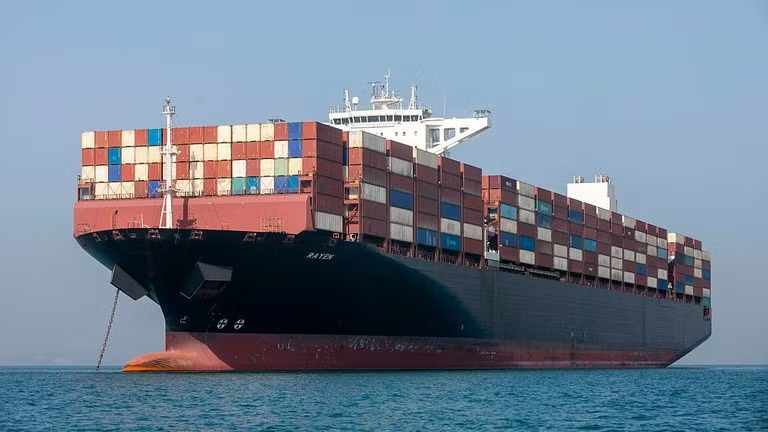
According to the New York Times (NYT), to navigate through Iranian-controlled areas, CENTCOM instructed approximately 70 commercial vessels to disable their transponders. Becoming "dark ships" allowed them to avoid surveillance by Iranian radar and naval forces. These vessels primarily used shipping lanes along the coast of Oman rather than regular shipping lanes.
Notably, this covert operation followed the rapid failure of a publicly announced initiative. In April 2026, US President Donald Trump announced "Project Freedom," aimed at escorting stranded commercial ships. However, the initiative was suspended less than 48 hours after its launch. The main reason is believed to be Saudi Arabia's refusal to grant US forces access to its airspace or Prince Sultan Air Base for the operation.
Consequences for international maritime security
Despite a ceasefire agreement signed on April 8th, traffic through the Strait of Hormuz shows no significant signs of recovery. Before the conflict, an average of 150 ships passed through daily, but this number has plummeted to fewer than 10. It is estimated that between 1,600 and 2,000 cargo and oil tankers, along with tens of thousands of sailors, remain stranded in the Persian Gulf.
On the Iranian side, the Islamic Revolutionary Guard Corps (IRGC) stated that in the 24 hours leading up to May 31, 28 ships were allowed to pass through the strait after completing the necessary procedures. Meanwhile, the US continues its blockade of Iranian ports and has intercepted a total of more than 100 cargo ships since April 2026, keeping the security situation at this strategic choke point on high alert.


