
The US military uses plywood tanks for training simulations.
The U.S. Army confirmed the use of plywood tank models at JPMRC 26-01 in Schofield Barracks, Hawaii, mounted on pickup trucks to simulate enemy armored vehicles, reducing training costs.
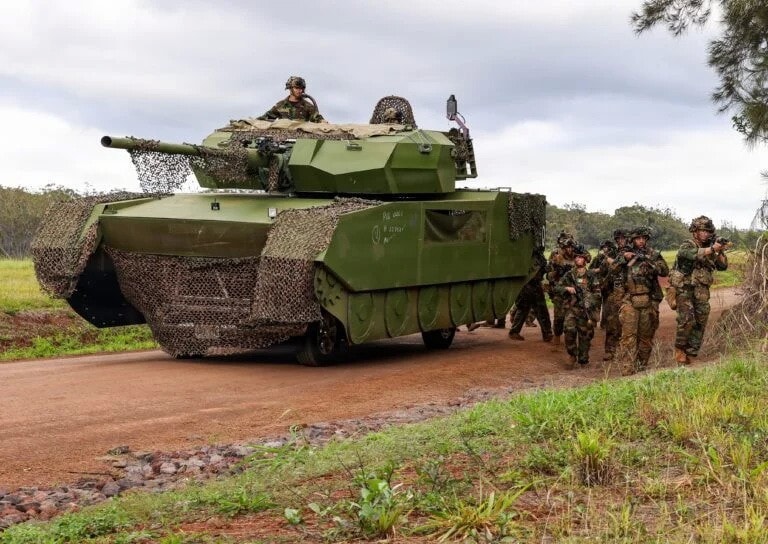
The U.S. Army confirmed the deployment of "wooden tank models" during a January 26 training event at the Joint Pacific Readiness Center (JPMRC) in Schofield Barracks, Hawaii. According to the press department, these are "adversary tank simulators" designed to create a realistic combat environment while being more cost-effective than using real tanks. The models are mounted on commercial pickup trucks to recreate the armored threat on a simulated battlefield.
Overview
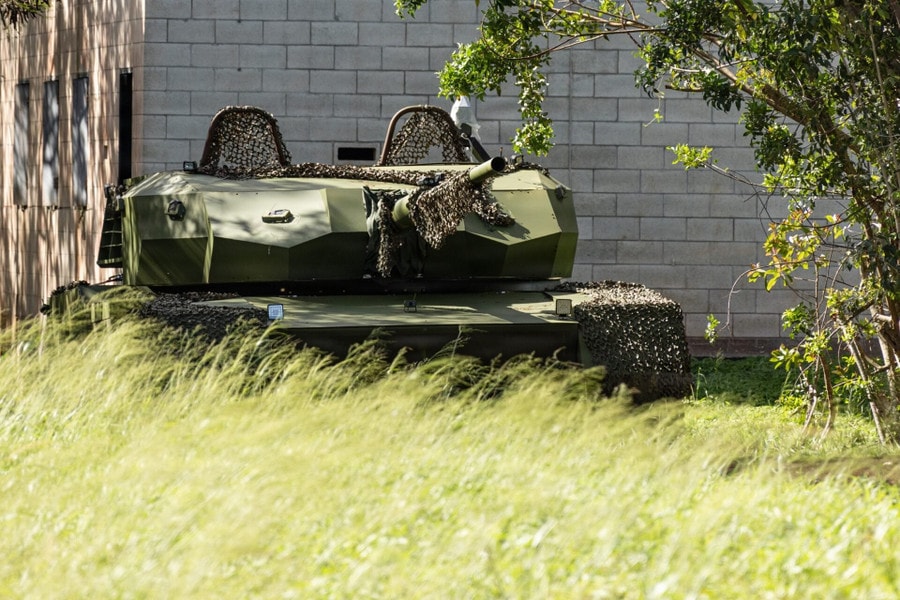
According to the official statement, the models, made from plywood and basic structural materials, are designed to visually simulate the shape of armored vehicles. When mounted on a pickup truck chassis, they create a mobile target, helping the training unit counter "enemy forces" in a large-scale coordinated scenario.
During JPMRC rotations, specialized adversarial forces utilize a mix of real assets such as drones, sensors, and adaptive platforms. This combination helps to more accurately replicate adversarial capabilities in modern battlefield conditions.
Technical analysis
These "wooden tanks" emphasize visual cues and mobility rather than protection or firepower. This aligns with the training objective of creating situational pressure, forcing units to detect, identify, and engage targets according to standard procedures.
| Characteristic | Describe |
|---|---|
| Material | Plywood and basic structural materials |
| Platform | Mounted on commercial pickup trucks. |
| Purpose | Visual simulation of the shape and maneuverability of an armored vehicle. |
| Context of use | JPMRC January 26 at Schofield Barracks, Hawaii |
| Integration | Coordinate with UAVs, sensors, and adaptive platforms of simulated opposing forces. |
| Benefit | Cost savings, reduced logistical burden, and scalable opponent simulation. |
Training tactics and scenarios
These models help simulate the threat of mechanization, placing units in situations where they must adjust tactics, reconnaissance methods, and combat procedures. The focus is on training reaction times and improving decision-making quality under pressure when confronting highly mobile targets.
Realistic simulation allows commanders to test the coordination between reconnaissance, firepower, and maneuvering when detecting, classifying, and handling unexpectedly appearing armored targets in complex terrain.
Logistics and maintenance benefits
Replacing them with cheaper models significantly reduces operating and logistical costs compared to deploying real tanks in large-scale exercises. The US military emphasizes that this solution contributes to extending the lifespan of combat vehicles, especially heavy armored vehicles which are expensive to operate and maintain.
The lower cost also allows for the creation of larger and more diverse simulated enemy forces, thereby increasing the challenge and representativeness of tactical scenarios in the training program.
Comparison of international practices
According to the source, the method of using simulation models is widely applied in many militaries. Countries use models to recreate armored vehicles, air defense systems, artillery, and command centers in large-scale exercises. Many European and Asian countries deploy decoy models made of plywood or metal frames for mechanized brigades and airborne units; some countries use inflatable or composite tanks to practice long-range attack procedures.
Conclude
The deployment of "wooden tanks" within the framework of JPMRC 26-01 demonstrates a cost-effective approach to enhancing battlefield realism while preserving the lifespan of the actual vehicles. The mobile models, combined with UAVs and sensors, provide practical training pressure on detecting, identifying, and engaging armored targets within a limited time frame.


