
US-NATO relations under Donald Trump
(Baonghean) - Just days after billionaire Donald Trump was elected the 45th President of the United States, the Secretary-General of the North Atlantic Treaty Organization (NATO) had to voice his concerns, while the European Union had to hold an emergency meeting to discuss how to "respond." The concerns of NATO and EU leaders are understandable after Trump's tough statements in recent times. However, will relations between the US and its close allies deteriorate as many fear?
Allies are worried.
Perhaps never before in many presidential elections has America's close allies, such as the European Union and NATO countries, been so worried, holding emergency meetings and issuing statements of concern as this time. In his latest statement, NATO Secretary General Jens Stoltenberg warned US President-elect Donald Trump that, "choosing your own path is not a good idea, neither for Europe nor for America."
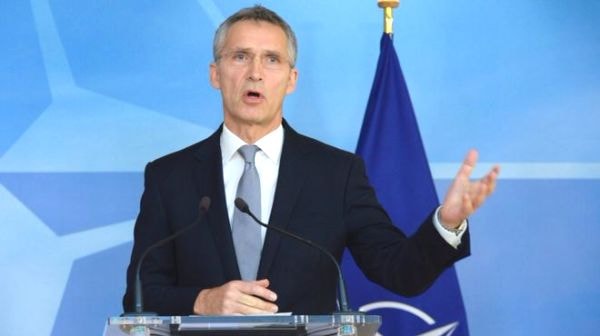 |
| NATO Secretary General Jens Stoltenberg warned against the "unilateral" policies of US President-elect Donald Trump. (Source: Getty Image) |
This statement is understandable, given that throughout his election campaign, billionaire Donald Trump repeatedly described NATO as an outdated organization, questioning whether the United States should continue to provide excessive support to its NATO allies. This also means that the US will not unconditionally defend NATO members in the event of an attack, but will instead consider that nation's contribution.
Furthermore, Trump has repeatedly expressed admiration for Russian President Vladimir Putin, causing unease among NATO member states. Eastern European countries, in particular, fear that the new US president may forge new agreements with Russia and turn his back on them; meaning their security could be jeopardized.
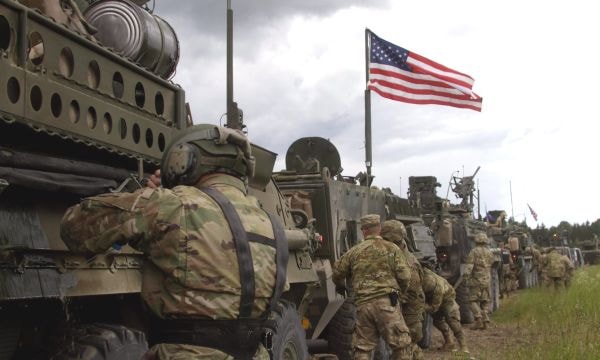 |
| US troops participate in a NATO exercise in Latvia (Source: Guardian) |
In a statement, German Foreign Minister Frank-Walter Steinmeier noted that Trump's victory is likely to make things more difficult for America's allies. President-elect Barack Obama, facing Donald Trump's isolationist tendencies, is currently undertaking what is likely his final trip to Europe to reassure them. Prior to his trip to Greece and Germany, Obama affirmed that Europe remains America's largest economic partner and that America's economic interests must be tied to a stable and prosperous Europe.
It's difficult for the US to "turn its back".
While allies are concerned, observers believe there are several reasons why Donald Trump cannot immediately implement the tough promises he made during his campaign, including his relationship with European allies and within NATO. Firstly, Trump faces numerous domestic challenges, namely the internal conflicts and divisions between the Democratic and Republican parties, which have become extremely serious after the recent presidential election. Meanwhile, protests against the new president are still ongoing in the US. This is why Trump cannot afford to make "shocking" decisions that would impact his close allies.
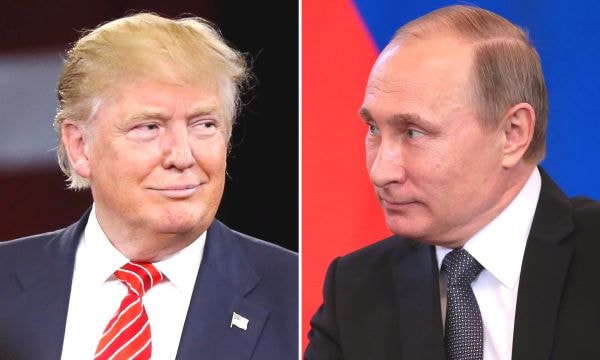 |
| Donald Trump's expressions of admiration for Russian President Vladimir Putin have caused concern among NATO leaders. (Source: Getty Image) |
Furthermore, becoming less cordial and more assertive with allied nations would only create more difficulties for the United States. It's clear that a cooperative economic relationship between the US and European countries plays a significant role in maintaining US growth and creating jobs, especially with the potential completion of the Transatlantic Trade and Investment Partnership (TTIP).
On the other hand, the United States cannot cooperate alone with Russia or China to combat the increasingly rampant terrorist forces around the globe. Coupled with a host of other issues such as the Ukraine crisis, climate change, and migration, the US certainly cannot stand alone on these fronts. Meanwhile, regardless of whether Donald Trump tends to "open up" to Russia or not, national interests and the assertion of America's leading position in the world are paramount.
Furthermore, not only NATO and the EU reacted, but another close ally of the US in Asia, Japan, recently made a firm statement that it would "not contribute more money to the US military stationed in Japan." Accordingly, Japanese Defense Minister Tomomi Inada affirmed her "rejection," stating that Japan is already fully covering the costs, despite Trump's previous statement that the US would leave if Japan did not contribute more.
Therefore, there are many reasons to believe that the future President of the United States will have much to consider before taking a clear stance towards NATO allies and the European Union. Of course, any changes in US-NATO and US-EU relations will likely be in the distant future.
Khang Duy
| RELATED NEWS |
|---|


