
Food safety and quality management: Why is it still lacking and weak?
(Baonghean.vn) - Food quality and safety are pressing issues throughout society. Despite the existence of the Food Safety Law and numerous directives and regulations on this matter, in reality, food safety remains difficult to manage.
According to the Government's assessment, in order to implement the Law on Food Safety and the Directive of the Party Central Committee, the Government and the Prime Minister have issued many policies and laws directing all levels and sectors to focus resources on strengthening the effectiveness of state management of quality and food safety in agriculture, forestry and fisheries, as well as creating a favorable environment for people and businesses to produce and trade quality and safe agricultural, forestry and fisheries products.
However, the rate of violations of food safety regulations remains high, food safety incidents are not promptly verified, investigated, or fully reported to the public, thus reducing market access for agricultural, forestry, and aquatic products.
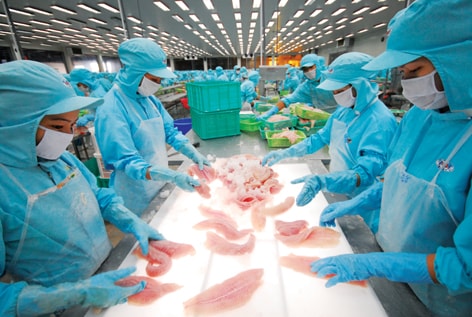 |
| Some seafood products are banned from import due to food safety concerns. (Illustrative image: Internet) |
It is noteworthy that, in addition to objective reasons, one of the subjective causes is that many localities have not identified priorities to focus resources on directing and coordinating the resolution of long-standing unresolved issues such as banned substances in livestock farming, pesticide residues, and antibiotic chemicals in fruits, vegetables, tea, meat, and seafood.
In particular, the system of Sub-departments for Quality Management of Agricultural, Forestry, and Fishery Products, although established in 61 out of 63 provinces and cities, is very weak and lacking in terms of offices, vehicles, inspection and testing equipment, funding, and personnel. Therefore, the assigned tasks are heavy, but only a part of them can be accomplished, affecting the effectiveness of quality management and food safety of agricultural, forestry, and fishery products.
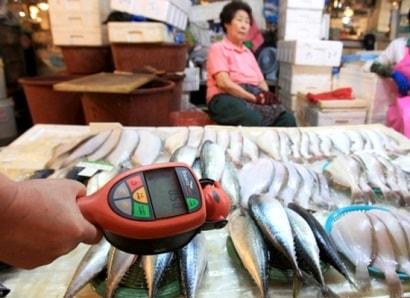 |
| Inspecting imported seafood. Photo: Internet. |
Recently, the Ministry of Agriculture and Rural Development has urgently requested the restructuring of the organizational apparatus of the Sub-Department of Agricultural, Forestry and Fisheries Product Quality Management, with a view to increasing staffing levels.
However, while adding staff to this task is necessary, it is thought that with the administrative apparatus in many places still having an "excess" of personnel, and the number of civil servants sitting idle and collecting full salaries increasing day by day, increasing the number of staff needs to be carefully considered. Because if not properly and adequately calculated, the surplus of personnel will continue, administrative costs from the state budget will remain heavy, and the effectiveness of the work will be minimal.
It is crucial to retrain existing staff, prioritizing the placement of qualified personnel to perform this task… this will be more effective than recruiting new staff. In addition, it is essential to prioritize allocating sufficient workspace, testing equipment, and operating funds to the Sub-departments of Agricultural, Forestry, and Fisheries Product Quality Management in carrying out their assigned tasks.
And this funding can be used to pay the salaries of newly recruited workers, thus maximizing the effectiveness of state salaries while improving the lack of technical infrastructure for this important work.
TV (general)
| RELATED NEWS |
|---|


