
Managing change to build peace
From the Shangri-La Dialogue in Singapore to the 81st session of the United Nations General Assembly in New York, General Secretary and President To Lam sent two diplomatic messages in two different spaces, but both converging on a common ideological axis: World change is inevitable, but conflict and division are not destiny.
Assoc. Prof. Dr. Bui Hoai Son(Deputy Head of the Central Propaganda Department)
*************
From the Shangri-La Dialogue in Singapore to the 81st session of the United Nations General Assembly in New York, General Secretary and President To Lam sent two diplomatic messages in two different spaces, yet both converging on a common ideological axis: World change is inevitable, but conflict and division are not inevitable. The important thing is for nations to proactively manage change, control competition, strengthen trust, uphold international law, and translate shared commitments into substantive cooperation mechanisms.
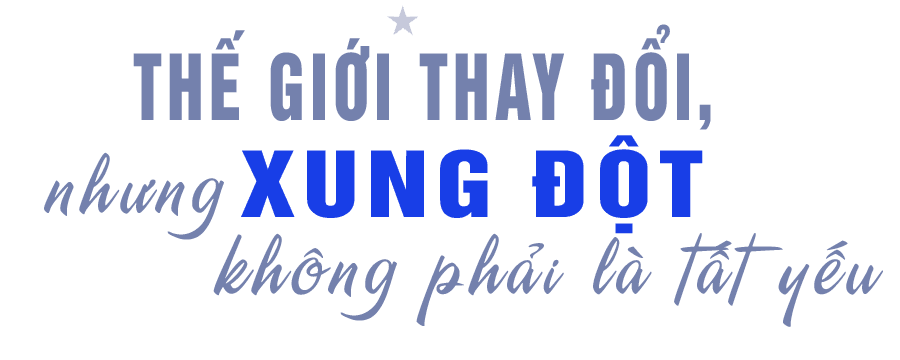
The speech at the Shangri-La Dialogue on May 29, 2026, focused on Asia-Pacific security, while the speech at the United Nations General Assembly on September 22, 2026, addressed issues of the global order. However, when placed side-by-side, a common thread emerges: correctly identifying the nature of the times to avoid being caught off guard by change, and simultaneously seeking new governance methods to prevent change from escalating into confrontation and conflict.
At Shangri-La, General Secretary and President To Lam pointed out three fundamental crises that are occurring simultaneously and impacting each other: the crisis of the international order, the crisis of the development model, and the crisis of strategic trust. This perspective goes beyond simply listing individual hotspots or security risks.
Behind conflict, economic fragmentation, technological competition, supply chain disruptions, and declining trust lie deeper shifts in the international structure. Significantly, this approach does not view volatility as a predetermined fate. Volatility is a constant state of the world, but whether it leads to conflict or becomes a driving force towards peace depends on the choices of nations and the international community. From this emerges a concept with methodological significance: Security is not just about handling crises after they occur, but first and foremost about the capacity to identify, prevent, and manage risks early and proactively.
At the United Nations forum, that perspective broadened from a regional to a global level. The General Secretary and President noted that the world is undergoing profound shifts in the international order with many risks and uncertainties; the trend of using or threatening to use force, the arms race, economic fragmentation, and increasing barriers to trade, investment, and technology are making cooperation more difficult.
Climate change, natural disasters, epidemics, and new risks from technology are creating new layers of instability. From Shangri-La to the United Nations, this thinking has evolved a step further: from risk management to guiding and managing change. If "managing change" is the overarching ideology, then managing competition and restoring trust are the core elements.
At Shangri-La, General Secretary and President To Lam clearly stated the issue: The choice for the Asia-Pacific region is not between competition or non-competition, but between uncontrolled competition and responsible coexistence. This framing of the issue reflects a pragmatic mindset: acknowledging competition as an attribute of international relations, but simultaneously demanding that competition be limited, responsible, and predictable.
At the United Nations, that message was condensed into the demand: "Crisis must be prevented. Competition must be regulated." Behind these concise statements lies a concept of international governance based on prevention rather than merely mitigating consequences. This is also why the General Secretary and President emphasized the restoration of trust between nations on the basis of full, consistent, and unselective respect for the UN Charter and international law.
A noteworthy new point is that both speeches placed technology at the heart of the international security and governance problem. Artificial intelligence, big data, quantum technology, automated systems, cyberspace, and digital infrastructure can expand development capabilities and risk prediction, but they can also increase the potential for information manipulation, automated conflict, shorten decision-making times, and increase the risk of miscalculation. This necessitates the formation of new norms of responsibility: Scientific and technological progress must serve humanity, not deepen divisions; humans must bear ultimate responsibility for decisions with serious security consequences; and the information environment needs to be protected from manipulation and extremism.

The two speeches converged on the need to transform principles into mechanisms, commitments into actions, and dialogue into capacity for crisis prevention and management. At Shangri-La, the message was conveyed through several specific suggestions: making rules and dialogue genuine means of risk mitigation; promoting ASEAN's central role; placing human security at the center; establishing responsible standards for new technologies; strengthening society's resilience to disinformation, information manipulation, and polarization; and enhancing the capacity for preventive diplomacy, reconciliation, and mediation.
At the United Nations, the scope of action has been broadened. Four major directions have been set: Restoring trust based on the UN Charter and international law; promoting equitable, humane, inclusive, and sustainable development; proactively shaping technology governance; and strengthening multilateralism and the central role of the United Nations. The common thread is bringing global governance back to the people. An order is only sustainable when rules protect the legitimate interests of nations, development creates broader opportunities, and international cooperation brings tangible benefits to people.
For Vietnam, the two speeches also offer a clearer understanding of independence and self-reliance in an era of interdependence. Independence and self-reliance do not mean standing outside the world's movements or narrowing the scope of cooperation. On the contrary, a solid foundation of self-reliance allows a nation to be more proactive in choosing partners, participating in shaping laws, and contributing to common issues, based on linking national interests with the peace, stability, and prosperity of the region and the world.
From Singapore to New York, the forums varied in scale, but the core message remained consistent: Peace must not only be preserved but also built; trust must not only be called for but also built through verifiable actions; laws must not only be invoked but also respected and consistently enforced; and cooperation should not stop at commitments but produce tangible results. In a world that continues to change, the crucial capacity of each nation is not only to adapt to change, but also to collectively guide and manage change towards peace, cooperation, and development.
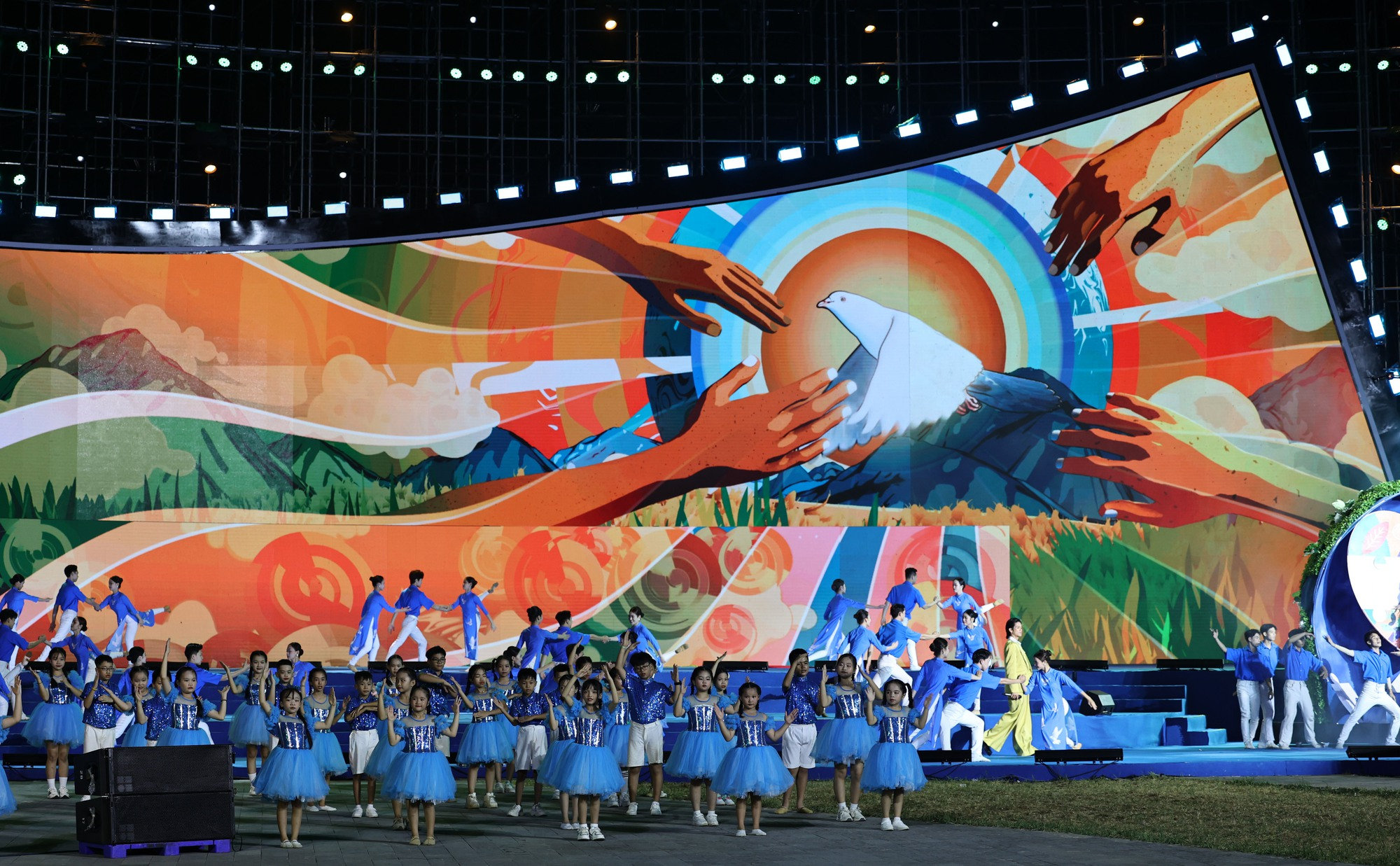
This also offers insights into Vietnam's development and foreign policy thinking in the new era. National resilience lies not in remaining unaffected by change, but in the ability to foresee changes early, understand their true nature, uphold core principles, and create sufficient space for cooperation to transform challenges into opportunities. In a world of major transformations, proactively building peace is also about proactively creating a development environment for ourselves and for the international community.


