
Quang Ngai after merger: Tourism to achieve impressive growth in 2025.
By 2025, Quang Ngai is expected to welcome approximately 5.2 million tourists, with tourism revenue estimated at 3,700 billion VND after the province merger. From the cool Mang Den to Ly Son, Sa Huynh, and My Khe, the tourism space has expanded significantly.
In 2025, Quang Ngai is expected to welcome approximately 5.2 million tourists, a 38% increase compared to 2024. Tourism revenue is estimated at 3,700 billion VND, a 74% increase, demonstrating the significant growth of the destination after the provincial merger, as the tourism space has expanded from the western mountainous region to the eastern coastal islands.
According to the Department of Culture, Sports and Tourism of Quang Ngai province, out of a total of 5.2 million visitors, international tourists accounted for approximately 98,500, a 2.6-fold increase compared to the same period last year. Foreign exchange earnings from tourism activities are estimated at 22 million USD, a 2.5-fold increase. These figures reflect the growing attractiveness of Quang Ngai on the regional tourism map.
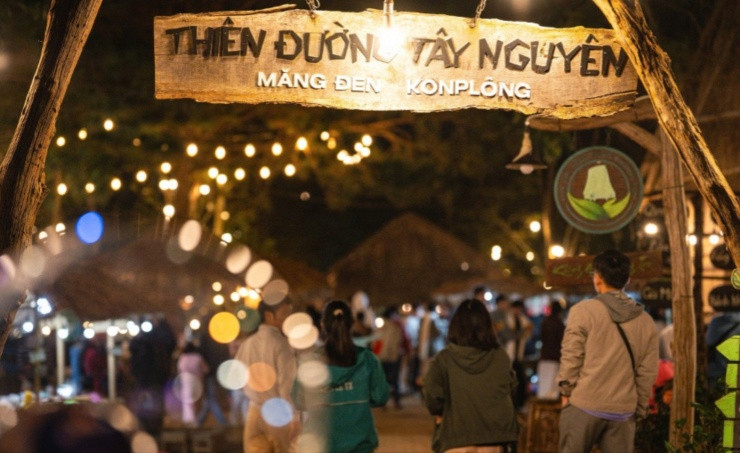
Expanding tourism space: from mountainous areas to coastal islands.
Following the merger, Quang Ngai's tourism space has expanded, creating a continuous experiential journey from mountains to the sea. Tourist destinations in the province continue to attract a large number of visitors, with two prominent areas: the western region with community tourism villages and the Mang Den eco-tourism area, and the eastern coastal and island areas such as Ly Son, Sa Huynh, and My Khe.
In the west, the cool climate, pristine natural landscapes, and unique local cultural experiences are key factors attracting tourists. In the east, the advantages of coastal and island scenery, cultural heritage, and distinctive cuisine make destinations like Ly Son, Sa Huynh, and My Khe popular choices for those who love the sea and local culture.
According to assessments by relevant authorities, these destinations not only meet the needs for relaxation but also align with the trend of experiential tourism, exploration, and connection with local nature and culture – a trend that is increasingly popular with both domestic and international tourists.
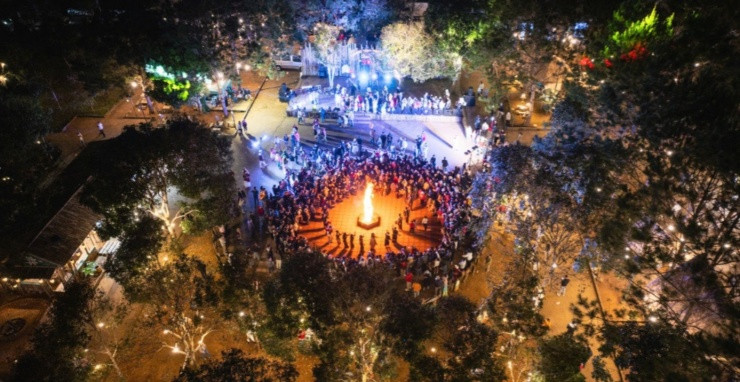
Mang Den and the western community tourism village
Community-based tourism villages and ecotourism areas in Mang Den are becoming a favorite choice for tourists visiting western Quang Ngai. The cool climate makes the journey pleasant, especially for those who want to escape the hot weather of the city and find a quiet, fresh environment.
The unspoiled natural landscape allows visitors to better appreciate the slow pace of life in the highlands. Within this setting, experiences of local culture, including cuisine, festivals, and traditional crafts, make the trip not just a relaxing getaway but also an opportunity to delve deeper into the lives of the local community.
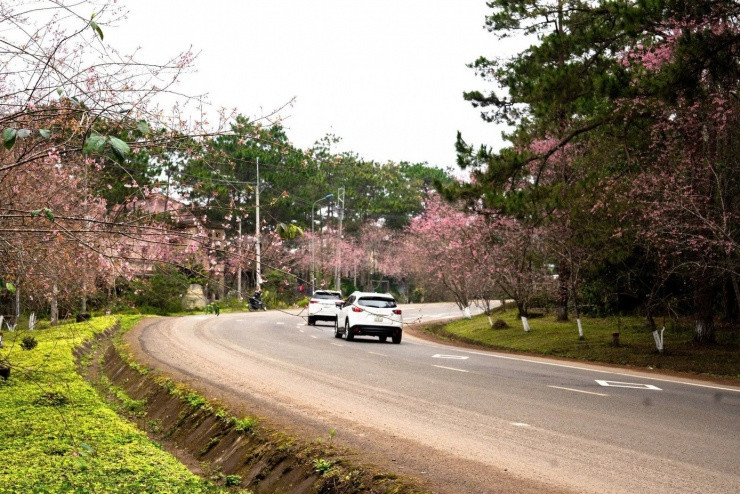
In Mang Den, the cherry blossom season is considered a beautiful time of year, creating an impressive landscape for nature-loving tourists who enjoy capturing memorable moments during their travels.
Eastern islands: Ly Son, Sa Huynh, My Khe
To the east, Quang Ngai boasts coastal and island areas such as Ly Son, Sa Huynh, and My Khe. The advantage of these coastal and island landscapes makes them attractive destinations for tourists who love open spaces, waterfronts, and coastlines.
Furthermore, the unique cultural heritage and cuisine of coastal localities create a second layer of experience, complementing the relaxation aspect. Tourists can combine exploring local culture with enjoying seafood dishes and learning about the stories associated with the history and lives of coastal residents, in line with the trend of tourism that connects with nature and culture.
Local people become the center of tourism activities.
Ms. Pham Thi Trung, Director of the Department of Culture, Sports and Tourism of Quang Ngai province, said that the strong growth of tourism in the province this year stems from many reasons. The expansion of tourism space after the provincial merger has created more room for development, bringing a new look and new appeal to destinations.
This is coupled with the effectiveness of policies to attract investment, upgrade tourism products, enhance promotion, and improve transportation infrastructure and services. According to Ms. Trung, Quang Ngai tourism is gradually asserting its brand and creating a clearer position on the regional tourism map.
Notably, local people are increasingly becoming central to tourism activities, directly participating in providing services, preserving cuisine, festivals, and traditional crafts. This contributes to preserving cultural identity while also helping to increase income and improve the lives of local communities.
Towards becoming a key economic sector.
According to Ms. Pham Thi Trung, in the coming time, Quang Ngai will continue to implement many comprehensive solutions to make tourism a key economic sector. The focus will be on completing planning and investing in infrastructure in key areas such as Ly Son, Sa Huynh, My Khe, Mang Den, and Ngoc Linh.
The province is also orienting towards developing distinctive and competitive tourism products; promoting digital transformation and advertising on digital platforms to better reach tourists. In particular, developing community-based tourism linked to cultural preservation is considered a crucial foundation for Quang Ngai's tourism to continue its strong breakthrough in the coming years.
Suggestions for travelers who love experiencing nature and culture.
With its combination of a cool climate and unspoiled landscapes in the west, and the coastal and island areas, cultural heritage, and distinctive cuisine in the east, Quang Ngai is ideal for tourists who enjoy experiential travel, exploration, and connecting with nature and local culture.
During a trip to Quang Ngai, tourists can prioritize destinations such as community-based tourism villages, the Mang Den eco-tourism area, along with Ly Son, Sa Huynh, and My Khe in the coastal and island region. Researching community-based tourism products, festivals, and local cuisine beforehand will make the trip more fulfilling and contribute to respecting and preserving the cultural values that the local people are striving to maintain.


