
The National Assembly officially decided to increase the basic salary by 5% from May 1, 2016.
With 392 out of 435 delegates present voting in favor (88.06%), this morning (November 11), the delegates...The National Assembly has passed a Resolution on the State Budget Estimates for 2016.
The resolution states that, from May 1, 2016, the basic salary for officials and civil servants will increase by 5%, or 60,000 VND compared to before.
The resolution on the 2016 state budget estimates clearly states that, from May 1, 2016, the basic salary for officials and civil servants will increase by 5%, or 60,000 VND compared to before. Accordingly, the basic salary will be adjusted from 1,150,000 VND to 1,210,000 VND. Pensions and preferential allowances for meritorious individuals will maintain the 8% increase as in 2015.
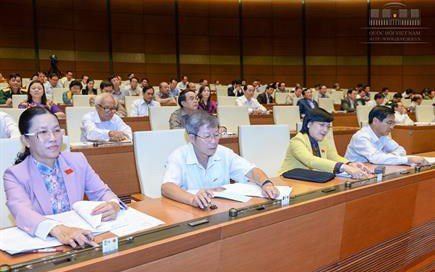 |
| The delegates pressed the button to approve the National Assembly Resolution. |
In addition, the Resolution also proposes adjusting pensions and disability benefits for those receiving less than 2 million VND/month, and adjusting the allowance for preschool teachers who worked before 1995 so that their pensions reach the basic salary level.
Regarding the basis for the salary increase, in an exchange with reporters, Mr. Bui Si Loi, Vice Chairman of the National Assembly's Committee on Social Affairs, said: After balancing expenditure sources, the Government found that it could arrange some resources, meaning a reduction in spending, allocating approximately 11,000 billion VND to improve the living standards of civil servants and salaried workers. The Government has addressed two issues. Those who retired, those with meritorious service, and those with salary coefficients below 2.34%, who already received an 8% salary increase from January 1, 2015, will continue to receive it.
As for those with a salary coefficient above 2.34, i.e., civil servants, they received an additional 60,000 VND, an increase of 5%, totaling 11,000 billion VND, and the government authorized its implementation from May 1, 2016. Mr. Loi stated that the salary increase stemmed from the difficult living conditions of civil servants and the excessively low basic salary.
Furthermore, Mr. Loi argued that the government had previously adjusted salaries for war veterans, retirees, and those with salary coefficients below 2.34. Therefore, while those currently working may receive slightly higher salaries, their basic living conditions remain difficult, and they still need to maintain a balance. Consequently, the government should reallocate resources, save on expenses, and allocate funds to raise the basic salary level, which would be more reasonable.
“An increase of 60,000 VND is small, but workers also have a salary coefficient to multiply by, so it will help improve their lives to some extent. Although it doesn't meet all needs, it shows the government's efforts. Saving 11,000 billion VND in a year is not easy. From the beginning, the government also wanted to increase salaries by more than 8%, but couldn't balance the resources,” Mr. Loi said.
According to Mr. Loi, the 5% salary increase in the current difficult budget context is a significant effort by the Government. The initial plan was to increase the basic salary by 100,000 VND, but due to budget constraints, they had to make do with what they had and could only increase it by 60,000 VND.
Representative Bui Si Loi also suggested that, along with this solution, the Government should be urged to actively implement measures to control inflation, because failure to control it will negatively impact salary increases. Simultaneously, research should be conducted on reorganizing the administrative apparatus and streamlining personnel to fundamentally reform the salary system.
Salary reform is not just about raising the base salary; it requires reforming the entire salary scale system to ensure that salaries reflect their true nature, with the "hard" aspect (salary structure) outweighing the "soft" aspect (labor). Salaries must be distributed according to labor, thereby increasing labor productivity.
According to VOV


