
Quy Hop - Awakening the potential of a tourist destination.
(Baonghean.vn) - The scenery, people, and spiritual heritage, enriched over time with vivid stories, are being transformed by the Party Committee, Government, and people of Quy Hop district into an aspiration to put the district on the tourism map of Nghe An province...
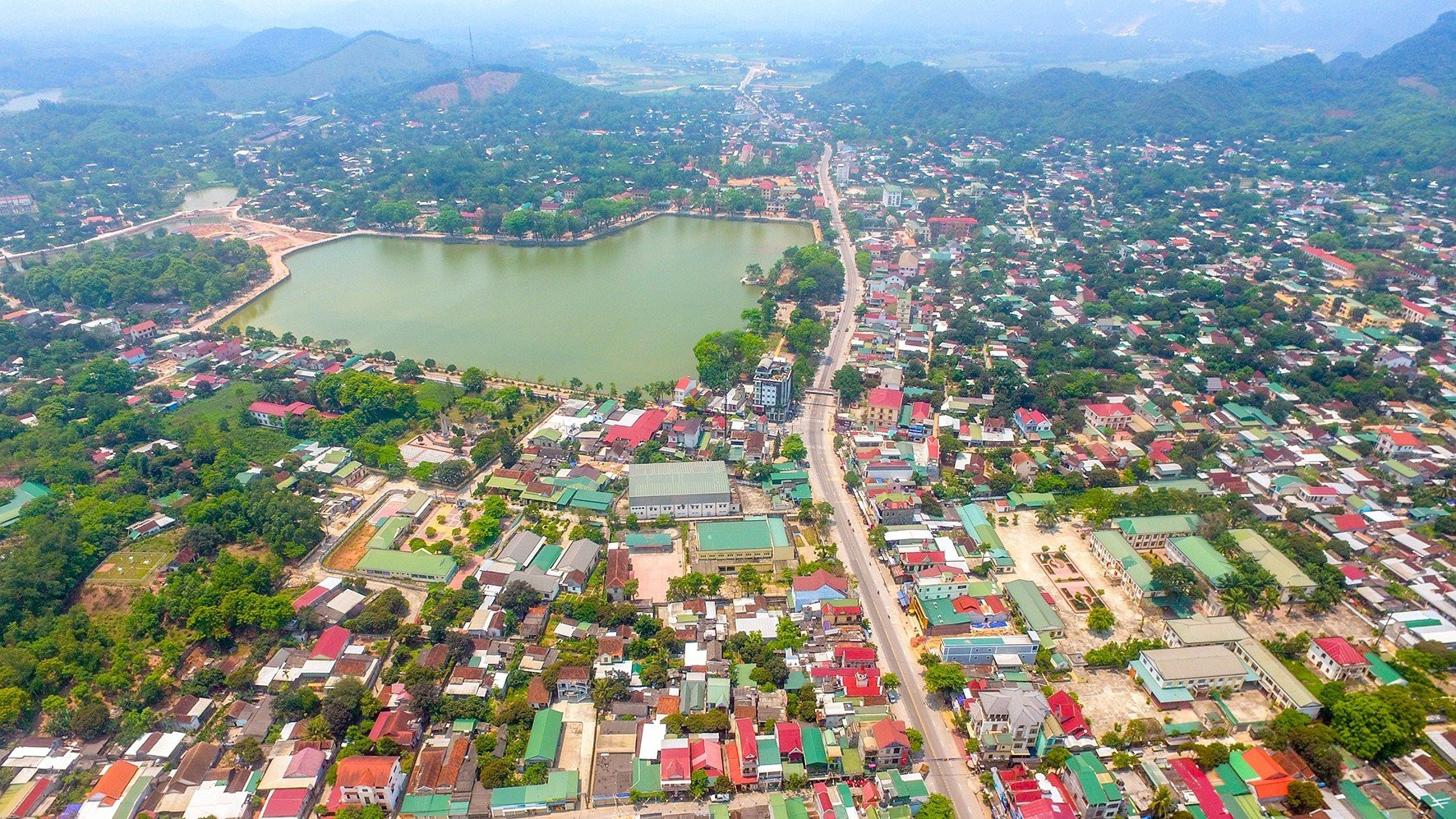 |
Quỳ Hợp district town with its famous Thung Mây lake. Photo: Provided. |
Ambition and determination
We returned to Quy Hop amidst a bustling atmosphere of anticipation for the 60th anniversary of the district's establishment. In our conversations with the district Party committee leaders, we learned so much about new and inspiring things; for example, the local government's efforts to implement Resolution No. 15-NQ/HU, dated October 25, 2022, of the XXI District Party Committee, on strengthening leadership and guidance in attracting investment and developing tourism in conjunction with preserving the cultural identity of ethnic minorities, for the period 2021-2025, with a vision to 2030 (hereinafter referred to as Resolution 15-PV).
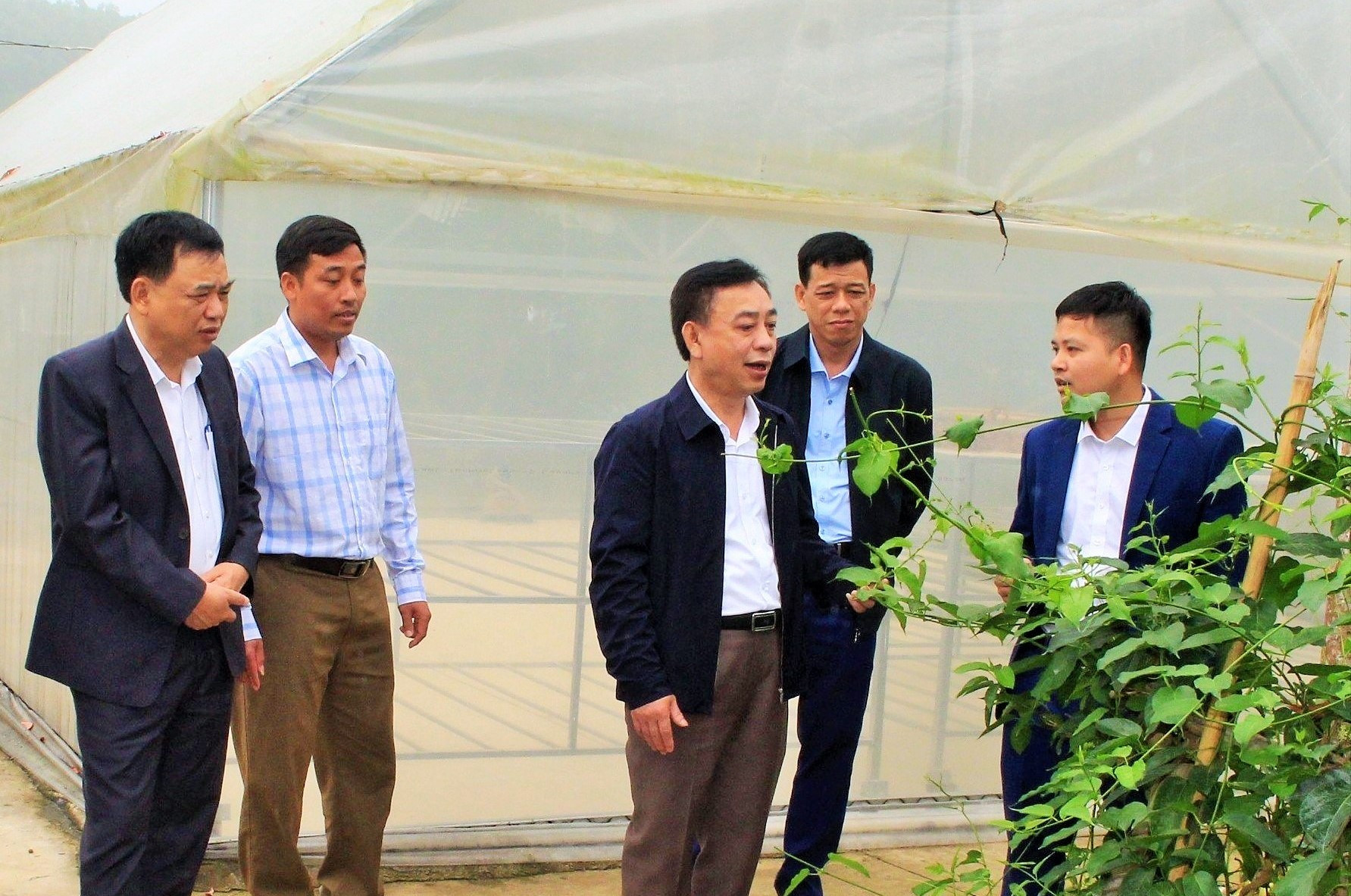 |
Leaders of Quy Hop district visit a high-tech production model in the district. Photo: PV. |
For a long time, places like Thung May, Muong Choong, Ban Vi, Chau Quang, etc., have been captivating landmarks when talking about Quy Hop - a land rich in cultural and historical value. And since 2001, Quy Hop has been selected by the Ministry of Culture and Information (now the Ministry of Culture, Sports and Tourism) and Nghe An province to be developed as a model district for mountainous and ethnic minority culture in the country.
The district's tourism potential promotion "handbook" also stated: Quy Hop is an ideal place for tourists to relax, have fun, and conduct scientific research, with its particularly attractive natural landscapes and ecological environment. The landscape system, with its hilly terrain, deep rivers, and rapids, offers good potential for developing tours and routes... In addition, Quy Hop's cool climate makes it an attractive option during hot days.
Quỳ Hợp is also attractive because of its heroic historical sites such as Bãi Tập, recorded in history as a base of the Lam Sơn rebels; the Cửa Troóng temple in Chủng Láng hamlet (now Yên Hợp commune) dedicated to the Lam Sơn rebels who sacrificed themselves in the ambush that annihilated the Ming army after the thunderous victory at Bồ Đằng; the Làng Sòng temple in Văn Lợi commune dedicated to a Thổ ethnic general; and the Bản Lè temple dedicated to a Thái ethnic girl – all are examples of heroic deeds of those who sacrificed themselves under the Lam Sơn banner to fight against foreign invaders, their stories passed down through generations...
Unlocking its tourism potential will give Quy Hop more confidence in its pursuit of becoming the most prosperous district in the Northwest region of the province. With its inherent natural resources, Quy Hop can achieve breakthroughs to become "rich" in a specific period, but to become "beautiful," it must aim for sustainable development. Tourism is therefore one of the chosen options!
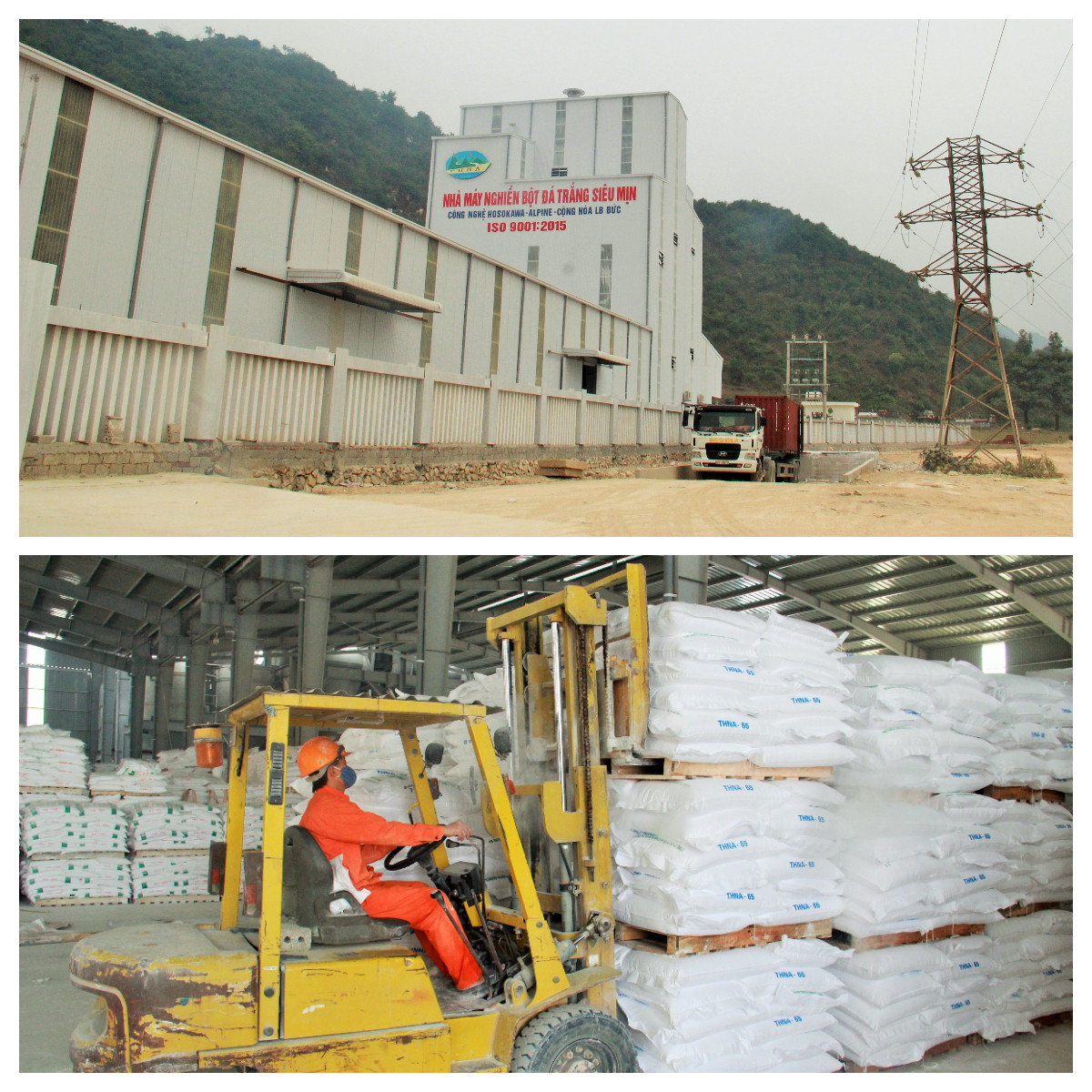 |
Processing ultrafine limestone powder in Quy Hop district. Photo: Hoang Vinh |
The potential and strengths of its white stone resources, sugarcane industry, and Vinh oranges remain, firmly establishing it as a "capital" of the region. However, Quỳ Hợp will gradually become a destination attracting visitors from afar with its vibrant and diverse attractions, including experiences in crafting white stone handicrafts, exploring the ecological aspects of the orange groves, and visiting the sugar factory as a fascinating glimpse into what was once the largest processing industrial facility in Western Nghe An province decades ago.
That certainly couldn't remain just an "aspiration," but has gradually been realized over the past year of implementing Resolution 15, concretized through plans and projects. Currently, one enterprise is in the process of applying for a permit to build an experiential tourism model at the Cam Vinh ecological tourism village in Minh Hop commune. Another enterprise is seeking approval to build an ecological tourism area at Ban Bia waterfall in Chau Ly commune. These earlier initiatives, although still in the experimental stage, have already welcomed thousands of visitors each year, including foreign tourists from countries such as the US, Japan, the Netherlands, and Singapore…
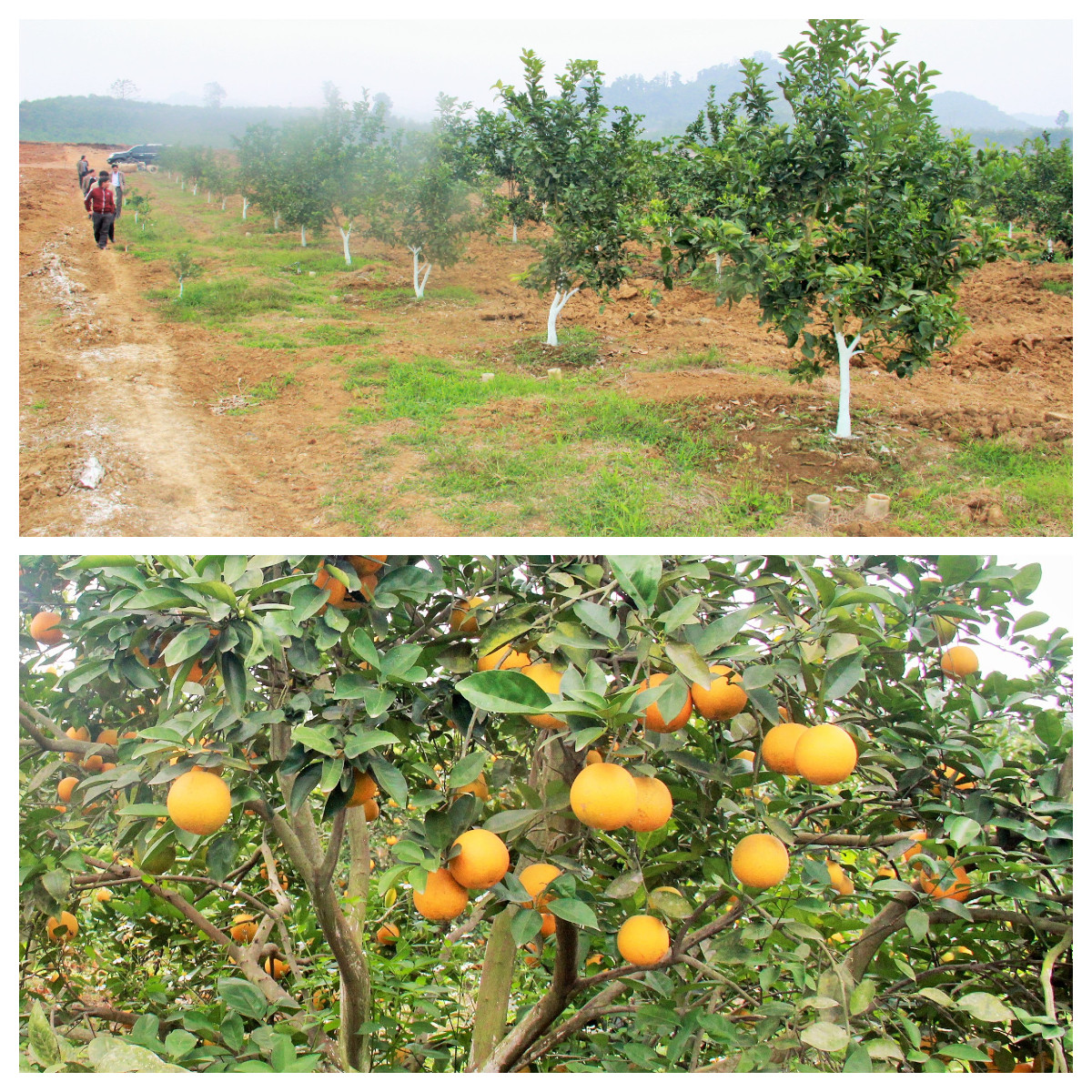 |
The model of growing high-quality oranges is being replicated in Quy Hop district. Photo: Hoang Vinh |
According to discussions among district leaders, Quy Hop has developed plans to implement Resolution 15, including planning and surveying several historical sites and scenic spots: Ban Vuc Cave in Chau Ly commune, Ban Mong Dam in Yen Hop commune, tea hills in Minh Hop commune, and a spring in Nghia Xuan commune. And it's gratifying to see the establishment of a community tourism village (one year ahead of schedule).
Along with that, there are efforts to mobilize resources for infrastructure investment, creating incentives to attract investment and promote tourism development in the district; coordinating the development of OCOP products... to gradually form a rich and diverse range of specialty products to serve tourism services.
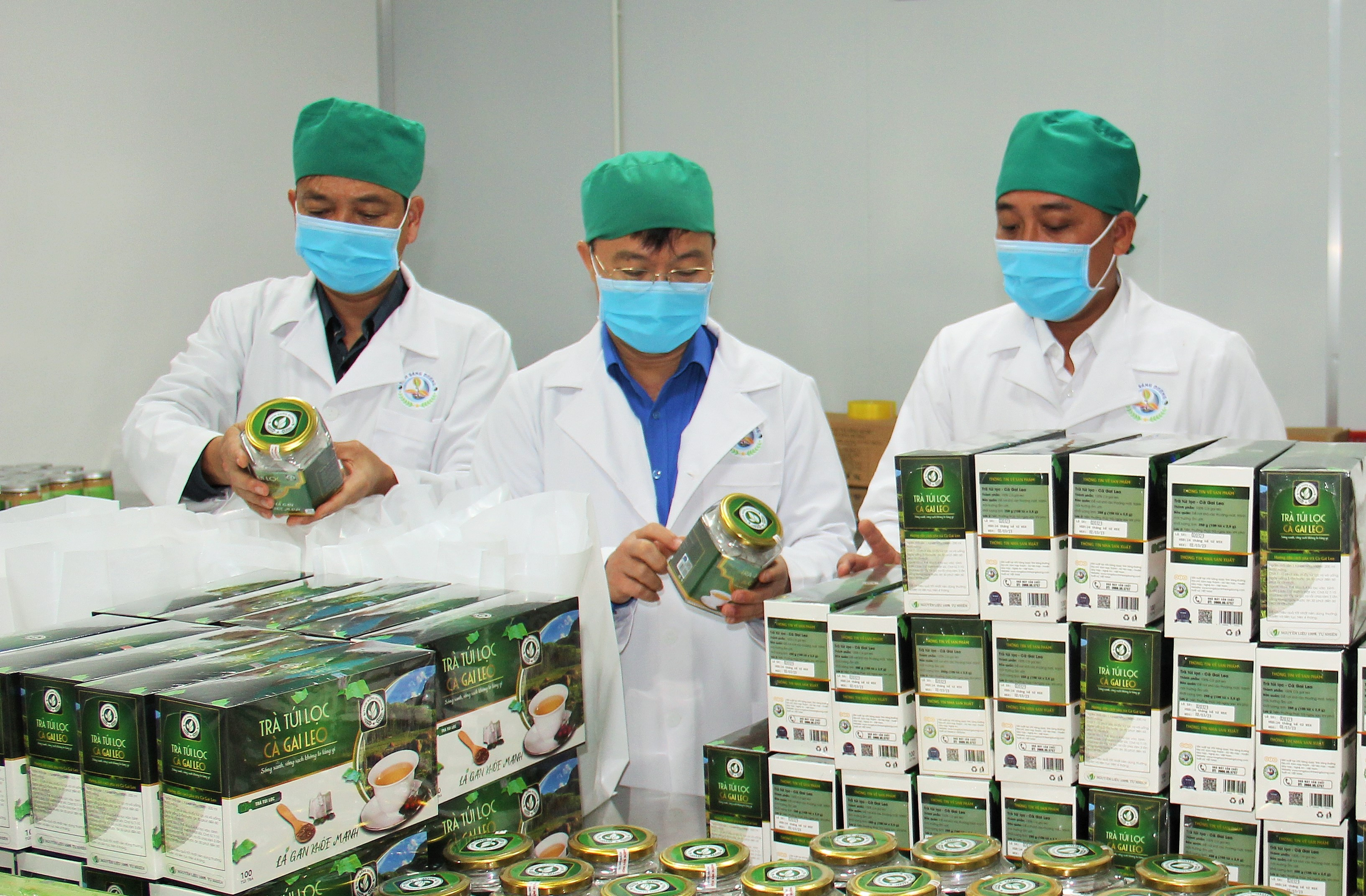 |
OCOP products of Tinh Sang Duong Agricultural and Pharmaceutical Cooperative (Quy Hop). Photo: Hoang Vinh |
Looking back over the past 20 years since Quy Hop was selected as a model district for mountainous and ethnic minority culture nationwide, alongside the achievements, the Party Committee and government of Quy Hop may have "self-reflected" and realized that, at times, due to focusing on rapid development in certain economic sectors, they have not fully utilized that honor and responsibility.
Therefore, with fundamental and proactive steps, such as issuing Resolution 15 and actively implementing the key task of tourism development linked to the preservation of cultural identity, the district government has "compensated" for certain limitations of previous development stages. Specifically, the district People's Committee has issued numerous documents to preserve historical relics, scenic spots, and national cultural identity in the area, such as organizing workshops on the restoration of Dinh Temple in Tam Hop commune and Le Temple in Chau Quang commune; and requesting the Department of Culture and Sports and the Provincial People's Committee to classify Mo Temple in Nghia Xuan commune and Tao Noi Temple in Chau Cuong commune as historical relics.
Having previously been chosen to host many major cultural events of the province such as the "Western Spring Festival Night" program and the "Vietnamese Ethnic Groups' Culture Day (April 19)", the work of preserving and promoting the cultural values of ethnic communities has been strengthened from the grassroots level. To date, implementing Resolution 15, Quy Hop district has directed the establishment of one more model of a Tho ethnic folk culture club at the provincial level, a model of Tho ethnic folk culture in Dot Ma and Mo hamlets, Nghia Xuan commune at the district level, and three models of Thai and Tho ethnic folk culture in Chau Cuong, Nghia Xuan, and Minh Hop communes. Dozens of folk culture clubs in communes and towns are maintained and operate, confidently participating in performances and festivals and winning many awards...
Homestay Choọng Bùng
The area surrounding Thung May – the famous lake in the heart of Quy Hop town – is bustling with activity as the park is being renovated and upgraded to serve an upcoming major event of the district. Following the advice of the district Party committee leaders, we decided to wait until the projects are completed and then join the district in celebrating before enjoying the dazzling and romantic night view of Thung May. There are so many new things to see and experience in Quy Hop to enjoy and remember it fondly!
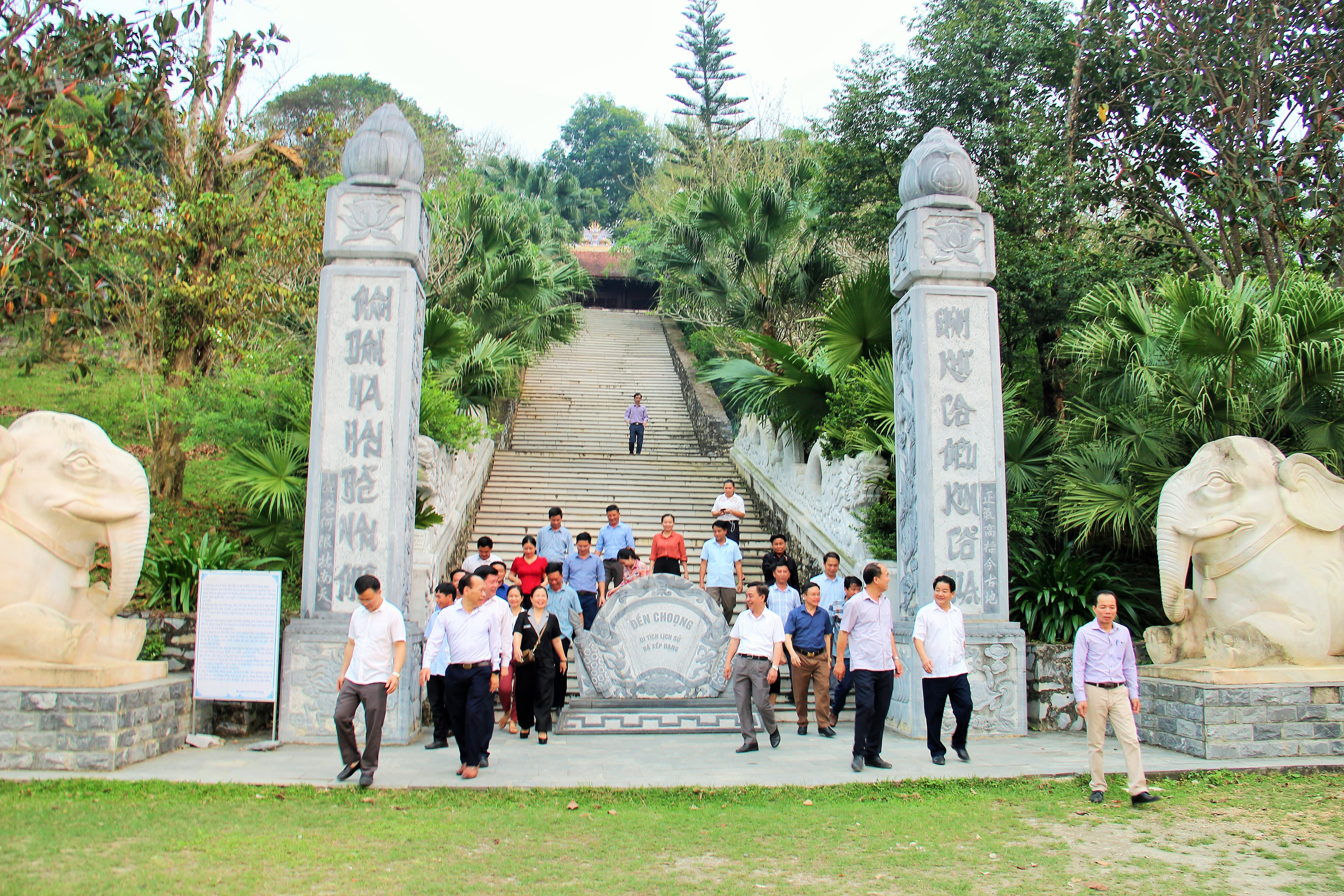 |
Choọng Temple - a famous spiritual destination in Châu Lý. Photo: Hoàng Vĩnh |
The district has directed the development of a community tourism model in Choọng Bùng Cultural Village, Châu Lý commune, with the first homestays in the district. The remoteness of Châu Lý is a thing of the past; transportation has developed with a wide, paved road connecting the district town to Châu Lý, taking only a few dozen minutes by car.
For many years now, Chau Ly, with its meticulously restored and magnificent Choong Temple and its annual festival, has become a famous spiritual destination steeped in legend, associated with the story of Nang Phom Hom (Fragrant Haired Girl). The area also boasts scenic spots like Ban Vuc Cave and Ban Bia Waterfall, which are currently being surveyed for potential investment as ecotourism destinations, aiming to create a rich and diverse experience for visitors to Chau Ly - Muong Choong.
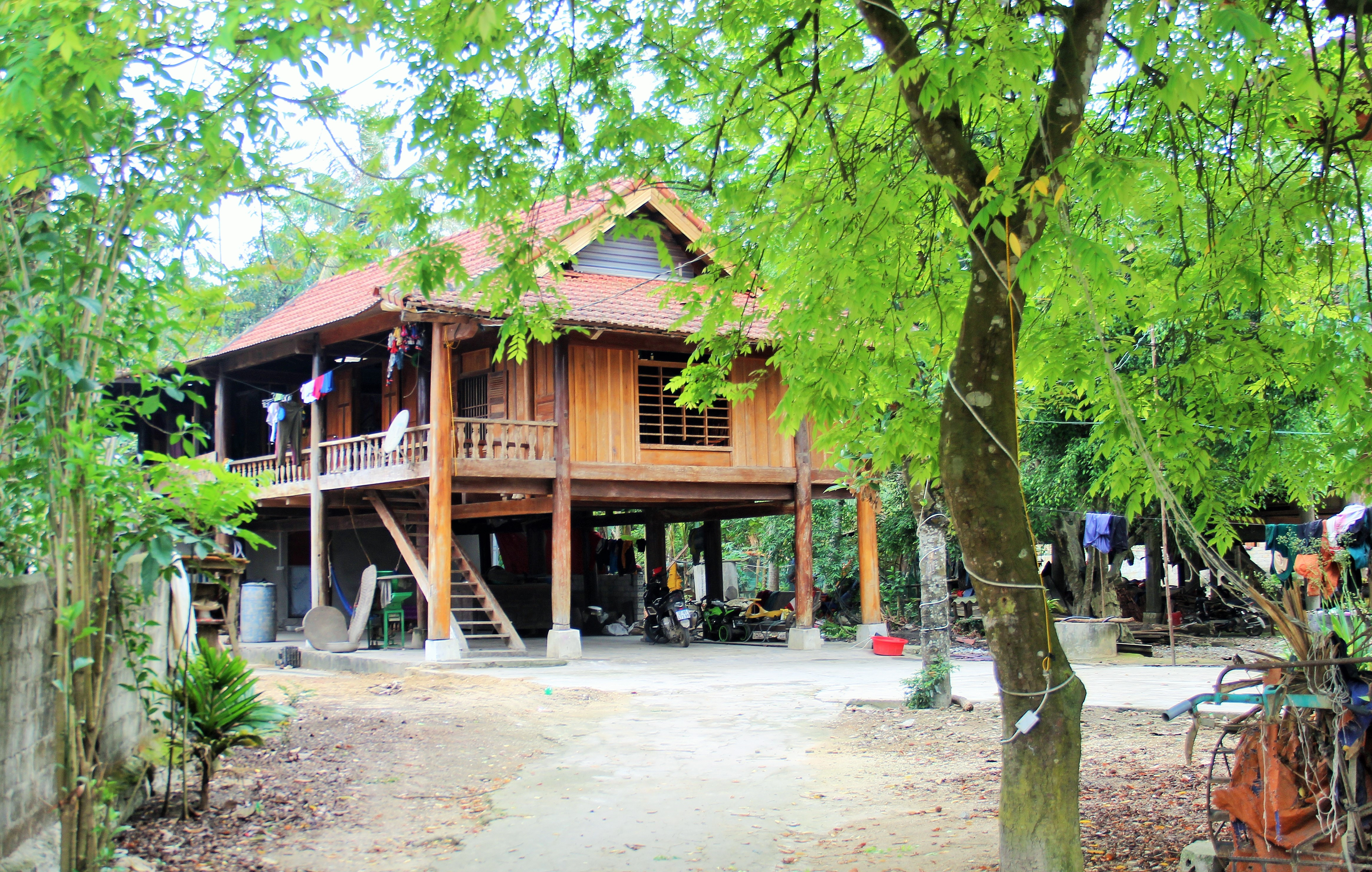 |
Homestay space in Choọng Bùng. Photo: Hoàng Vĩnh |
As dusk fell, Mr. Cao Duy Thai, Secretary of the Party Committee of Chau Ly commune, led us to the Choong Bung Cultural Village. The village, with its ancient stilt houses of the gentle Thai people, lies beside the Nam Choong river, which has flowed for generations, recounting the story of the fragrant-haired girl who dropped her comb while washing her hair... Does her hair still linger? All we know is that in Choong Bung there is a water source where the women and mothers come to dry and wash their hair, carefully performing a ritual to commemorate the beautiful Thai girl whom the Lam Son army entrusted with the mission of gathering food supplies to feed the troops in western Nghe An in ancient times.
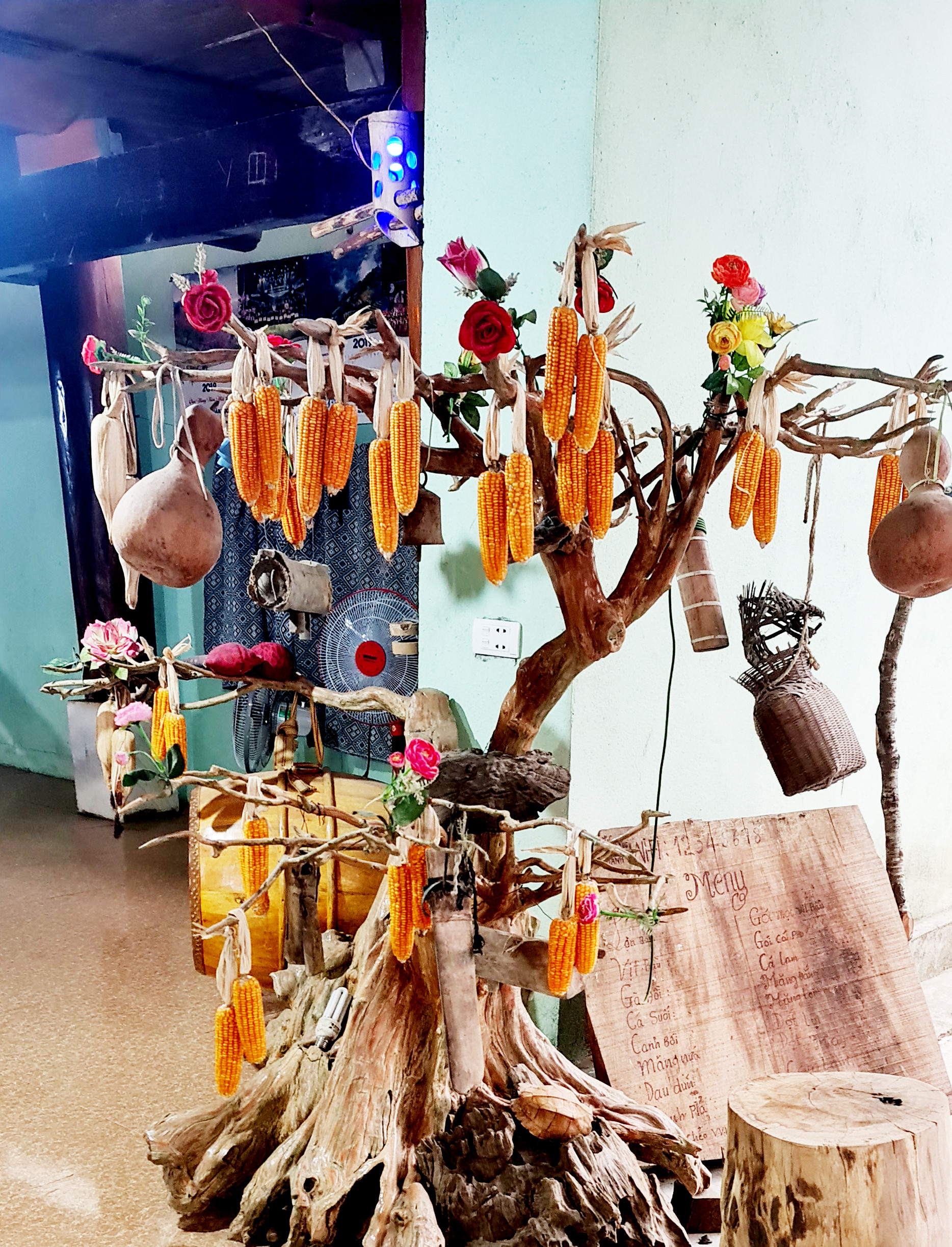 |
A uniquely decorated miniature landscape at a homestay in Choọng Bùng. Photo: Hoàng Vĩnh |
Beside the waterfront is a large, leveled plot of land intended to become an outdoor space for evenings of traditional rice wine drinking, bamboo pole dancing, and performances of various Thai folk songs; it will also feature stalls selling souvenirs to tourists such as dresses, scarves, bracelets, embroidered bags, sticky rice, fish baskets, etc., and most importantly, it will host a highland market.
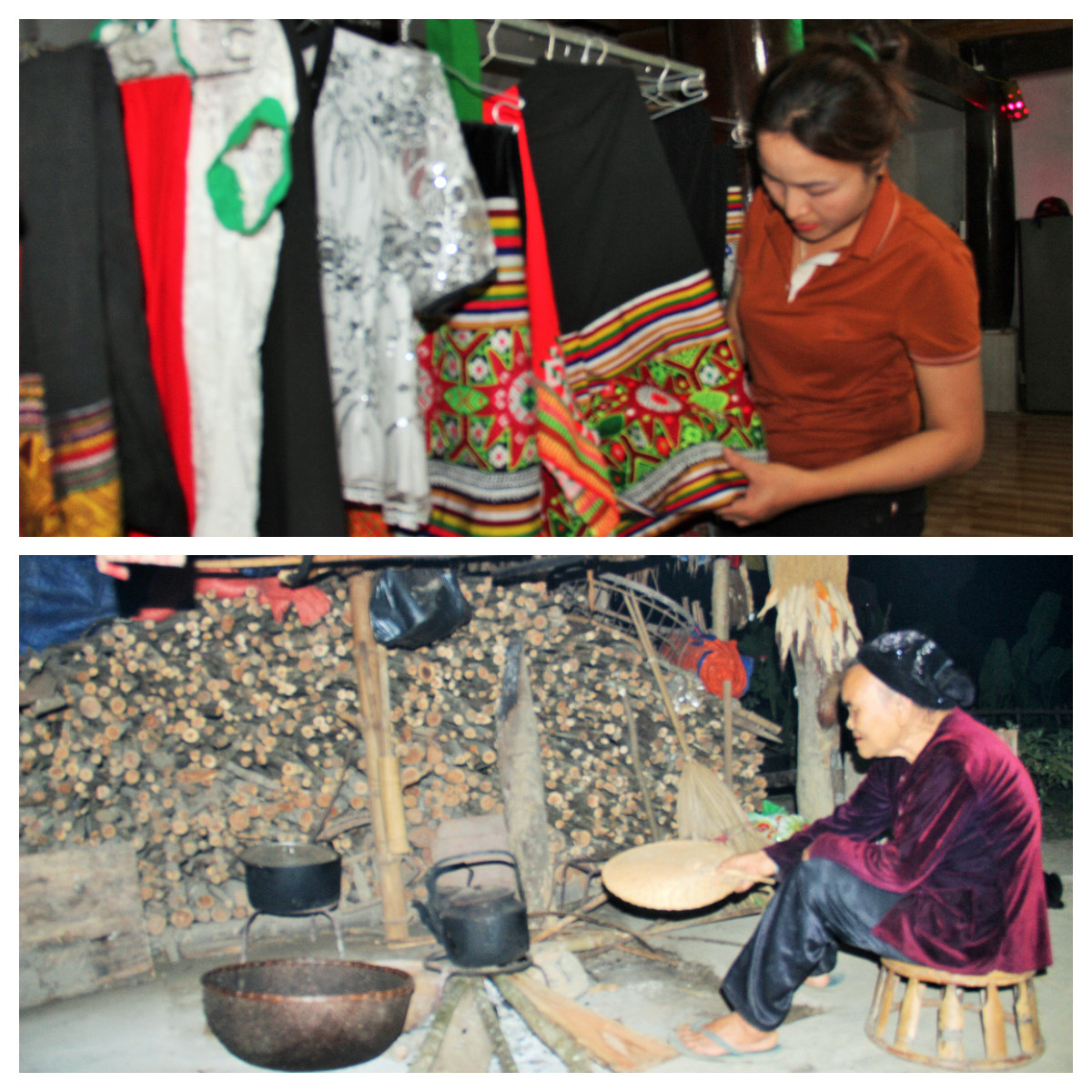 |
The distinctive traditional costumes of Thai women in Choọng Bùng and the warm, authentic kitchen space of the homestay reflect the highland culture. Photo: Hoàng Vĩnh |
Everything is just beginning, but Choọng Bùng has already taken shape as a community-based cultural tourism homestay area thanks to the efforts of the local people and the investment and support of the authorities at all levels, with 3 families selected as model households. While waiting for dinner at Mr. Lo Văn Hoàng's homestay, we took the opportunity to enjoy a glass of fragrant wine at Mr. Lô Văn Phong's homestay and sample the fermented pork sausage wrapped in dổi leaves at Mr. Vi Văn Thành's homestay.
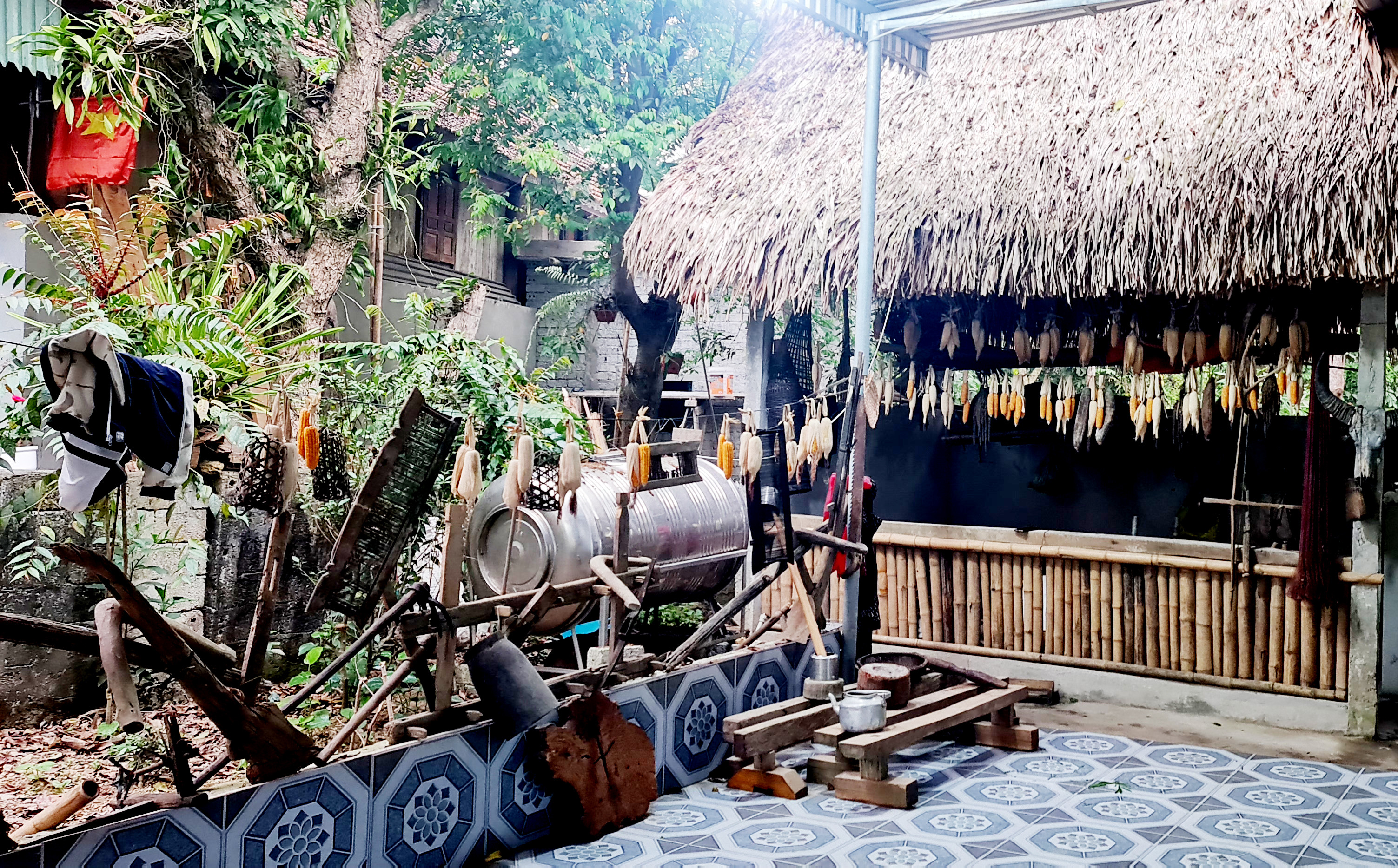 |
The kitchen area of a homestay in Choọng Bùng. Photo: Hoàng Vĩnh |
The story seems to be brewing with plans and confidence for future development, showing many positive signs as homestays have already welcomed thousands of visitors to experience the traditional stilt houses and meticulously collected and decorated traditional items of the Thai ethnic group; enjoy delicious dishes such as grilled catfish, dried meat, ho moc (a type of noodle soup), canh ot (a type of soup), and various wild vegetables with dipping sauce; and immerse themselves in the traditional work of weaving brocade and rattan crafts of the local people...
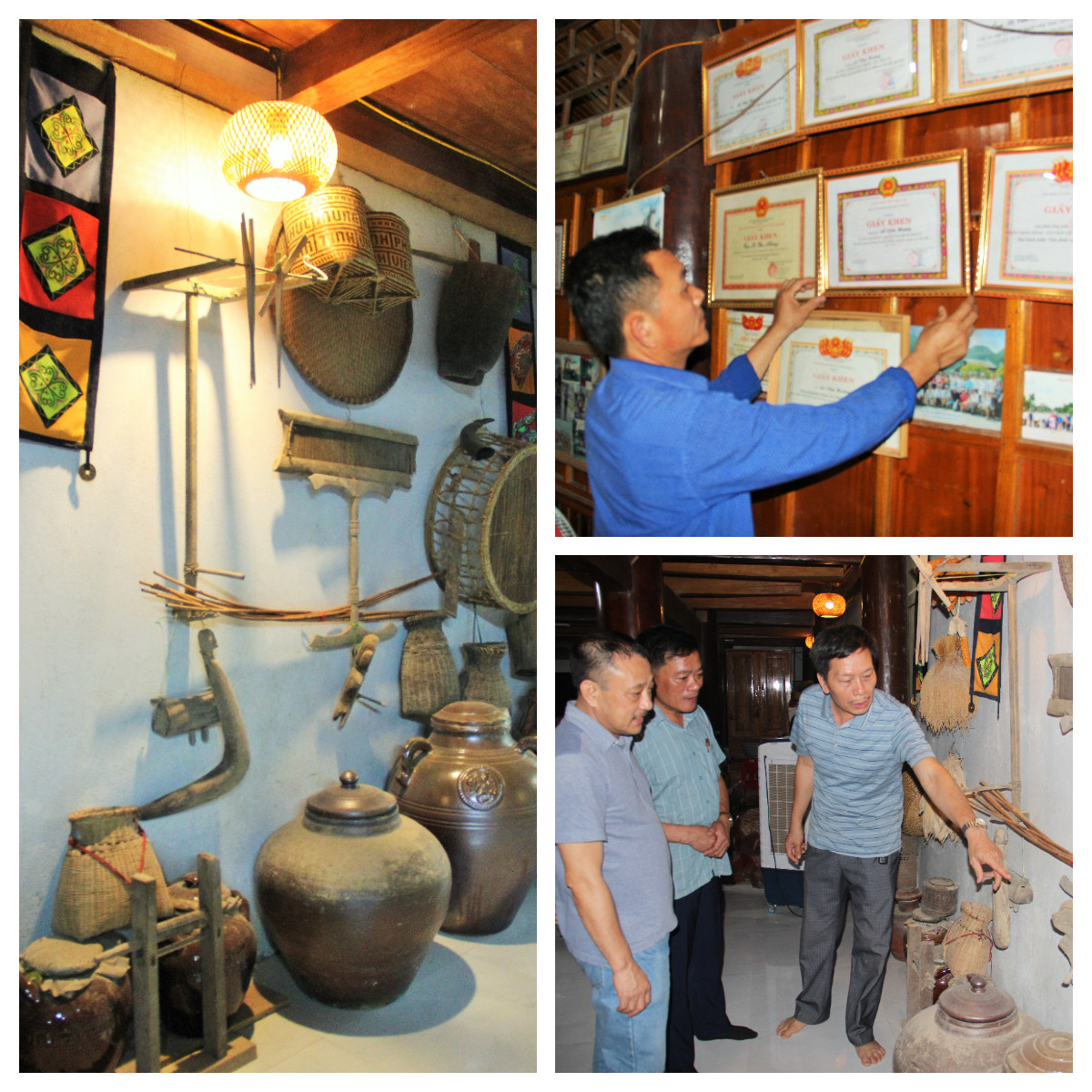 |
Traditional items of the Thai ethnic group are meticulously collected and displayed, along with Certificates of Merit and Commendations from various levels of government awarded to households in Choọng Bùng. Photo: Hoàng Vĩnh |
The night in Choọng Bùng was crisp and clear, and sleep gradually deepened as we imagined the echoes of the festivities, the rice wine, the folk songs, the traditional dances, the lam vông... Homestay in Choọng Bùng was a fleeting experience, but it allowed us to rediscover ourselves, a selves we sometimes seemed to have "lost" somewhere amidst the hustle and bustle of everyday life.
Epilogue
...The direction is clear, the path is open, and with the ultimate goal of creating jobs and improving the material and spiritual lives of the people, especially ethnic minorities in remote and disadvantaged areas; we believe that Quy Hop will soon be listed on the tourism map of Nghe An province by concretizing the goal and resolutely acting to implement Resolution 15 with a vision to 2030.


