
The PhantomStrike radar paved the way for US unmanned combat aircraft.
Raytheon's next-generation PhantomStrike radar, compact and cost-effective, has been integrated into the X-62A VISTA, enhancing the capabilities of the U.S. Air Force's AI-powered autonomous aircraft squadrons.
Raytheon's PhantomStrike fire control radar is becoming a crucial link in the U.S. Air Force's plan to build a fleet of AI-integrated autonomous fighter aircraft. Equipping the X-62A VISTA test aircraft with this system combines advanced sensors with AI, directly supporting programs such as Collaborative Combat Aircraft (CCA).
PhantomStrike on the X-62A: a turning point for the "flying laboratory".
Raytheon has confirmed it has won the contract to supply PhantomStrike radar for the X-62A VISTA. Unlike conventional fighters, the X-62A – developed from the F-16D Block 30 airframe and extensively upgraded to Block 40 avionics standards – is considered a key “flying laboratory” where machine learning and AI algorithms are tested in realistic air combat scenarios.
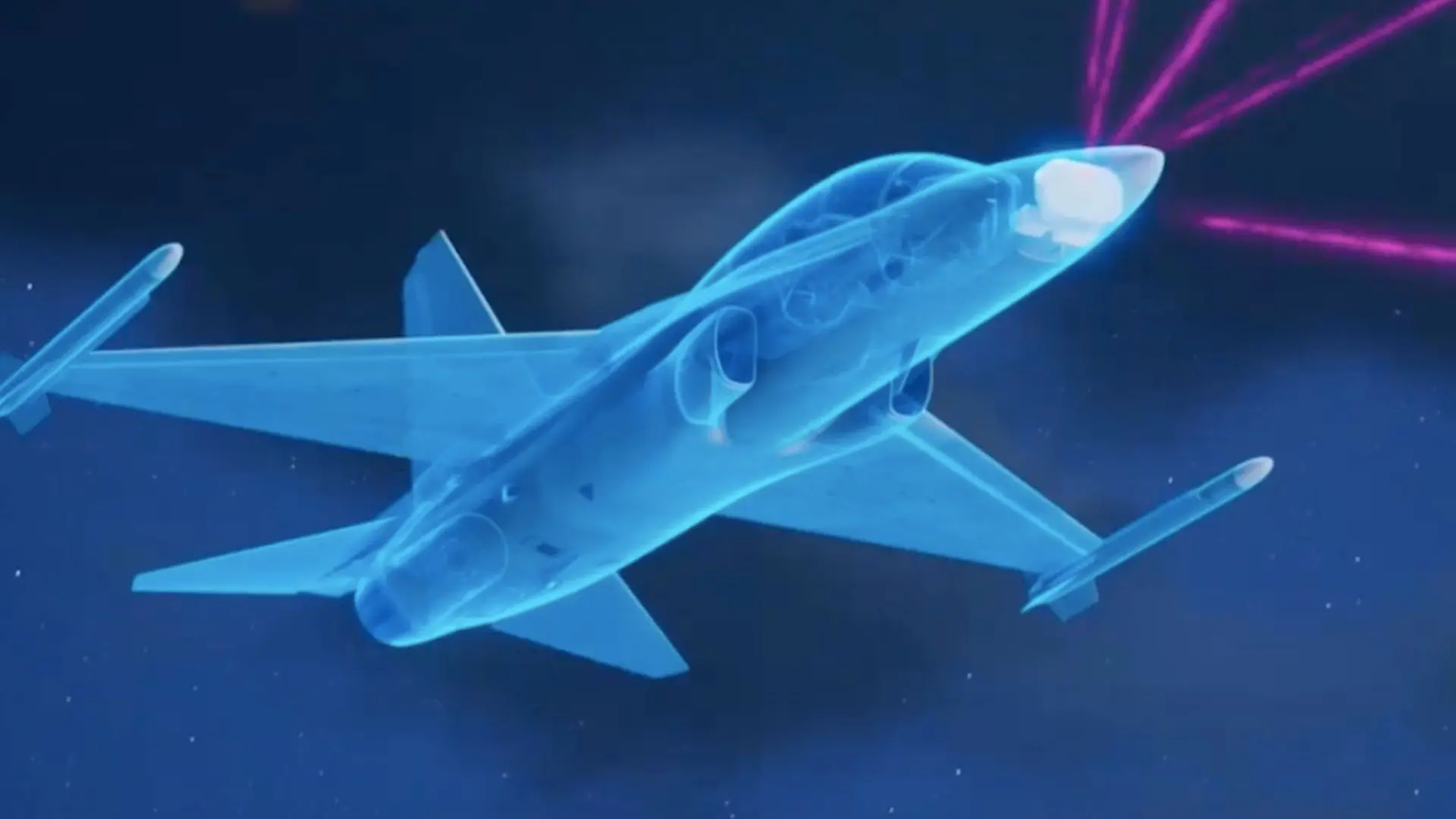
According to military observers, integrating PhantomStrike onto the X-62A is the missing piece to complete the capabilities of future autonomous aircraft. Unlike human pilots, AI systems need electronic "eyes" that are both sensitive enough to process real-time data and compact enough to be installed on unmanned platforms with limited size and power.
PhantomStrike radar design: compact, GaN materials, air-cooled.
The PhantomStrike's key differentiator lies in its design, which Raytheon describes as revolutionary. It's the smallest and lightest fire control radar the company has ever built, weighing under 68kg—approximately half the weight of previous generations of active electronically scanned array (AESA) radars in the same segment.
At the heart of the PhantomStrike is Gallium Nitride (GaN) semiconductor technology. This material makes the radar more heat-resistant, emits stronger radiation, and is more durable than traditional semiconductor components. As a result, the system can maintain high performance over extended periods, meeting the demands of high-intensity operations on combat platforms.
Another notable change is that the PhantomStrike is the first AESA radar to completely eliminate the bulky liquid cooling system, switching to air cooling. This significantly reduces weight, simplifies maintenance, and enhances reliability when operating in harsh environments.
Combined with the CHIRP digital signal processor, the PhantomStrike achieves performance comparable to radars on heavy fighter jets despite its compact size, allowing integration onto platforms previously considered incapable of carrying fire control radar.
Comparison table of some key features of PhantomStrike
| Criteria | Phantom Strike | Previous AESA radars (in the same segment) |
|---|---|---|
| Weight | Under 68kg | Approximately twice the size of Phantom Strike |
| Cooling system | Air cooling | Liquid cooling |
| Semiconductor technology | Gallium Nitride (GaN) | Traditional semiconductor components |
| Relatively low cost | Approximately 50% in the same segment | The benchmark for the segment. |
Economic efficiency and multi-mission combat advantages
In the context of rising defense spending, PhantomStrike offers a strategic advantage with a cost of only about 50% compared to comparable radar systems. This allows the US Air Force to expand its autonomous aircraft fleet – such as the Collaborative Combat Aircraft (CCA) program – without dramatically increasing the budget.
Collaborative Combat Aircraft (CCA) is a program to develop next-generation unmanned combat aircraft (UCAVs) that act as AI "companions" for manned aircraft (6th-generation aircraft). These UCAVs perform reconnaissance and combat support missions, aiming to enhance air power at lower cost and reduce pilot risk.
In terms of combat operations, digital beamforming and control technology allows the PhantomStrike to perform multiple tasks simultaneously. The radar can both conduct ground reconnaissance and track airborne targets, and accurately guide missiles. The ability to switch seamlessly between air-to-air and air-to-ground modes provides a comprehensive battlefield picture (situational awareness) for both the pilot and AI control systems.
Raytheon developed PhantomStrike with an open system architecture, allowing for software upgrades to address new threats without changing the hardware. The US government has authorized the export of this radar through direct commercial sales, expanding its deployment capabilities across various platforms.
Thanks to its high compatibility, PhantomStrike can be equipped on a wide range of vehicles, from light fighters and attack helicopters to UAVs and ground defense systems. This increases the radar's application range, not just limited to domestic projects.
X-62A VISTA: AI testing platform for autonomous fighter jets
The X-62A VISTA (Variable In-flight Simulation Test Aircraft) is a groundbreaking test aircraft developed by the US Air Force, based on the F-16D Fighting Falcon fighter jet. This aircraft is considered a key "flying laboratory," directly supporting AI research and application programs, as well as the development of future autonomous combat aircraft.
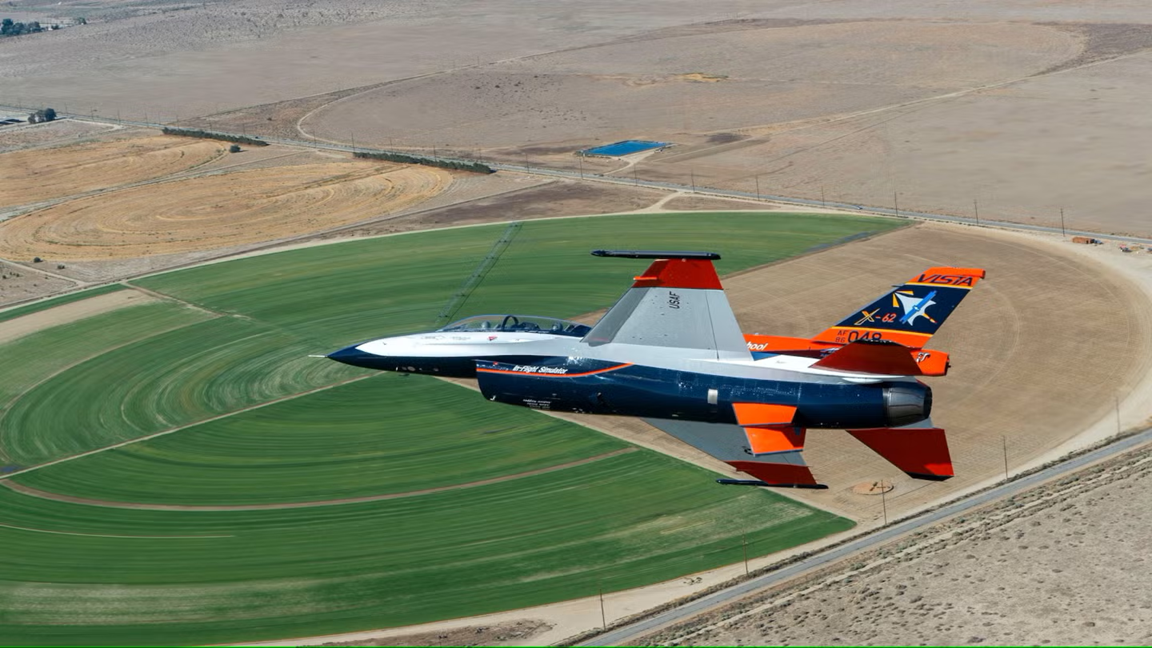
Technically, the X-62A is an improved version of the F-16D Block 30 but incorporates Block 40 standard avionics upgrades. As a result, the aircraft is capable of supporting complex tests involving flight control, sensors, and real-time data processing, far exceeding the role of a typical training fighter.
A key feature of the X-62A is its ability to simulate the flight characteristics of a wide variety of aircraft. Through its open-system architecture, the X-62A can be programmed to “mimic” the aerodynamic behavior and control responses of other platforms, supporting training and research.
The aircraft is operated by two people: a test pilot and a safety pilot. The X-62A uses General Electric F110-GE-100 engines, allowing it to reach a top speed of over Mach 2 (2,550 km/h) at high altitudes, with a ceiling of approximately 15,000 meters. The aircraft's AI system includes SACS – a simulated control system – and a central processing computer called the "Einstein Box".
The X-62A has been controlled by an AI agent for over 17 hours of flight time, demonstrating its central role in efforts to realize plans to field more than 1,000 autonomous combat aircraft (CCAs) by 2028. As the most important flying AI test platform currently available, the X-62A is laying the groundwork for a major shift in how the U.S. Air Force builds and operates its air power.
Combining advanced sensors and AI to maintain air superiority.
The deployment of the PhantomStrike on the X-62A VISTA is not just a single radar installation contract. It signals that the U.S. is focusing on the combination of advanced sensors and autonomous AI systems. In a context where data processing speed and autonomous decision-making capabilities are increasingly crucial to combat outcomes, compact yet feature-rich radars like the PhantomStrike are seen as key to the U.S. Air Force maintaining air superiority.


