
Renault Twingo E-Tech Electric: Retro design, LFP battery.
The Twingo E-Tech Electric reimagines the 1992 Twingo in a modern way: a 27.5 kWh LFP battery, 262 km WLTP range, 50 kW DC charging, priced under €20,000, and delivery in early 2026.
Renault has just unveiled the all-new Twingo E-Tech Electric for the European market, inspired by the 1992 Twingo but with a clear electric technology and practicality approach. The model is expected to be priced under €20,000, manufactured at the Novo Mesto plant (Slovenia), with the first deliveries scheduled for early 2026. The new Twingo is also a strategic move for Renault to directly compete with affordable electric vehicles from China such as the BYD Seagull (Dolphin Surf), while simultaneously evoking a sense of nostalgia for European consumers.
Compact, retro design with 4 doors.
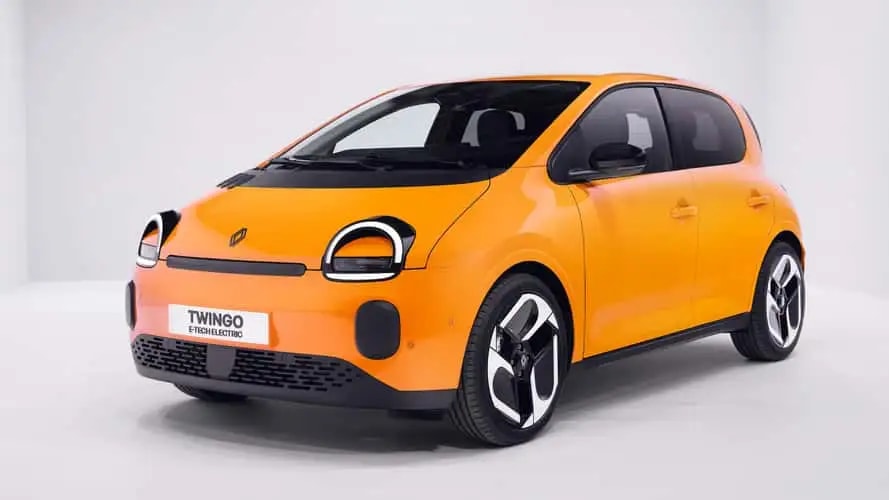
The Twingo E-Tech Electric's design remains true to the original Twingo DNA: round headlights, three small air vents on the hood, and a recognizable, boxy body. The front and rear light clusters are symmetrically designed: the front lights serve for nighttime illumination, while the rear features three bulbs that double as reverse lights, turn signals, and fog lights.
The cabin blends modern and retro elements, using bright colors combined with dark plastic details. Decorative accents appear between the seats and on the door surfaces. Unlike the original two-door Twingo, the new version switches to a four-door configuration, significantly improving accessibility and everyday use.
27.5 kWh LFP battery: 262 km WLTP range, 50 kW DC charging, V2L available.
The Twingo E-Tech Electric uses a 27.5 kWh LFP battery. According to WLTP standards, the vehicle achieves a range of 163 miles (262 km), equivalent to an efficiency of approximately 6 miles/kWh (nearly 9.7 km/kWh). Switching to LFP chemistry helped Renault reduce costs by about 20%, despite the lower energy density compared to NMC batteries.
Charging capabilities are optimized for urban needs: DC fast charging up to 50 kW, charging from 10% to 80% in 30 minutes; AC charging at 11 kW fully charges the battery in 2 hours and 35 minutes. The vehicle supports bidirectional charging (V2L) with a power output of 3.7 kW to power external devices when needed.
80 horsepower, 175 Nm engine: sufficient for European highways.
The Twingo's electric motor delivers 80 horsepower and 175 Nm of torque. It accelerates from 0–100 km/h in 12.1 seconds and has a top speed of 130 km/h, making it suitable for city driving and capable of handling European highways. The vehicle weighs approximately 1,200 kg.
The model shares its chassis platform with the Renault 5 E-Tech, promising stable and enjoyable driving in urban environments thanks to its compact size and the characteristic weight distribution of an electric vehicle.
Practicality: rear seats slide 17 cm, cargo space 360–1,000 liters
Interior space is a key focus for Renault. The two rear seats can slide independently by 17 cm, allowing users flexibility between legroom and luggage capacity. Standard cargo capacity is 360 liters, expandable to 1,000 liters when the rear seats are folded down.
Pricing, production, and marketing strategy
The Twingo E-Tech Electric targets a price point under 20,000 euros, directly competing with budget electric vehicles like the BYD Seagull (Dolphin Surf). The car will be manufactured at the Novo Mesto plant in Slovenia, with first deliveries scheduled for early 2026. Renault expects European consumers to favor the domestic brand if the price is comparable to vehicles from China.
Renault also confirmed it will have a "sister" model under the Dacia brand, starting at 18,000 euros, assembled at the same factory to cater to cost-conscious customers.
Main technical specifications
| Category | Parameter |
|---|---|
| Foundation | Share with Renault 5 E-Tech |
| Battery chemistry | LFP |
| Battery capacity | 27.5 kWh |
| WLTP scope | 163 miles (262 km) |
| Estimated performance | ~6 miles/kWh (original value); ~9.7 km/kWh (converted value) |
| DC fast charging | Maximum 50 kW; 10%–80% in 30 minutes |
| AC charger | 11 kW; fully charged in 2 hours and 35 minutes |
| V2L (external power supply) | 3.7 kW |
| Power/Torque | 80 horsepower / 175 Nm |
| 0–100 km/h | 12.1 seconds |
| Maximum speed | 130 km/h |
| Mass | Approximately 1,200 kg |
| Number of doors | 4 |
| Rear seat | Independent slide 17 cm |
| Luggage compartment | 360–1,000 liters |
| Manufacture | Novo Mesto (Slovenia) |
| Delivery time | Early 2026 |
| Expected price | Under 20,000 euros |
| Related variants | Dacia, starting price 18,000 euros |
Quick assessment
The Twingo E-Tech Electric combines the iconic features of the 1992 Twingo with a cost-effective electrification solution (LFP battery, 50 kW DC charger, 11 kW AC charger) and the practicality of a four-door city car. Adequate performance, flexible space, and a clear pricing strategy make this model a compelling option for daily commuting in Europe, with deliveries beginning in early 2026.


