
Chinese humanoid robot breaks half-marathon record: A revolution in speed and AI.
Honor's robot model completed 21km in 50 minutes and 26 seconds, shattering the human world record. This is a major step forward in China's efforts to master humanoid robot technology.
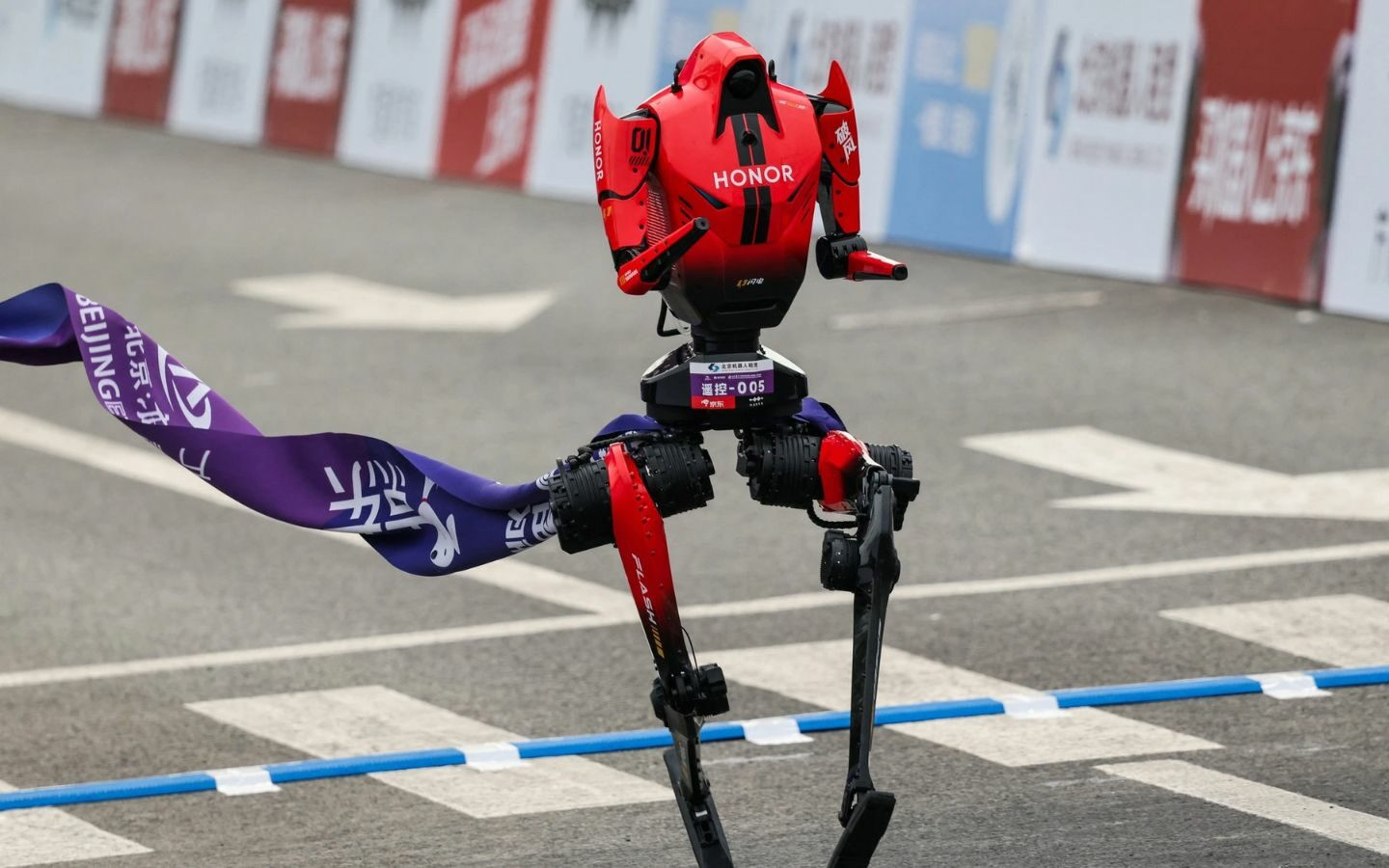
In a half-marathon race held on April 19th, a humanoid robot manufactured in China caused a sensation by completing the 21km distance in a time faster than the world record set by a professional athlete. This event marks a significant leap forward in robotics technology after only one year of testing.
Breaking the physical limits of human beings.
The winning robot in this year's race finished in just 50 minutes and 26 seconds. This is a few minutes faster than the current world half-marathon record held by Jacob Kiplimo (Uganda athlete), who set the record with 57 minutes and 31 seconds in Lisbon.
Notably, this robot was developed by Honor, a brand well-known in the smartphone manufacturing industry. Despite its impressive speed, the device revealed limitations in its balance, stumbling just before the finish line after hitting a railing and requiring human assistance to get back on its feet.
| Criteria | Humanoid robot (Honor) | Athlete Jacob Kiplimo |
|---|---|---|
| Half marathon (21km) performance | 50 minutes 26 seconds | 57 minutes 31 seconds |
| Unit/Nationality | Honor (China) | Uganda |
A technological transformation in 12 months
Compared to the first race held last year, the maneuverability of the humanoid robots has improved significantly. At last year's competition, most of the robot models were unable to start properly or complete the distance. The fastest robot then took 2 hours and 40 minutes to reach the finish line.
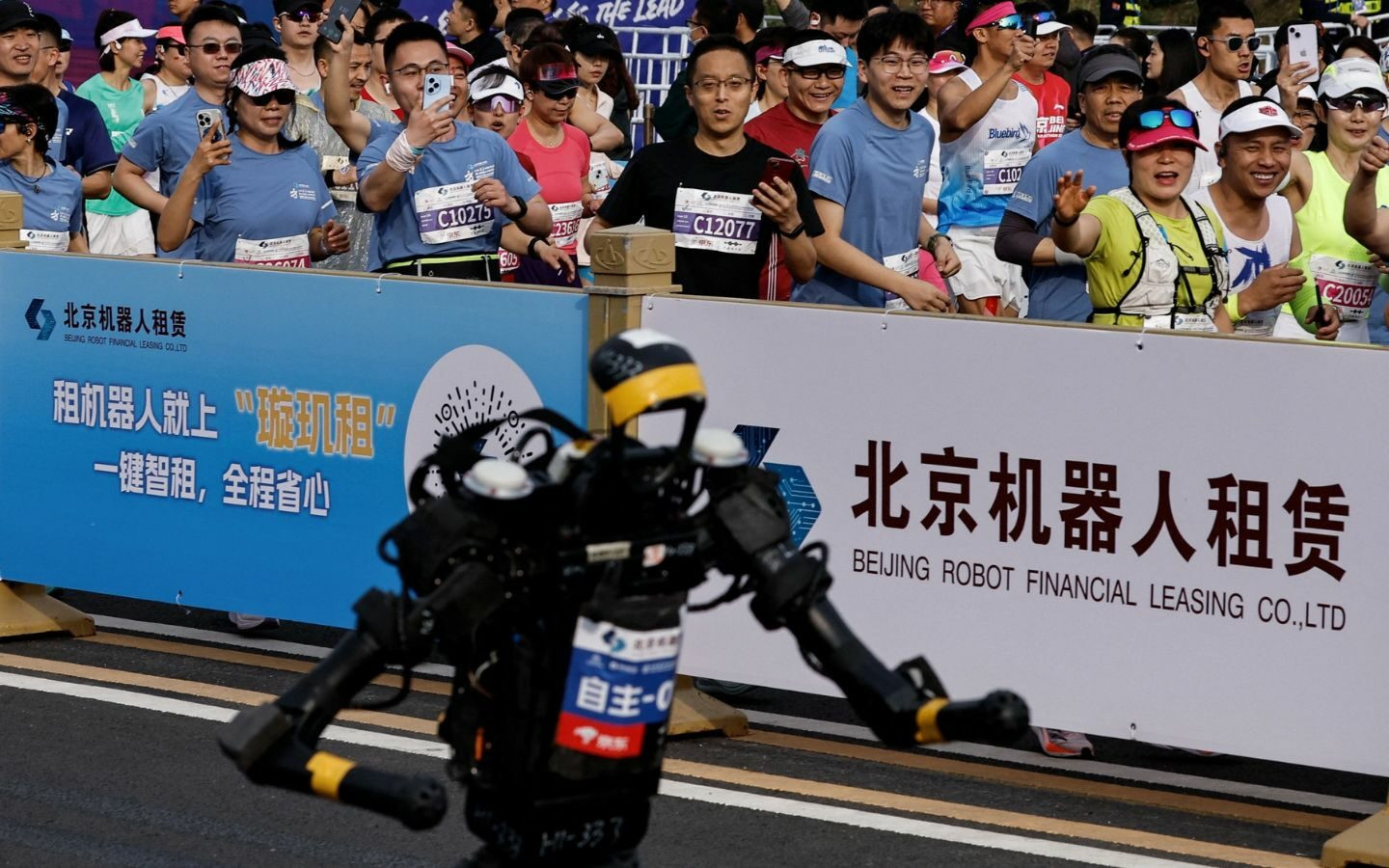
This year, both the number and quality of participating models have increased significantly. The athletes and robots are positioned on two separate lanes to ensure safety and avoid direct collisions at high speeds. This advancement lies not only in the mechanical structure but also in the motion control algorithms and real-time data processing capabilities.
Strategy to dominate the global robotics market.
The impressive performance at the half-marathon race is proof of China's ambition to lead the robotics industry. According to data from Counterpoint Research, China holds a dominant position, owning more than 80% of the 16,000 humanoid robots to be deployed globally by 2025.
The two leading domestic market players, AgiBot and Unitree, each shipped over 5,000 robots last year. Unitree even aims to increase its production capacity to 75,000 robots per year to meet growing demand.
From the track to practical applications
Although commercial applications are still in the testing phase, the potential to replace labor in hazardous environments or military applications is clear. Chinese companies are now investing heavily in AI software and collecting large-scale real-world data by equipping factory workers with sensors to train robots.
Beyond mobility, humanoid robots also demonstrate versatility in entertainment and martial arts. At CCTV's Lunar New Year Gala, Unitree's robot models performed complex movements with weapons, showcasing precise coordination between their mechanical body parts.


