
Omych ground robots appear near the front lines: capabilities and risks.
Images from X-rays show the Russian Omych ground robotic platform being used near the combat zone, capable of carrying Shmel thermobaric weapons and also serving as a transport vehicle. However, its effectiveness and survivability against artillery, FPV drones, and electronic warfare remain questionable.
Images posted on social media show a remotely controlled, unmanned mobile platform, allegedly being used near the front lines. According to a report by @TheDeadDistrict on X-Men, the vehicle in the photo is a ground-based robotic system called Omych, which has been previously showcased by Russian media sources.
Notably, these images depict combat environments, raising the possibility that the Omych system has been put into field use to some extent, rather than remaining merely a demonstration. However, what has emerged is primarily visual evidence, lacking technical data or combat results necessary for a comprehensive assessment.
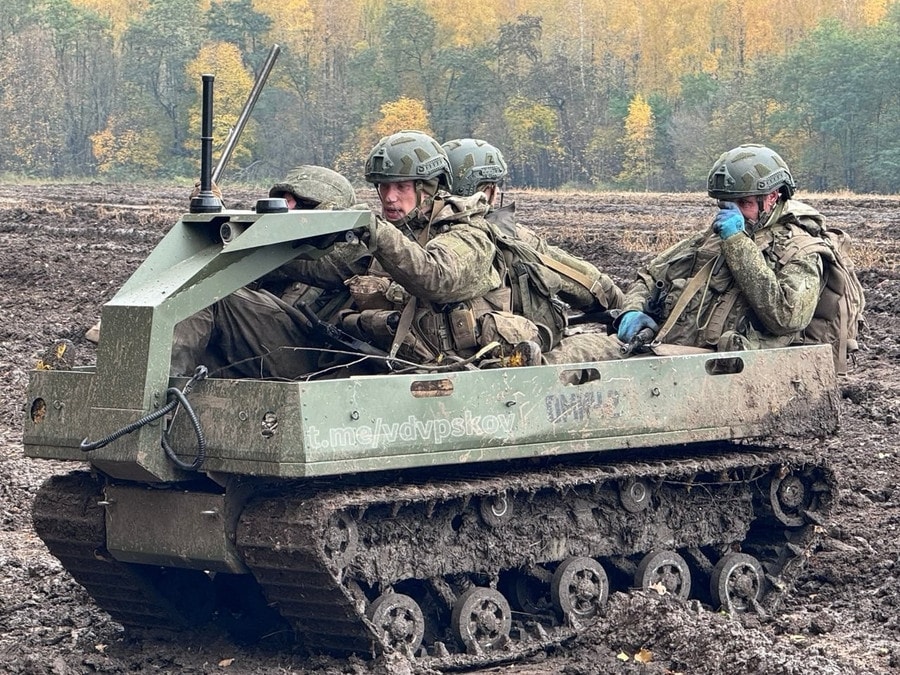
Overview: Omych has been reported to be active near the combat zone.
The source material describes this as a small-scale ground robotic platform, using a tracked chassis and designed to operate in areas "in direct contact with enemy fire." This positioning reflects the idea of using unmanned vehicles to access dangerous locations, reducing risk to soldiers when deploying firepower or transporting supplies.
According to information previously presented by Russian media (as the source of this article states), the Omych was introduced as a launch platform carrying thermobaric grenade launchers. At the same time, images had previously emerged of the Russians equipping the Omych combat robot with Shmel thermobaric flamethrowers, aiming for its role in attacking and destroying fortifications.
Technical analysis: compact configuration, tracked, flexible load-carrying
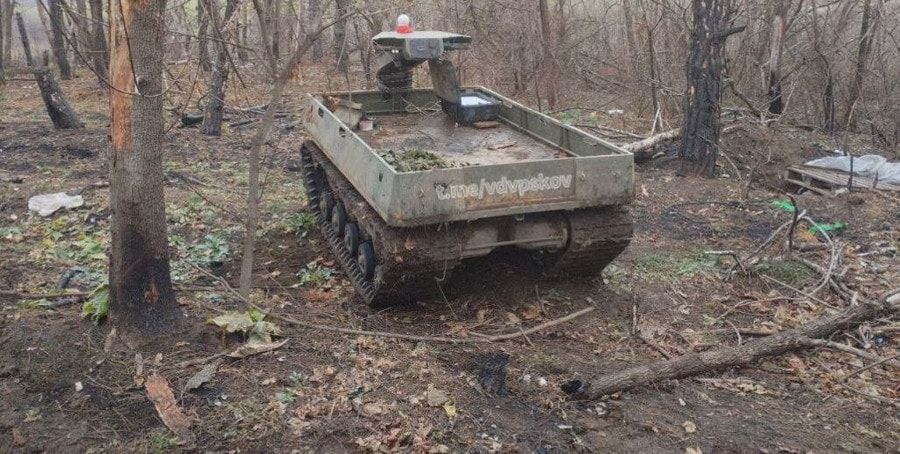
From the source description, the Omych has three main technical characteristics that have been mentioned: (1) compact size; (2) tracked chassis; (3) remote control. These three factors typically serve the purpose of maneuvering through rough terrain, approaching targets at close range, and deploying in confined spaces.
Regarding the weapon system, the source mentions two configurations that have been "demonstrated" or "pictured": carrying a thermobaric grenade launcher and being equipped with a Shmel thermobaric flamethrower. If the combat configuration is correct, this is a firepower group directed at fixed targets or fortifications, requiring relatively close approach and therefore placing high demands on the survivability of the platform.
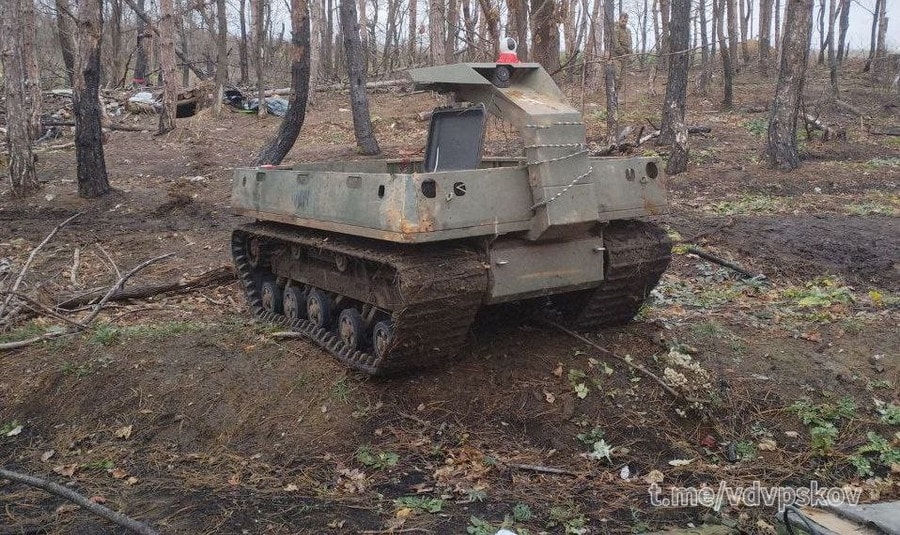
Tactics employed: attacking fortifications and supporting transport.
The source describes the Omych as being able to serve as both an assault platform and a transport vehicle. This combination suits common needs on the front lines: delivering supplies/ammunition to dangerous locations, or delivering a package of firepower to a suppression point without exposing the carrying force.
However, the "close approach in direct fire" tactic also puts the small platform at high risk. Sources cite expert opinions that the effectiveness and survivability of the Omych in real combat conditions remain questionable, as such vehicles are vulnerable to artillery, FPV drones, and electronic warfare equipment.
Key point to note: unmanned operation but with signs of direct control.
A key detail in the source is that, although the Omych is positioned as "unmanned," the published photos clearly show a control system allowing military personnel to take direct control. The source suggests this could reflect the vehicle "not yet being perfect," or it could be a backup control channel to meet practical battlefield requirements.
Summary table: data presented and points still under consideration.
| Category | Information by source | Unconfirmed point in the source |
|---|---|---|
| Foundation | Omych ground robotic platform, remote controlled. | Level of automation; control range; interference immunity |
| Mobility | Compact size, tracked chassis | Speed; range; payload |
| Firepower | It was once showcased as a launcher carrying thermobaric grenade launchers; images show it equipped with a Shmel. | Ammunition capacity; firing stability; accuracy |
| Survive | Experts doubt its ability to survive artillery fire, FPV drones, and electronic warfare. | Armor protection; countermeasures against FPV UAVs; formation-based combat plan. |
Conclusion based on source reliability
The data in the source allows us to draw three certain conclusions at the descriptive level: Omych is a tracked, remotely controlled ground robotic platform; it is assigned to an attack role using thermobaric fire (including Shmel) and can also perform transport duties; and it faces a high risk from artillery, FPV UAVs, and electronic warfare.
The remaining aspects—including actual deployment levels, combat effectiveness, and jamming/survivability capabilities—lack any data or reports in the source. Therefore, any further assessment requires additional independent evidence, particularly data on operation in electronic warfare environments and against FPV UAV threats.


